
search the site


Bulk Shipping: Economics 101
Bulk Shipping: Economics 101
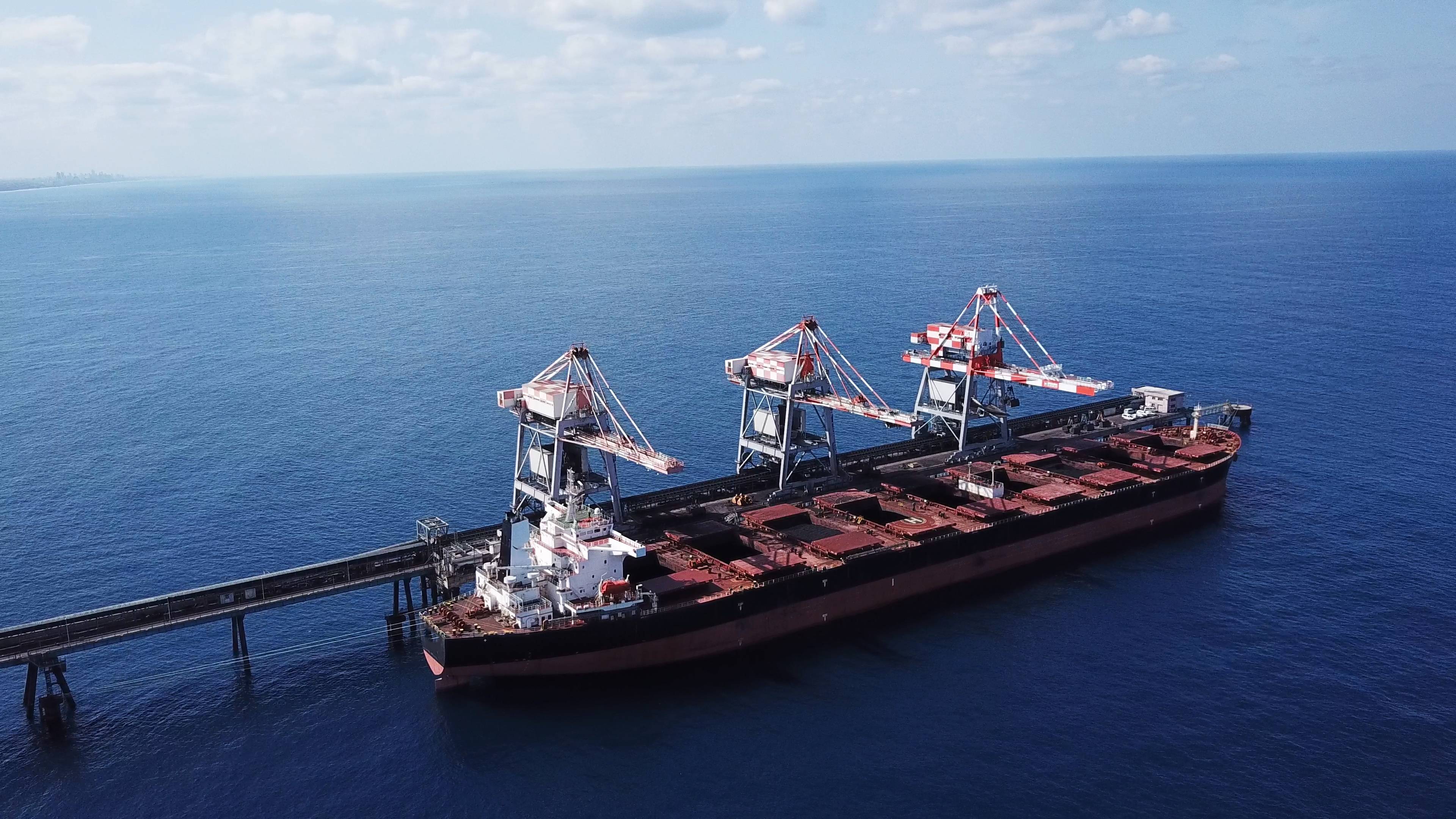
© yaniv / Adobe Stock
Supply and Demand in the bulk transport sectors will define the course line ahead. Less ships and more cargo will be the key.
The drybulk sector – where iron ore, coal, grain and other raw materials dominate – is still wrestling with a decade-long hangover that began with the financial collapse of 2008. A recovery ensued in 2010 and 2011, but, following the time honored trade pattern, the brighter outlook brought about an avalanche of new build orders and another drop in rates ensued. The pattern, with cycles each extending approximately three to four years in duration, repeated in 2014 – when a slightly stronger market sowed the seeds of its own demise … yet again.
Volatility, brought about by the intersection of demand and supply, has been a hallmark of the drybulk markets; indeed, market observers looking back see the boom of 2003 to mid-2008 as corresponding with the peak of a “commodity super cycle.” Prior to that, the last super cycle peaked circa 1980, and before that, during the 1950s. Over time, commodity demand predictably ebbs and flows. And, while recent years have seen growth, these gains have albeit come at a slow pace, and have been no match for the robust increase in both numbers and tonnage associated with sector newbuilds.
Sentiment Brightening
Regardless of commodity demand, it is the supply side – the global fleet – that continually sees overbuilding. Because ships have a useful life of 20 to 25 years, they will be around – cluttering up the market, for multiple trips through the economic cycle. So it went in 2016 and into early 2017, when widely followed indices of drybulk market health saw record lows. That said, in mid 2018, the outlook is brightening.
Indeed, optimism is returning to the beleaguered market, according to the latest Shipping Confidence Survey from Moore Stephens. The London, UK-based international accountant and shipping adviser reported that “Shipping confidence reached a four-year high in the three months to end-February 2018” based on a periodic survey of market participants, with an emphasis on intentions to make capital investments. Mr. Richard Greiner, Partner at Moore Stephens, adds, “Net freight rate sentiment is positive in all main tonnage categories … it increased both in the drybulk and container ship trades.”
‘Shipping Confidence’ is one thing, but these expectations can be quantified. London’s Baltic Exchange, which produces extensive data on drybulk hires and freight, looked at the market for forward physical freight, saying in a late March edition of its Bulk Report, “Period rates were still being agreed at numbers considerably higher than spot values. The New Orleans, a Capesize bulker of 180,960-dwt, built in 2015, fixed to charterer SwissMarine for 11 to 13 months trading with 25 March delivery China at $21,000 daily, with other well-described ships having achieved similar levels.”
Conversely, spot hires for Capesize ships in early March were around $12,000/day, so a savvy charterer willing to take on a vessel at a daily hire of $9,000/day above spot levels shows considerable optimism. Or, if you are a pessimist, it arguably shows desperation, a fixture on the wrong day, with the wrong options and other parameters.
Where Are We in the Cycle?
Earlier this year, Barry Rogliano Salles, a shipbroker based in Paris, with a worldwide office network, pronounced the drybulk market, as having entered a “long-awaited recovery.” For their part, they offer, “After the record lows of 2016, expectations for a better shipping market in 2017 emerged from the beginning. As usual, the Capesize sector closely followed developments in the commodity markets. In particular, higher iron ore prices encouraged miners to ship as much material as possible, as soon as possible, and this created inflationary pressure on freight. With spot cargoes deep in the money, shippers were content to pay a few cents more to secure prompt ships.”
Vessel Hires Rebound in 2017
Maritime Strategies International (MSI), London (UK) based freight market analysts, writing in the March edition of its Dry Bulk Freight Forecaster, said, “Slow fleet growth and stronger demand will support earnings this year. We’re forecasting an increase of between 17% and 28% for spot earnings across all bulker benchmarks by May.” But, analysis of spot hires (on a timecharter basis, which is net of fuel and port costs) by MSI shows that Capesize vessels (typically 180,000 dwt) were earning $14.5 k/day and $11.5K/day in January 2018 and February 2018 respectively. Clarksons and Baltic Exchange data show the March spot hires noted above, working back to around $12.0k/day. In contrast, 2017 Q4 was far stronger, with hires of $19.8k/day (Oct.), $21.3k/day (Nov.) and $25.6k/day (Dec.). So, which direction is the market heading?
Addressing that pressing question, MSI also looks closely at other drybulk size categories. MSI’s lead drybulk analyst, Will Fray, insists, “At the end of February daily Panamax earnings pushed above Capes and have remained above Capesize earnings so far in March.” The end February 2018 hires, nearing $12k/day, compare with a high of around $12.7k/day reached in December, 2018. On the smaller sizes, Fray adds, “Strong support is expected from minor bulks trade this year and MSI is forecasting Supramax earnings of $12.0 k/Day in May and $11.7 k/Day in August.”
Supply and Demand
Positive views stem, in part, from a tighter supply situation – the rate of expansion for the overall drybulk fleet is way down from previous years (and possibly less than increases in demand, in certain sectors). On a drybulk themed panel, at Capital Link’s Shipping Forum in mid-March, Mr. Stamatis Tsantanis, the CEO of Seanergy Maritime Holdings, an owner of 11 vessels, including nine capsize bulkers, said: “There is very limited shipbuilding capacity … to build additional ships … in many countries, like China, they have consolidated some of the bigger yards.” He added that yards in South Korea are now under court receivership. Importantly, and addressing concerns about a large group of newbuild orders tied to the Brazilian miner Vale (representing a potential overhang on the market), Mr. Tsantanis said: “With recent price increases from yards, these will not make financial sense to build … I am not sure that the VLOC [Very Large Ore Carrier] orders that we see now will eventually be realized.”
Stakeholders often look closely at ships on order as a percent of the existing fleet size. Analyst Randy Giveans, who runs Equity Research-Maritime at investment bank Jefferies & Company, presented data (originating from Clarksons Research) at the Capital Link conference showing the orderbook/ fleet ratio hovering around 10% in early 2018, compared to 80% at the height of the market in 2008. His data also showed the spike in newbuild order activity during 2013-2014 was followed by a lull (corresponding to the market’s drop) in 2015 and 2016.
On the demand side, the researchers BRS said that “Chinese steel output grew by a strong 6% to 832 million tons.” This had positive implications for iron ore movements (the leading drybulk mover) with BRS noting that “Overall, Chinese iron ore imports grew by 6% to 1,075 million tons…” adding that the two major originators of iron ore exports both saw double digit gains from 2016. Australia, with overall iron ore shipments of 839 million tons, was up to 25% from the prior year, and Brazil- with 384 million tons overall, also up by a similar amount.
Financials, ‘Black Swans’ & Logic
The fair winds pushed by market experts have also begun resonating through to the financial arena. In early April, Evercore ISI analyst Jon Chappell wrote, “For the first time in more than two years, we can begin to value dry bulk stocks on estimated cash flows, rather than net asset value (NAV), as spot rate improvements drive meaningful cash flow acceleration.” As markets improve, analysts look at company earnings, rather than simply the value of the steel (a downside protection if a company were to liquidate its assets). Chappell added, “We believe ongoing rate improvements and sustained earnings growth will provide some confidence in the cycle, driving multiple expansion (on top of further cash flow acceleration) leading to 30-40% upside across the stocks in this sector in the next 12 months.”
At a conference hosted by Morgan Stanley, a few days after the Capital Link event, Mr. Hamish Norton, the President of SBLK, was asked about ways that investors would value shipping companies. His answer revealed how the answer changes, depending on where the market sits in terms of the longer term cycle. Mr. Norton (who came from the investment banking side of the business) said: “At the market trough, investors will look at Net Asset Value (NAV) as a base for valuation. As the market improves, institutional investors will look to value companies based on Enterprise Value (EV)/Earnings Before Interest-Depreciation-Amortization (EBITDA). Near the peak of the cycle retail investors will value companies based on dividend yield (Dividend per share/ Share price).”
One thing is for sure: there are many moving parts to the current bulk trading cycle. The specter of a trade war precipitated by the threat of steel tariffs – a ‘Black Swan’ event if there ever was one – is an unwanted addition to that mix, and in the end, could make all of the analysis moot. In the end, however, global bulk shipping’s future health may hinge one piece of savvy advice – interestingly enough, provided by an operator of inland dry bulk barges in the heartland of America.
Peter H. Stephaich is Chairman and CEO of Blue Danube Incorporated and Campbell Transportation Company. In a September 2017 interview, MarineNews editor Joe Keefe asked, “What will it take for freight rates to improve on the inland rivers?” Stephaich answered simply, “Economics 101, demand and supply. We either need more tons to move or we need to shrink the barge fleet. Preferably both.” When it comes to global dry bulk shipping, that sounds just about right.
Bulk Shipping: The Trump Impact
Political risks: these are the bane of industry forecasters because of their unpredictability and, by definition, uncertain consequences, are omnipresent, with the potential to quickly impact trade flows. Addressing perhaps the biggest political variable in more than four decades, Mr. Rahul Sharan, lead drybulk analyst at Drewry, offered a carefully worded view of the impact of newly announced U.S. steel tariffs on drybulk shipping, with a focus on the Handymax and Supramax sizes predominating in the movements of finished steel products.
In an OP/Ed published in March 2018, Sharan opined, “President Trump’s decision to slap a 25% tariff on steel imports might not be all bad news, as alternative trading patterns could lead to an increase in tonne-mile demand.” This analysis was published just prior to the early April tariff bombshells being lobbed back and forth between Washington, D.C. and Peking.
Mr. Sharan elaborates, in the Drewry analysis: “Overhauling trade routes to and from US will have ripple effects on dry bulk shipping. If events go according to Trump’s plan, then dry bulk shipping will lose 32 billion tonne-miles of steel demand. Half of all steel products move in dry bulk carriers, so a decrease of 13 million tonnes of steel imports would mean a loss of 6.5 million tonnes of dry bulk cargo.”
However, Drewry offers the potential for a silver lining, for Handy and Supramax size vessels – the workhorses of the steel trades. Mr. Sharan suggests that: “Steel volumes from all trade partners apart from Canada and Mexico would suffer. Even without an increase in Canada and Mexico’s share of US imports, more than 100 Supramax shipments a year would be lost. If other countries lose business to the NAFTA pair, the impact will be even heavier.
Then there are the effects of any retaliation. These are more difficult to quantify, as the measures exist only as threats so far and the commodities involved would be varied. In some cases, ship operators could benefit. For example, China is planning to import soybean from Brazil and Argentina instead of the US as a protest against the steel tariff, which would mean a substantial increase in tonne-miles.”
Speaking at the Morgan Stanley conference (two weeks prior to the “Trade War” talk), Robert Bugbee, the President of Scorpio Bulk Carriers, said: “A trade war would have more immediate and detrimental effects on the containership industry than on dry bulk.”
Following the Trump/China volleys, analysts added necessary qualifications to their views. Jon Chappell, the Equities Analyst at Evercore ISI, cautioned investors, saying “…the segment now faces some uncertainty regarding a potential Trade War, and equity investors have been quick to protect the downside before any clear conclusions can be drawn. We do not pretend to know where the trade tariff bluster will ultimately end up and what impact it may have on global dry bulk trade, but we do know that absent political meddling the capacity expansion outlook for this sector sets the market up very well for continued strength.” Analyst Randy Giveans, who follows shipping stocks at Jefferies & Company, took a neutral view. Writing in the midst of the jousting, he said “Although this news has been generally perceived as negative for shipping, we believe the impact on ton-mile demand could be minimal as Chinese imports and US exports will not cease, but rather switch to new trade routes/destinations, further dislocating the global shipping market.”
(As published in the March/April 2018 edition of Maritime Logistics Professional)
Featured Post
 বড় জাহাজ মেরামতে মাতারবাড়ীতে ১ বিলিয়ন ডলারের প্রকল্প
 মাতারবাড়ীতে প্রায় ১ বিলিয়ন মার্কিন ডলার ব্যয়ে পরিবেশবান্ধব ডকইয়ার্ড ও জাহাজ নির্মাণ কেন্দ্র স্থাপনের উদ্যোগে নীতিগত অনুমোদন দিয়েছে নৌপরিবহন মন্ত্রণালয়। এখন প্রকল্পটির কারিগরি ও আর্থিক মূল্যায়নের জন্য প্রস্তাবটি সরকারি-বেসরকারি অংশীদারত্ব (পিপিপি) কর্তৃপক্ষের কাছে পাঠানো হয়েছে। সম্পূর্ণ বেসরকারি অর্থায়নে সরকারি জমির মালিকানা অক্ষুণ্ন রেখে প্রকল্পটি বাস্তবায়নের পরিকল্পনা রয়েছে। বন্দর কর্তৃপক্ষ জানায়, […]
 Industry on alert over scam messages offering ships “safe passage” on Hormuz
 Credit: Shutterstock Fraudulent messages offering safe passage through the Strait of Hormuz in exchange for cryptocurrency have been circulated to shipping companies with vessels stranded west of the waterway, according to MARISKS. In an alert issued on 20 April, MARISKS cautioned that unknown actors posing as Iranian authorities had contacted […]



JOB SITES
CONTENTS
LINKS
Happy New Year

Découvrez les avantages de MadCasino
Dans le monde des casinos en ligne, MadCasino se distingue par ses offres attrayantes et ses services de qualité. Que vous soyez un joueur débutant ou un parieur aguerri, vous trouverez ici une variété de jeux qui sauront satisfaire toutes vos envies. Les machines à sous, les jeux de table et les options de paris en direct sont tous disponibles pour vous offrir une expérience de jeu inégalée. De plus, le casino propose régulièrement des bonus qui permettent d'augmenter vos chances de gagner, vous offrant ainsi une excellente opportunité de maximiser vos gains.
En matière de sécurité, MadCasino est un nom de confiance. Il est entièrement licencié et régulé, ce qui garantit un environnement de jeu sûr et équitable. Les joueurs peuvent se concentrer sur leur expérience de jeu sans se soucier des problèmes de sécurité. Les transactions financières sont également sécurisées grâce à des technologies de pointe.
Les jeux proposés par MadCasino sont issus des développeurs les plus réputés de l'industrie, vous assurant des graphismes époustouflants et des mécaniques de jeu innovantes. Les joueurs peuvent également profiter d'une expérience de jeu en direct qui simule l'atmosphère d'un casino terrestre, tout en restant dans le confort de leur maison.
Enfin, la plateforme de MadCasino est optimisée pour les appareils mobiles, permettant aux joueurs de parier à tout moment et de n'importe où. Que vous soyez sur votre smartphone ou votre tablette, l'accès à vos jeux préférés n'a jamais été aussi simple. Ne manquez pas l'opportunité de découvrir ce casino exceptionnel.
Les offres de Cresus Casino
Cresus Casino est un autre acteur majeur dans le domaine des jeux en ligne, offrant des promotions généreuses et une vaste sélection de jeux. Les joueurs peuvent profiter d'une expérience de jeu enrichissante grâce aux nombreux bonus disponibles, qui sont conçus pour attirer tant les nouveaux utilisateurs que les joueurs réguliers. Ces avantages permettent non seulement de prolonger votre temps de jeu, mais aussi d'augmenter vos chances de gains conséquents.
Le casino se distingue également par sa ludothèque impressionnante, comprenant une sélection variée de machines à sous, de jeux de table et de jeux en direct. Les clients peuvent choisir parmi des titres populaires et appréciés, ainsi que des nouveautés qui enrichissent constamment l'offre. L'interface utilisateur est conviviale, rendant la navigation sur la plateforme fluide et agréable.
En termes de sécurité, Cresus Casino assure à ses joueurs un environnement de jeu fiable. La plateforme utilise des protocoles de sécurité avancés pour protéger les données personnelles et financières des utilisateurs. Cela permet aux joueurs de se sentir en sécurité tout en jouant à leurs jeux préférés.
Avec un service client réactif et professionnel, Cresus Casino s'assure que toutes vos questions et préoccupations sont traitées rapidement. Que ce soit pour des questions concernant les bonus, les retraits ou les jeux, vous bénéficierez d'une assistance rapide et efficace.
Explorez Nine Casino et ses avantages
Dans l'univers des casinos en ligne, Nine Casino a su se faire une place de choix grâce à son approche innovante et à ses nombreux avantages pour les joueurs. Les utilisateurs peuvent s'attendre à une expérience de jeu enrichissante, avec des bonus attractifs qui sont régulièrement mis à jour. Ces offres sont une excellente façon de découvrir de nouveaux jeux tout en maximisant votre potentiel de gain.
La plateforme de Nine Casino est riche en options de jeux, allant des machines à sous aux jeux de table, en passant par le live casino. Chaque jeu est conçu pour offrir une expérience immersive grâce à des graphismes de haute qualité et des fonctionnalités innovantes. Les parieurs peuvent profiter de sessions de jeu captivantes, comme s'ils étaient dans un véritable casino.
La sécurité est une priorité pour Nine Casino, qui utilise des technologies de cryptage avancées pour protéger les informations de ses joueurs. Cela garantit un environnement de jeu sûr et fiable, permettant aux utilisateurs de se concentrer sur ce qu'ils aiment le plus : jouer.
Enfin, le service clientèle fourni par Nine Casino est exceptionnel, avec des agents disponibles pour répondre à toutes vos questions et résoudre vos problèmes. Vous pourrez ainsi jouer en toute tranquillité, sachant que votre satisfaction est au cœur de leurs préoccupations.
Profitez de l'expérience Lucky31
Lucky31 est un casino en ligne qui se distingue par son approche orientée vers le joueur, offrant une multitude d'options de jeux et des bonus généreux. Que vous soyez amateur de machines à sous ou passionné de jeux de table, vous trouverez une large sélection pour satisfaire toutes vos envies de jeu. Les promotions fréquentes permettent aux joueurs de prolonger leur expérience tout en augmentant leurs chances de gains.
La convivialité de la plateforme de Lucky31 est l'un de ses plus grands atouts. Les joueurs peuvent naviguer facilement entre les différents jeux, et l'interface est conçue pour être intuitive, quel que soit le niveau d'expérience de l'utilisateur. De plus, le casino est entièrement optimisé pour les appareils mobiles, ce qui permet de parier où que vous soyez.
En matière de sécurité, Lucky31 prend les préoccupations des joueurs très au sérieux. Le casino est agréé et régulé, garantissant un environnement de jeu équitable et sécurisé. Les joueurs peuvent ainsi se concentrer sur leur expérience de jeu sans se soucier des risques liés à la sécurité.
Pour ceux qui recherchent un support client efficace, Lucky31 offre un service réactif et professionnel. Que ce soit pour des questions sur les bonus, les jeux ou les paiements, vous aurez accès à une assistance de qualité, vous garantissant une expérience de jeu fluide et agréable.