search the site


What Can The U.S. Can Learn From The Death Of The Royal Navy?

Traditionally, Britain’s Royal Navy has been the U.S. Navy’s closest partner. The two have fought together against most every foe. So any weakening of the Royal Navy also erodes Washington’s naval power.
Today, however, the Royal Navy is a shadow of its former self. Government budgeteers have repeatedly, and excessively, cut the numbers of its ships, planes and manpower. It can barely patrol the United Kingdom’s own waters, much less project British influence abroad.

by D. Michael Abrashoff
Though London officials now vow to reverse the decline, it might be too late. With morale plummeting, and its few remaining ships frequently malfunctioning at sea, the Royal Navy’s suffering might be terminal.
The timing couldn’t be worse. The West is mobilizing to defeat Islamic State, deter an increasingly aggressive Russia and manage China’s meteoric rise as a world power. The British fleet’s collapse is an object lesson for cash-strapped governments struggling to balance competing budgetary needs in a seemingly ever more volatile world.
Yes, navies are expensive. They require long-term planning, work and funding. In peacetime, the fleet’s benefit is often invisible, marked by the absence of overt conflict.
Yet navies remain crucial to national defense. Patrolling international waters with sophisticated sensors and powerful, long-range weaponry, they can respond more quickly to crises and bring more firepower to bear than can air forces (which require nearby runways) and armies (which move slowly).
Navies that die from neglect leave a void that rogue states, terrorists and criminals can quickly fill. It takes navies to keep an eye on vast ocean regions. Remove what was once the world’s leading fleet, and you create a virtual security vacuum.
During World War Two, the British fleet was still dominant. On D-Day in 1944, it was able to send more than 900 British warships across the English Channel to escort the Allied troops who would liberate Europe from Nazi Germany.
As recently as 1982, the Royal Navy could quickly muster no fewer than 115 ships — including two aircraft carriers carrying jet fighters, plus 23 destroyers and frigates — to retake the Falkland Islands from Argentina.
Today, the British navy doesn’t even have jet fighters. It mothballed its last Harriers in 2010. It possesses just 89 ships. (By comparison, the U.S. Navy and Military Sealift Command, the Pentagon’s fleet of support ships, have roughly 400.)
Britain’s fleet has declined amid steady defense budget cuts, from 4.1 percent of gross domestic product in 1988 to 2.6 percent in 2010. Reductions in 2010 sliced another 8 percent in real terms. As part of a defense review in 2015, London vowed to stop cutbacks on the fleet. But the damage has been done.
On paper, the Royal Navy’s 89 ships include one helicopter carrier, six amphibious assault ships, six destroyers, 13 frigates, seven attack submarines and four ballistic-missile submarines. The rest are minesweepers, survey ships and other support vessels, many no larger than the U.S. Coast Guard’s small patrol ships.
Only the six destroyers, 13 frigates and seven attack submarines can be considered true frontline vessels, with adequate sensors, weapons and protection to fight and survive in a battle with a sophisticated foe. The other ships require escort through dangerous waters.
Roughly half the ships are in routine maintenance or training at any given time. Several others are committed to small standing patrols, which leaves just a handful of vessels to respond to emergencies.
But that’s assuming there are enough sailors to operate the ships. The Royal Navy has shed people faster than ships. Britain had 39,000 sailors in 2000. It now has a little more than 29,000, at least 2,000 short of its authorized strength.
Fleet planners tried to address the personnel shortage by sidelining two of its most powerful ships. This summer, for example, the Royal Navy placed the large Type 23 frigate HMS Lancaster in “extended readiness”: It was tied up pierside, its crew assigned to other vessels.
Meanwhile, the new Type 45 destroyer HMS Dauntless suffered serious problems with generators and entered port for repairs that could last at least until 2019. As with Lancaster, the fleet dispersed Dauntless‘ sailors to other vessels.
With those vessels out of action, the Royal Navy’s real strength dropped from 26 fighting ships to an unprecedented modern low of 24.
Last month, the new attack submarine HMS Ambush collided with a merchant vessel off Gibraltar. The sub suffered serious damage and limped back to Britain for repairs that could take months, if not longer.
That accident reduced the Royal Navy’s undersea combat strength by nearly 15 percent. It was a stark reminder that Britain has almost no naval strength in reserve.
As budget reductions cut deeper, the British fleet withdrew from much of the world. Before 2010, the Royal Navy played a leading role in efforts to curb piracy off the Somali coast. British frigates formed the core of various international task forces that patrolled the Indian Ocean and Red Sea.
But in 2012, London quietly ended its permanent role in the counter-piracy efforts. Britain also felt the dearth of ships much closer to home. In January 2014, the resurgent Russian navy, which under President Vladimir Putin has embarked on an extensive modernization program, sailed a missile-armed cruiser through the North Sea.
The Russian ship approached to within 30 miles of Scotland. The Royal Navy’s crucial job is safeguarding British home waters. But the only available warship, the destroyer HMS Defender, was at Portsmouth on England’s southern coast. Defender took 24 hours to make the 600-mile journey to Scotland. It eventually located the Russian ship and, after the two crews exchanged a few radio messages, Defender escorted the cruiser away from British territory.
A few months later, Islamic State fighters swept through northwestern Iraq. The world mobilized air and sea power to help Baghdad push them back. The U.S. and French navies deployed aircraft carriers to launch air strikes on the militant forces. The U.S. Navy even occasionally positioned two flattops in Middle East waters.
But for the first time in a century, Britain could do little to help. It had no aircraft carriers capable of supporting fixed-wing planes. London had decommissioned its last — HMS Illustrious — in August 2014. Illustrious‘ Harrier strike jets had preceded the vessel into retirement.
Perhaps most damning, in 2016 the Royal Navy withdrew from the South Atlantic after 34 years of deploying at least one large warship to deter Argentina from again trying to seize the Falklands Islands.
Under successive Labour and Conservative governments, London has consistently cut the Royal Navy for more than a decade, while denying that the cuts were detrimental to national security. The government pointed to several multibillion-pound shipbuilding programs for new frigates, destroyers and submarines, as well as an ambitious plan to build two new large aircraft carriers and outfit them with F-35 stealth fighters.
But the new ships are too few, too late. They are also too lightly armed to adequately replace older vessels. Much less to expand and enhance the fleet.
In recent years, the Royal Navy has replaced 12 old Type 42 destroyers with just six new Type 45s, which are larger and more heavily armed than the Type 42s but mechanically unreliable. In addition, there are too few to handle all the missions the older vessels once undertook.
The fleet is getting just seven new Astute-class attack submarines, to replace 12 old Swiftsure– and Trafalgar-class subs. As with the Type 45 destroyers, the Astutes are bigger and pack more firepower than the ships they’re replacing. But like the Type 45s, the Astutes have proved difficult to operate. In any case, there aren’t enough to cover all the areas the older submarines once patrolled.
Today there are 13 old Type 23 frigates in the fleet. The government has approved just eight new Type 26 frigates. Meanwhile, it is promising to build at least five smaller Type 31s to help keep up the fleet’s strength. But the lighter Type 31s could lack the firepower and protection to be a credible deterrent to Russia’s far heavier vessels.
Indeed, many of Britain’s newest ships are remarkably light. London has placed orders over the past two years for several small, lightly equipped patrol vessels. The net effect is a Royal Navy that’s increasingly made up of small, underarmed vessels that maintain the official ship count, but continue the hollowing-out trend that has steadily sapped its real strength.
The new aircraft carriers are perhaps the best examples. The two Queen Elizabeth-class ships, which are 920 feet long and displace more than 60,000 tons of water, are the biggest warships Britain has produced. When they enter frontline service in 2020, they should restore the at-sea aviation capability that the Royal Navy lost when it retired its Harrier jets in 2010.
The Queen Elizabeths, however, were planned for a larger fleet. An aircraft carrier requires more planes and escorts than Britain can provide. The U.S. Navy, for example, never deploys a carrier without 60 aircraft aboard and a convoy of three or four destroyers and cruisers, a submarine and several supply ships.
The Royal Navy expects to deploy just one carrier at a time and keep the second at home. It projects that its new carriers will deploy between 12 and 24 F-35s — too few to use the ships to their full potential. In addition, assigning the vessels needed to accompany and supply the carrier — three or four frigates and destroyers as escort and a several supply ships to sustain it — would monopolize the Royal Navy’s entire deployable strength.
A 60,000-ton carrier can accommodate 50 or more aircraft. London plans to buy just 48 F-35 fighters, which means many could be in maintenance or training at any given time.
Navies are indeed complex and expensive. Stop paying attention to your fleet, and it will go away. For Britain’s allies, there’s a powerful lesson in that.
Source: gCaptain
Featured Post
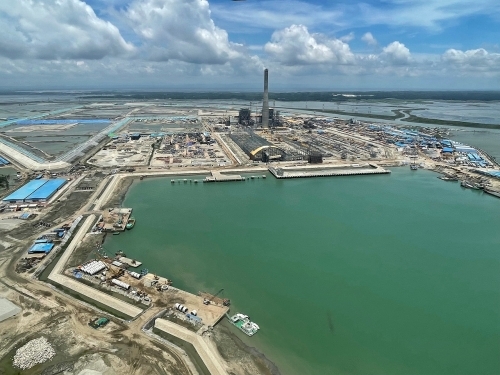 বড় জাহাজ মেরামতে মাতারবাড়ীতে ১ বিলিয়ন ডলারের প্রকল্প
 মাতারবাড়ীতে প্রায় ১ বিলিয়ন মার্কিন ডলার ব্যয়ে পরিবেশবান্ধব ডকইয়ার্ড ও জাহাজ নির্মাণ কেন্দ্র স্থাপনের উদ্যোগে নীতিগত অনুমোদন দিয়েছে নৌপরিবহন মন্ত্রণালয়। এখন প্রকল্পটির কারিগরি ও আর্থিক মূল্যায়নের জন্য প্রস্তাবটি সরকারি-বেসরকারি অংশীদারত্ব (পিপিপি) কর্তৃপক্ষের কাছে পাঠানো হয়েছে। সম্পূর্ণ বেসরকারি অর্থায়নে সরকারি জমির মালিকানা অক্ষুণ্ন রেখে প্রকল্পটি বাস্তবায়নের পরিকল্পনা রয়েছে। বন্দর কর্তৃপক্ষ জানায়, […]
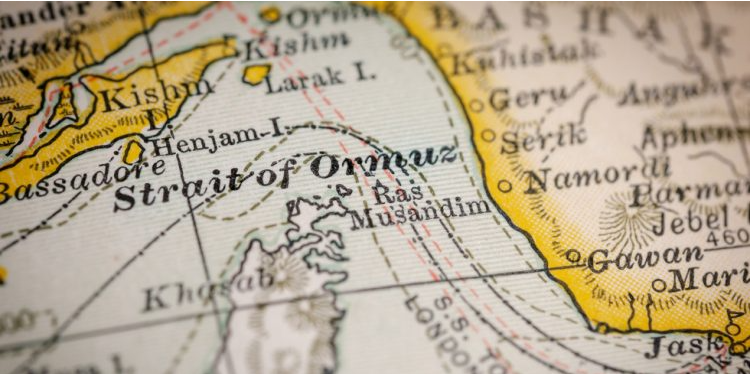 Industry on alert over scam messages offering ships “safe passage” on Hormuz
 Credit: Shutterstock Fraudulent messages offering safe passage through the Strait of Hormuz in exchange for cryptocurrency have been circulated to shipping companies with vessels stranded west of the waterway, according to MARISKS. In an alert issued on 20 April, MARISKS cautioned that unknown actors posing as Iranian authorities had contacted […]



JOB SITES
CONTENTS
LINKS
Happy New Year

Découvrez les avantages de MadCasino
Dans le monde des casinos en ligne, MadCasino se distingue par ses offres attrayantes et ses services de qualité. Que vous soyez un joueur débutant ou un parieur aguerri, vous trouverez ici une variété de jeux qui sauront satisfaire toutes vos envies. Les machines à sous, les jeux de table et les options de paris en direct sont tous disponibles pour vous offrir une expérience de jeu inégalée. De plus, le casino propose régulièrement des bonus qui permettent d'augmenter vos chances de gagner, vous offrant ainsi une excellente opportunité de maximiser vos gains.
En matière de sécurité, MadCasino est un nom de confiance. Il est entièrement licencié et régulé, ce qui garantit un environnement de jeu sûr et équitable. Les joueurs peuvent se concentrer sur leur expérience de jeu sans se soucier des problèmes de sécurité. Les transactions financières sont également sécurisées grâce à des technologies de pointe.
Les jeux proposés par MadCasino sont issus des développeurs les plus réputés de l'industrie, vous assurant des graphismes époustouflants et des mécaniques de jeu innovantes. Les joueurs peuvent également profiter d'une expérience de jeu en direct qui simule l'atmosphère d'un casino terrestre, tout en restant dans le confort de leur maison.
Enfin, la plateforme de MadCasino est optimisée pour les appareils mobiles, permettant aux joueurs de parier à tout moment et de n'importe où. Que vous soyez sur votre smartphone ou votre tablette, l'accès à vos jeux préférés n'a jamais été aussi simple. Ne manquez pas l'opportunité de découvrir ce casino exceptionnel.
Les offres de Cresus Casino
Cresus Casino est un autre acteur majeur dans le domaine des jeux en ligne, offrant des promotions généreuses et une vaste sélection de jeux. Les joueurs peuvent profiter d'une expérience de jeu enrichissante grâce aux nombreux bonus disponibles, qui sont conçus pour attirer tant les nouveaux utilisateurs que les joueurs réguliers. Ces avantages permettent non seulement de prolonger votre temps de jeu, mais aussi d'augmenter vos chances de gains conséquents.
Le casino se distingue également par sa ludothèque impressionnante, comprenant une sélection variée de machines à sous, de jeux de table et de jeux en direct. Les clients peuvent choisir parmi des titres populaires et appréciés, ainsi que des nouveautés qui enrichissent constamment l'offre. L'interface utilisateur est conviviale, rendant la navigation sur la plateforme fluide et agréable.
En termes de sécurité, Cresus Casino assure à ses joueurs un environnement de jeu fiable. La plateforme utilise des protocoles de sécurité avancés pour protéger les données personnelles et financières des utilisateurs. Cela permet aux joueurs de se sentir en sécurité tout en jouant à leurs jeux préférés.
Avec un service client réactif et professionnel, Cresus Casino s'assure que toutes vos questions et préoccupations sont traitées rapidement. Que ce soit pour des questions concernant les bonus, les retraits ou les jeux, vous bénéficierez d'une assistance rapide et efficace.
Explorez Nine Casino et ses avantages
Dans l'univers des casinos en ligne, Nine Casino a su se faire une place de choix grâce à son approche innovante et à ses nombreux avantages pour les joueurs. Les utilisateurs peuvent s'attendre à une expérience de jeu enrichissante, avec des bonus attractifs qui sont régulièrement mis à jour. Ces offres sont une excellente façon de découvrir de nouveaux jeux tout en maximisant votre potentiel de gain.
La plateforme de Nine Casino est riche en options de jeux, allant des machines à sous aux jeux de table, en passant par le live casino. Chaque jeu est conçu pour offrir une expérience immersive grâce à des graphismes de haute qualité et des fonctionnalités innovantes. Les parieurs peuvent profiter de sessions de jeu captivantes, comme s'ils étaient dans un véritable casino.
La sécurité est une priorité pour Nine Casino, qui utilise des technologies de cryptage avancées pour protéger les informations de ses joueurs. Cela garantit un environnement de jeu sûr et fiable, permettant aux utilisateurs de se concentrer sur ce qu'ils aiment le plus : jouer.
Enfin, le service clientèle fourni par Nine Casino est exceptionnel, avec des agents disponibles pour répondre à toutes vos questions et résoudre vos problèmes. Vous pourrez ainsi jouer en toute tranquillité, sachant que votre satisfaction est au cœur de leurs préoccupations.
Profitez de l'expérience Lucky31
Lucky31 est un casino en ligne qui se distingue par son approche orientée vers le joueur, offrant une multitude d'options de jeux et des bonus généreux. Que vous soyez amateur de machines à sous ou passionné de jeux de table, vous trouverez une large sélection pour satisfaire toutes vos envies de jeu. Les promotions fréquentes permettent aux joueurs de prolonger leur expérience tout en augmentant leurs chances de gains.
La convivialité de la plateforme de Lucky31 est l'un de ses plus grands atouts. Les joueurs peuvent naviguer facilement entre les différents jeux, et l'interface est conçue pour être intuitive, quel que soit le niveau d'expérience de l'utilisateur. De plus, le casino est entièrement optimisé pour les appareils mobiles, ce qui permet de parier où que vous soyez.
En matière de sécurité, Lucky31 prend les préoccupations des joueurs très au sérieux. Le casino est agréé et régulé, garantissant un environnement de jeu équitable et sécurisé. Les joueurs peuvent ainsi se concentrer sur leur expérience de jeu sans se soucier des risques liés à la sécurité.
Pour ceux qui recherchent un support client efficace, Lucky31 offre un service réactif et professionnel. Que ce soit pour des questions sur les bonus, les jeux ou les paiements, vous aurez accès à une assistance de qualité, vous garantissant une expérience de jeu fluide et agréable.