search the site


CURRENT NEWS
NEW MINISTER: the UK has a new shipping minister following last month’s government reshuffle. South Holland & the Deepings MP John Hayes has returned to the post, which he previously held between 2014 and 2015, after Robert Goodwill was moved to the Home Office. Nautilus has written to Mr Hayes seeking an urgent meeting to discuss issues including progress on the Maritime Growth Study and industry calls for improved support for maritime training.
HORROR FILM: Seafarers Rights International has released a hard-hitting fi lm to raise awareness of the continued problem of abandoned seafarers. The 11-minute video, which can be seen via the website www.seafarersrights.org, highlights a number of cases and offers advice to seafarers on how to avoid being abandoned and what to do if they are stranded in a foreign port.
LNG DRIVE: Shell, Carnival, Lloyd’s Register and the Port of Rotterdam are among the members of a new shipping industry initiative to promote the use of LNG as a marine fuel. The SEA\LNG campaign aims to address barriers such as the lack of LNG bunkering infrastructure in ports around the world, the price premium for LNG-fuelled vessels and the lack of globally consistent regulation.
CORSICAN VISIT: several members of the Corsican Assembly executive visited Scotland last month to see how the Scottish government administers its lifeline ferry operations. The trip was organised ahead of a forthcoming announcement about the future of services between the French mainland and Corsica following the collapse of the Marseilles-based operator SNCM.
KILLER INDUSTRY: shipping has been blamed for causing as many as 37,500 premature deaths a year in China and SE Asia, according to a new study. Scientists at Duke University in the US say ship traffic has doubled in the region since 2005, and sulphur dioxide and other pollutants are causing health problems such as lung disease, cancer and heart conditions.
PIRATES CONVICTED: the European Union Naval Force has welcomed the conviction by court in Mauritius of 12 men accused of a pirate attack on the Cyprus-flagged containership MSC Jasmine in the Indian Ocean in January 2014. The judgment followed a prosecution challenge to a court ruling in November 2014 which found the men not guilty.
FRIENDLY WARNING: the environmental group Friends of the Earth has accused the cruise shipping industry of dragging its heels on measures to cut the sector’s impact on air and water pollution. In a new report, the organisation is particularly critical of the ageing sewage treatment technology used by around 40% of the world fleet.
ENERGY DEFICIENT: a total of 24 ships have been detected with energy efficiency deficiencies during UK port state control inspections since 1 January 2013, the House of Commons heard last month. MPs were told that no additional penalties had been imposed on any of the ships.
STOLT BUY-OUT: Stolt-Nielsen has agreed a US$575m deal to buy out Jo Tankers’ chemical tanker operations. The purchase includes 13 tankers and a 50% stake in a joint venture with eight 33,000dwt newbuildings.
MASTER ARRESTED: the master of the Panama-flagged containership MSC Poh Lin was among 12 people arrested after authorities in the Italian port of Gioia Tauro discovered 83kg of cocaine onboard the vessel.
DAMAGES AWARD: a US court has awarded more than $1m in damages to a ship master who lost his job after reporting safety violations to the US Coast Guard and the American Bureau of Shipping.
INFLATION ALERT: latest UK inflation figures showing the CPI rate to be 0.5% show the need for the government to do more to boost growth, said TUC general secretary Frances O’Grady last month. She urged ministers to give the go-ahead for a third runway at Heathrow, bring forward major new infrastructure projects like high-speed rail and announce a big expansion in house building.
SCHEME SLAMMED: offshore unions have criticised UK government plans to encourage redundant workers into new roles in the energy and engineering sectors, including a new website highlighting jobs in projects such as nuclear newbuilds, renewable energy and oil platform decommissioning. Oil and Gas UK warns that the total number of job losses will rise to more than 120,000 by the end of this year. Unions say the government’s attempts to offer alternative employment are ‘woefully inadequate’.
DP INCIDENTS: thruster and propulsion issues are the main cause of DP incidents, according to a new report from the International Marine Contractors’ Association (IMCA). In an analysis of 71 station-keeping incidents, IMCA found that 36% had thruster and propulsion problems as the main cause, followed by 18% arising from computer issues, 13% from power and reference issues, and 10% from human error. IMCA said it was concerned that a significant number of incidents are still not being reported.
VROON VOTE: Nautilus International members serving with Vroon Offshore Services BV have been asked to vote on revised company proposals for flexible working schedules. The company had originally sought to move from four-on/four-off rotas to eight-on/eight-off, but after talks with the Union it is now proposing to shift to a schedule which allows the possibility of working one week more or one week less.
TECHNIP CALL: Nautilus is urging Technip (Singapore) to make a response on a range of issues affecting members following a meeting in May. ‘We remain frustrated at the delayed response from the company following the meeting and continue to press them in order that progress can be made on matters such as redundancy terms and liquidated leave arrangements,’ said national secretary Steve Doran.
MORE CLOSURES: the pace of North Sea oil field shutdowns is accelerating as the impact of the oil price slump is compounded by the uncertain investment environment created by Brexit, a new report has warned. Projected spending on decommissioning in the UK sector in the decade to 2024 has risen to £16.9bn, according to Oil & Gas UK, some 16% higher than forecast in 2014.
TANKER BLOW: French unions expressed concern last month after the 314,249dwt VLCC Samco Redwood was switched from the country’s RIF second register to the Hong Kong flag only days after a new law came in to require oil companies to carry more products on national-flagged tankers. Jean-Philippe Chateil, general secretary of the FOMM-CGT officers’ union, commented: ‘The new law was supposed to increase the number of ships carrying oil to France and we are concerned that this first de-flagging will lead to others, with a consequential loss of jobs for French officers.’
AUSTRALIAN TRAFFIC: two new traffic separation schemes are to come into effect off the SW coast of Western Australia on 1 December this year following approval by the International Maritime Organisation. The two schemes, off Cape Leeuwin and Chatham Island, aim to increase navigational safety by reducing the number of head-on situations and improve environmental protection by keeping ships away from the coastline.
GROUNDING ROW: an investigation has been launched after a 44,183dwt bulk carrier ran aground in Mauritius following reports that it had lost power as a result of a fight between crew members in the engine room. Eff orts to salvage the Liberian flagged Benita and to recover bunkers were said to be progressing well late last month.
TRAINING DEAL: the French ship operators’ association AdF and the country’s national maritime officers’ training academy have signed an ambitious strategic partnership which aims to extend and improve officer training and enhance employability through lifelong training, including onboard ship.
PORT PROTESTS: Greek dock workers’ unions are stepping up their protests over the privatisation of Piraeus and Thessaloniki (Salonica) ports. They accuse the government of failing to provide acceptable assurances over stable employment and future working conditions.
FLAG CHOICE: Marseilles-based containership operator CMA CGM has announced that four new 3,300TEU vessels ordered from Cosco’s Zhoushan yard will fly the French flag. The new vessels are earmarked for delivery between April and September 2018.
FERRY WORK: the Mediterranean ferry firm Corsica Linea has concluded a partnership agreement with the Corsica maritime high school to provide one week onboard training sessions for its students.
ITALIAN DECLINE: the Italian merchant fleet registered a 3% year-on-year fall to 16.5m gt during 2015, according to a report from the country’s owners’ association Confitarma.
BRAZILIAN CUT: the Brazilian tanker firm Transpetro has slashed its long-standing fleet renewal programme by cutting its orderbook from more than 40 new ships to just 27.
REGISTRY CALL: Monaco’s international shipping community has called for the creation of a Monaco shipping register and a tonnage tax regime. The principality’s Chamber of Shipping, representing 34 operators, shipbrokers, agents, maritime lawyers and ship managers, says Monaco’s shipping sector employs 1,000 people, reports €180m in turnover and accounts for 4% of Monaco’s GDP. The fleet managed by Monaco-based companies such as V.Ships and GasLog is in the world’s Top 20.
ITALIAN ALARM: Italy’s three main maritime unions are concerned about plans to introduce new working conditions for seafarers serving with the former Tirrenia ferry subsidiary Siremar. The fleet was recently taken over by the Sicilian company SNS, which is seeking to impose model contracts formulated by Confitarma, the Italian owners’ association, rather than those established by Fedarlinea, the ferry operators’ association.
RANDOM WARNING: the US Coast Guard (USCG) has reminded shipowners and operators that they must have a valid random drug testing programme in place for all ships calling at the country’s ports. The random tests were introduced in a bid to ‘prevent drug misuse as a causative factor in marine casualties’, the USCG pointed out, and failure to comply with the rules may result in civil penalties of up to $7,500 per day, per violation.
FIXING FINE: the Scandinavian shipping operation Wallenius Wilhelmsen Logistics (WWL) has agreed to pay a US$98.9m fine for its involvement in a conspiracy to fi x prices for ro-ro cargo shipments to and from various US ports between 2000 and 2012. WWL is the fourth company to agree to plead guilty in the Department of Justice investigation, which has now secured fines totalling $230m.
CONTAINER MERGER: the German container shipping company Hapag-Lloyd is set to merge with the United Arab Shipping Company (UASC) following an agreement on the terms and conditions to combine their operations. If the deal is given the go-ahead, it will create the world’s fifth-largest container line, with a fleet of 1.5m TEU.
CHERBOURG BOOST: the French port of Cherbourg recorded a 10.25% increase in passenger traffic and a 28.4% increase in freight last year. Passenger traffic with Ireland rose by 7.5% and freight volumes were up by 17.4%, and figures for the first half of 2016 show further growth.
CLEANING AID: the Finnish ferry operator Finnlines has secured a €50m loan from the European Investment Bank to help fund its €100m programme to retrofit its fleet with exhaust gas cleaning systems.
CYPRUS PLAN: a package of ‘favourable incentives’ to boost the shipping sector has been revealed by Cyprus in an eff ort to expand the national flag and the associated maritime cluster. Industry protest at jail sentence
International Day of the Seafarer
Representatives from European seafaring unions and shipping companies marked this year’s International Day of the Seafarer, on 24 June, with an event to highlight the criminalisation of the maritime profession.
Officials from the European Transport Workers’ Federation (ETF) and the European Community Shipowners’ Associations (ECSA) travelled to Greece to meet Captain Apostolos Mangouras, the master of the tanker Prestige, who was sentenced to two years in prison by the Spanish supreme court earlier this year.
The court ruled that Capt Mangouras was guilty of ‘recklessness resulting in catastrophic environmental damage’ when the tanker broke up and sank off the northern coast of Spain, leading to the spillage of some 63,000 tonnes of fuel oil.
The sentence, which came 14 years after the disaster, overturned a previous judgment by a provincial court which had cleared Capt Mangouras of blame for the accident, on the grounds that it was impossible to establish criminal responsibility, and that the disaster was partly due to the 26-year-old tanker’s poor condition.
The EU shipping industry social partners visited Capt Mangouras in Athens to express their support following his conviction and to demonstrate their firm stand against the trend of criminalising seafarers.
The joint delegation consisting offeCSA’s sectoral social dialogue spokesperson Tim Springett (UK Chamber of Shipping), Eirini Tsakona (ECSA secretariat), ETF political secretary Philippe Alfonso, and Cristian Castaño from the Spanish trade union Comisiones Obreras, said they condemned the Spanish court’s ruling in the strongest terms possible.
‘On the eve of this symbolic day, it is fundamental to pay tribute to people working in difficult conditions onboard ships, and to condemn the trend of seafarers being used too often as easy scapegoats upon whom to shift all responsibility for accidents at sea,’ said Mr Alfonso.
‘Captain Mangouras’s situation demonstrates that there is a strong case for the implementation and observance of the joint ILO/IMO guidelines on fair treatment of seafarers following a maritime accident, so we can finally remove what has become a significant obstacle to the recruitment of the future generations of seafarers on which an overwhelming proportion of trade depends,’ added Mr Springett.
The unions and the owners said they were concerned that such rulings will have a negative impact on the attractiveness of the seafaring profession and will damage the industry’s recruitment efforts.
ETF and ECSA said they hoped the ‘wholly unjustified sentence will not be served, as logic suggests a man who is past 80 and deeply marked by injustice cannot again be pointlessly sent to jail’.
Inspections reveal rise in MLC defects
Port state control inspections have revealed a marked increase in the number of ships with deficiencies related to Maritime Labour Convention (MLC) requirements. Problems related to seafarers’ working and living conditions accounted for almost 15% of all 41,436 deficiencies discovered during checks in the 27 Paris MOU member states last year.
2015 was the second full year in which the MLC has been in force, and the total number of deficiencies linked to the convention recorded during the year was 6,404, up from 5,502 in 2014. The number of detainable MLC deficiencies also rose sharply, from 259 to 362. Health and safety and accident prevention together accounted for 41% of all the MLC deficiencies, followed by food and catering (17%), hours of work and rest (12%), accommodation (9%) and seafarers’ employment agreements (6%).
The most common detainable MLC deficiencies were wages, seafarers’ employment agreements, dirty engine rooms, sanitary facilities, and minimum safe manning. Despite the increase in MLC deficiencies, the Paris MOU port state control authorities reported a significant decline in the total number of defects, almost 10%, and in the number of unseaworthy ships having to be detained last year.
The most common deficiencies were linked to ISM, fire doors, nautical publications, charts and oil record books. Inspectors said there had been particularly marked decreases in the number of defects related to certificates and documentation (down 19% from the previous year) and in safety of navigation (down 17%).
Reflecting the move towards a more targeted inspection regime, the number of checks carried out fell by just over 3% last year. The number of detentions declined from 612 to 595 and the number of ‘repeat offender’ ships being banned from Paris MOU waters fell from 20 to 11.
Paris MOU secretary-general Richard Schiferli said the decline in the number of banned ships over the past two years may indicate that such vessels may have moved to other parts of the world or have been scrapped. It is ‘imperative that other regions intensify their port state control activities’, he added.
‘Unfortunately sub-standard ships are still a reality of today’s world. Unscrupulous owners even use them to smuggle refugees and send ships on a course towards the European coastline,’ Mr Schiferli pointed out. ‘Equally concerning is that there are still a few flags and recognised organisations around that are willing to provide a “legal shelter” to these ships by providing them with a registry and certificates. This practice needs our attention and Paris and Tokyo MoU have submitted papers to the IMO to expose these poor performing flags and the ROs that serve them.’
The inspection-detention rate has fallen from more than 10% in 1996 to 3.32% last year, although the rate for ships under the 11 ‘black list’ flags was 11.24% and for those flying ‘grey’ flags, the detention rate was 8.58%, compared with 2.5% for ‘white list’ registers. Sweden was the flag with the best PSC record, with the UK rising to second place from sixth in 2014. The worst performing flags were Tanzania, Moldova, Togo, Comoros and the Cook Islands.
Alarm at MCA’s office closures
Concern has been voiced over the UK Maritime & Coastguard Agency’s plan to press ahead with an amended package of cuts to its marine offices.
Announcing the results of a consultation on the changes, the MCA said it had decided to keep open two of the offices that were originally earmarked for closure, but four offices will be shut to save around £300,000 a year.
The MCA will go ahead with the closure of the Tyne, Harwich, Norwich and Orpington marine offices, and three others, Dover, Falmouth and Milford Haven, will be downgraded and become satellite bases. Belfast, Liverpool, Cardiff, Aberdeen, Plymouth, Southampton, Beverley (Hull) and Glasgow marine offices will remain open and a new office will be opened in the Colchester/Ipswich area.
The marine office changes form part of a wider review of the MCA’s survey and inspection work, which aims to ‘improve customer service and efficiency’ by ensuring a full team is in place covering the whole UK, with more remote working.
MCA chieffexecutive Sir Alan Massey said the programme was vital to modernise the way the Agency works. ‘The maritime world is changing, and we have to move with the times,’ he added. ‘For example, we’ve had great difficulty in recruiting and retaining marine surveyors; and our customers are also, and rightly, demanding more responsive services that are fit for a competitive world market in the digital age. ‘Modernising our approach, in terms of both the geographical location of our offices and the way our surveyors work, offers us a positive, efficient way forward.
(With thanks to the Nautilus Telegraph: www.nautilusint.org)\\
New rules aim to slash enclosed space deaths
The industry has welcomed the introduction of a new international regulation which seeks to cut the number of seafarer accidents in enclosed spaces.
Agreed by the International Maritime Organisation as an amendment to the SOLAS Convention, the new regulation requires ships to carry portable atmosphere testing equipment onboard, with effect from 1 July 2016.
Associated guidelines on the selection of such equipment have also been published. The IMO says ‘appropriate’ atmosphere testing instruments should be capable, as a minimum, of measuring concentrations of oxygen, flammable gases or vapours, hydrogen sulphide and carbon monoxide, prior to entry into enclosed spaces.
The IMO notes that enclosed spaces covered by the regulation include, but are not limited to, cargo spaces, double bottoms, fuel tanks, ballast tanks, cargo pumprooms, coffferdams, chain lockers, void spaces, duct keels, inter-barrier spaces, boilers, engine crankcases, engine scavenge air receivers, sewage tanks, and adjacent connected spaces.
The list is not exhaustive and enclosed spaces should be identified and listed on a ship-by-ship basis, it stressed.
** Cargo **
DNV GL, the Classification Society, has just issued a report of fire incidents on RO-RO (Roll-On, Roll-Off) ships identifying 35 such events between 2005 and 2016. Of this number, 18 took place on Ro-Pax (Ro-On, Roll-Off, Passenger), 9 on Pure Car Carriers and 8 on Cargo/RO-RO vessels. According to the report, in all cases the fires were caused by the cargo (cars, and trucks) or the power connection between the ship and a refrigeration unit on a trailer/container. These are the main recommendations:
- Old and towed used vehicles should be carefully checked prior to loading to ensure their suitability.
- Reefer units should be placed in a dedicated area, such as on weather decks, and then monitored by surveillance cameras.
- Access to cargo spaces should be restricted during voyages.
- Crew training should include defined procedures for reacting to fires and the use of fixed fire-fighting equipment along with specific goals for release time of the extinguishing agent.
- Fire safety policies should include a plan on how to handle vehicles that use alternative fuels.
- Power circuits serving reefer units should be equipped with ground fault detection systems that will trigger alarms in a manned control station.
A previous DNV study covering the period 1990-2003 identified 25 fires in Ro-Ro spaces. We can also report that in our analysis of 2015 vessel casualties, all causes, 20 Ro-Ro ships and another 13 car carriers were involved in incidents. Here is the relevant excerpt from that document:
‘Fires erupted on five Ro-Ro ships; given the configuration of the cargo decks, this can wreak havoc on vehicles being transported along with being difficult to extinguish. Automobiles, trucks and construction equipment, staples for this trade, contain some level of fuel since they are driven on and off the vessel under their own power. Additionally, their interiors are typically fabricated from flammable materials. Also, of note was that most of the vessels were over 20 years of age which may have accounted, in part, to the fact that another 5 were disabled and adrift with the proximate cause engine failure.’
To see the report, go to: http://www.marinelog.com/images/PDF/DNV_GL_Paper_RoRo_fire_on_deck.pdf
** Legal **
ISM ‘being used to blame crews’
The International Safety Management (ISM) Code is too often used as a mechanism to blame seafarers for accidents, a new report has warned.
Published by the Danish Maritime Accident Investigation Board (DMAIB), the study argues that the Code creates ‘goal conflicts’ for seafarers by setting out static procedures to minimise risk in dynamic and uncertain work environments.
The report draws from accident investigations and case histories to highlight shortcomings with the Code and to challenge the ‘conventional thinking’ about procedures which underpins it.
The DMAIB says the ISM Code was created with good intentions following some major shipping accidents in the 1980s and 90s. Its use of procedures as safety barriers enables rapid implementation and provides a sense of security and signal improvement.
However, it warns, establishing procedures to be covered by the safety management system is a complex task and one that often creates conflicting messages — such as orders and guidance which are mutually exclusive.
Ambiguous procedures can reflect the complexity of the systems they seek to control, the report argues. ISM not only seeks to minimise accidents but also to limit business and liability concerns, it notes.
‘This means that safety and economic risks are being handled at the same time and often mixed up.’
Generalised and outcome-focussed procedures can leave seafarers exposed to blame following accidents in which they have been managing the conflicting goals of the safety management system, the report adds.
‘Although a key purpose of the ISM Code is to ensure the responsibility for safety management is evenly distributed between the ship and the company, undesirable outcomes are often projected as instances where procedures are not followed by the seafarer,’ it points out.
In many cases, such as breakdowns or failure of critical items of equipment, it may be safer for seafarers not to follow procedures, the report says. Deviation from procedures to adapt to operational situations is a normal part of daily work, but is often faulted following accidents.
Blaming accidents on the failure to follow procedure can mean that safety lessons are missed, the DMAIB warns, as ‘it is rarely questioned, investigated or understood why the procedures were not followed’.
The report concludes that while procedures may manage risk, they do not necessarily create safety. ‘In order for safety procedures to be effective, it is necessary to take a new and critical look at how they are created and for what purpose, and to be aware of the functional limits of procedures,’ it adds.
Credits: FLASHLIGHT – August 2016 Edition No 166
Featured Post
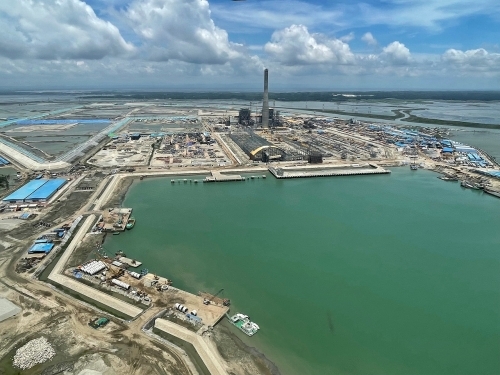 বড় জাহাজ মেরামতে মাতারবাড়ীতে ১ বিলিয়ন ডলারের প্রকল্প
 মাতারবাড়ীতে প্রায় ১ বিলিয়ন মার্কিন ডলার ব্যয়ে পরিবেশবান্ধব ডকইয়ার্ড ও জাহাজ নির্মাণ কেন্দ্র স্থাপনের উদ্যোগে নীতিগত অনুমোদন দিয়েছে নৌপরিবহন মন্ত্রণালয়। এখন প্রকল্পটির কারিগরি ও আর্থিক মূল্যায়নের জন্য প্রস্তাবটি সরকারি-বেসরকারি অংশীদারত্ব (পিপিপি) কর্তৃপক্ষের কাছে পাঠানো হয়েছে। সম্পূর্ণ বেসরকারি অর্থায়নে সরকারি জমির মালিকানা অক্ষুণ্ন রেখে প্রকল্পটি বাস্তবায়নের পরিকল্পনা রয়েছে। বন্দর কর্তৃপক্ষ জানায়, […]
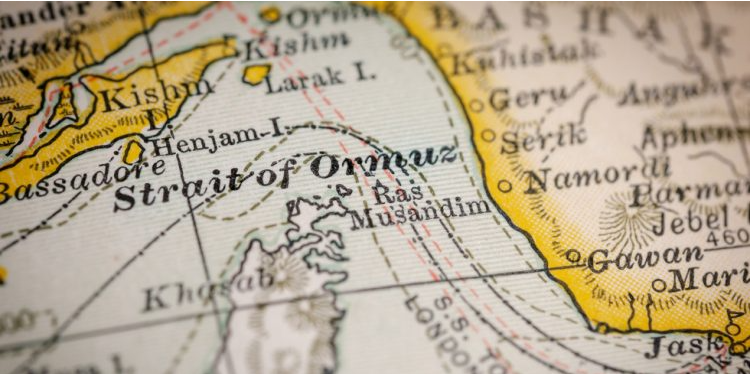 Industry on alert over scam messages offering ships “safe passage” on Hormuz
 Credit: Shutterstock Fraudulent messages offering safe passage through the Strait of Hormuz in exchange for cryptocurrency have been circulated to shipping companies with vessels stranded west of the waterway, according to MARISKS. In an alert issued on 20 April, MARISKS cautioned that unknown actors posing as Iranian authorities had contacted […]



JOB SITES
CONTENTS
LINKS
Happy New Year

Découvrez les avantages de MadCasino
Dans le monde des casinos en ligne, MadCasino se distingue par ses offres attrayantes et ses services de qualité. Que vous soyez un joueur débutant ou un parieur aguerri, vous trouverez ici une variété de jeux qui sauront satisfaire toutes vos envies. Les machines à sous, les jeux de table et les options de paris en direct sont tous disponibles pour vous offrir une expérience de jeu inégalée. De plus, le casino propose régulièrement des bonus qui permettent d'augmenter vos chances de gagner, vous offrant ainsi une excellente opportunité de maximiser vos gains.
En matière de sécurité, MadCasino est un nom de confiance. Il est entièrement licencié et régulé, ce qui garantit un environnement de jeu sûr et équitable. Les joueurs peuvent se concentrer sur leur expérience de jeu sans se soucier des problèmes de sécurité. Les transactions financières sont également sécurisées grâce à des technologies de pointe.
Les jeux proposés par MadCasino sont issus des développeurs les plus réputés de l'industrie, vous assurant des graphismes époustouflants et des mécaniques de jeu innovantes. Les joueurs peuvent également profiter d'une expérience de jeu en direct qui simule l'atmosphère d'un casino terrestre, tout en restant dans le confort de leur maison.
Enfin, la plateforme de MadCasino est optimisée pour les appareils mobiles, permettant aux joueurs de parier à tout moment et de n'importe où. Que vous soyez sur votre smartphone ou votre tablette, l'accès à vos jeux préférés n'a jamais été aussi simple. Ne manquez pas l'opportunité de découvrir ce casino exceptionnel.
Les offres de Cresus Casino
Cresus Casino est un autre acteur majeur dans le domaine des jeux en ligne, offrant des promotions généreuses et une vaste sélection de jeux. Les joueurs peuvent profiter d'une expérience de jeu enrichissante grâce aux nombreux bonus disponibles, qui sont conçus pour attirer tant les nouveaux utilisateurs que les joueurs réguliers. Ces avantages permettent non seulement de prolonger votre temps de jeu, mais aussi d'augmenter vos chances de gains conséquents.
Le casino se distingue également par sa ludothèque impressionnante, comprenant une sélection variée de machines à sous, de jeux de table et de jeux en direct. Les clients peuvent choisir parmi des titres populaires et appréciés, ainsi que des nouveautés qui enrichissent constamment l'offre. L'interface utilisateur est conviviale, rendant la navigation sur la plateforme fluide et agréable.
En termes de sécurité, Cresus Casino assure à ses joueurs un environnement de jeu fiable. La plateforme utilise des protocoles de sécurité avancés pour protéger les données personnelles et financières des utilisateurs. Cela permet aux joueurs de se sentir en sécurité tout en jouant à leurs jeux préférés.
Avec un service client réactif et professionnel, Cresus Casino s'assure que toutes vos questions et préoccupations sont traitées rapidement. Que ce soit pour des questions concernant les bonus, les retraits ou les jeux, vous bénéficierez d'une assistance rapide et efficace.
Explorez Nine Casino et ses avantages
Dans l'univers des casinos en ligne, Nine Casino a su se faire une place de choix grâce à son approche innovante et à ses nombreux avantages pour les joueurs. Les utilisateurs peuvent s'attendre à une expérience de jeu enrichissante, avec des bonus attractifs qui sont régulièrement mis à jour. Ces offres sont une excellente façon de découvrir de nouveaux jeux tout en maximisant votre potentiel de gain.
La plateforme de Nine Casino est riche en options de jeux, allant des machines à sous aux jeux de table, en passant par le live casino. Chaque jeu est conçu pour offrir une expérience immersive grâce à des graphismes de haute qualité et des fonctionnalités innovantes. Les parieurs peuvent profiter de sessions de jeu captivantes, comme s'ils étaient dans un véritable casino.
La sécurité est une priorité pour Nine Casino, qui utilise des technologies de cryptage avancées pour protéger les informations de ses joueurs. Cela garantit un environnement de jeu sûr et fiable, permettant aux utilisateurs de se concentrer sur ce qu'ils aiment le plus : jouer.
Enfin, le service clientèle fourni par Nine Casino est exceptionnel, avec des agents disponibles pour répondre à toutes vos questions et résoudre vos problèmes. Vous pourrez ainsi jouer en toute tranquillité, sachant que votre satisfaction est au cœur de leurs préoccupations.
Profitez de l'expérience Lucky31
Lucky31 est un casino en ligne qui se distingue par son approche orientée vers le joueur, offrant une multitude d'options de jeux et des bonus généreux. Que vous soyez amateur de machines à sous ou passionné de jeux de table, vous trouverez une large sélection pour satisfaire toutes vos envies de jeu. Les promotions fréquentes permettent aux joueurs de prolonger leur expérience tout en augmentant leurs chances de gains.
La convivialité de la plateforme de Lucky31 est l'un de ses plus grands atouts. Les joueurs peuvent naviguer facilement entre les différents jeux, et l'interface est conçue pour être intuitive, quel que soit le niveau d'expérience de l'utilisateur. De plus, le casino est entièrement optimisé pour les appareils mobiles, ce qui permet de parier où que vous soyez.
En matière de sécurité, Lucky31 prend les préoccupations des joueurs très au sérieux. Le casino est agréé et régulé, garantissant un environnement de jeu équitable et sécurisé. Les joueurs peuvent ainsi se concentrer sur leur expérience de jeu sans se soucier des risques liés à la sécurité.
Pour ceux qui recherchent un support client efficace, Lucky31 offre un service réactif et professionnel. Que ce soit pour des questions sur les bonus, les jeux ou les paiements, vous aurez accès à une assistance de qualité, vous garantissant une expérience de jeu fluide et agréable.