search the site


THE ROLE OF CLASSIFICATION SOCIETIES
by F.R. Chowdhury
Brief history:
An important group of organisations that exert considerable influence on the design, construction and safety of ships are the Classification Societies. Classification is defined as ‘a division by groups in order of merit’ – and this was precisely what was attempted in the early days of ship classification. It was done for the benefit of shipowners, cargo owners and underwriters in order to ascertain if a particular ship represented a reasonable risk. The origin of classification is associated with the name Lloyd’s Register of Shipping, which is the oldest society.
It was customary in the seventeenth and eighteenth centuries for merchants, shippers and underwriters to meet in coffee houses in London to discuss business. Ship lists were circulated in these establishments, which contained information concerning ships and these lists in particular were useful in providing underwriters with information concerning the degree of risk involved in insuring the ships and their cargoes. Amongst these coffee houses was one owned by an enterprising man called Edward Lloyd. His coffee house was originally in Tower Street but he later moved to Lombard Street. Lloyd provided a list or bulletin about ships as far back as 1702 and after being withdrawn for a time it was issued again in 1734 and that continued to be published until December, 2013 as Lloyd’s List. It was a glorious history of non-stop publication for 279 years. As time went on, the provisions relating to information about ships got more formalized and eventually a Register was published. Originally a business of classifying ships and insuring them went on under the same roof but eventually the two activities became entirely separate. Both activities took the name of the coffee house proprietor, the Classification side taking the name Lloyd’s Register of Shipping. Founded in 1760 to examine merchant ships and classify them according to their condition, today the organization’s expertise and activities extend far wider than the shipping field – shore based industries, offshore exploration and installations.
Today, Lloyd’s Register of Shipping is an independent authority, non-profit making, and relying entirely for its income on the fees charged for surveys and other services rendered. It is controlled by a committee representing shipowners, ship and engine builders, the Institute of London Underwriters, the Royal Institute of Naval Architects and Shipbuilders. Most other international classification societies follow the same pattern and try to maintain their independent entity and global network of service.
A Classification Society is now very much like a standard institute. It has its own rules and regulations for construction and classification of different kinds of ships. It acts without any prejudice to anyone’s interest. If the ship concerned meets the standards laid down in the Rules, then she is classed and she remains classed as long as she maintains the standards. This has earned a high degree of reliability, trust and fame for the classification society and has made it equally acceptable by almost all concerned in shipping. The role and function of the Classification Society will be better understood by analysing its relationship with other organisations and agencies involved in shipping.
Ship-owners:
For the shipowner, it is possibly one of the best technical consultancy services available. A good shipowner will always like to have an efficient ship and by having the vessel classed, he will have the services of the Society Surveyor available whenever there is a deficiency or breakdown and would get the best advice as to how the ship can be put back into same efficient good order as it were before. The modern classification rules involve mandatory inspection of each and every part and component of the ship, her machinery and equipment, once every four years, which
automatically ensures good upkeep and maintenance. Besides the shipowner enjoys the trust and confidence of the market as long as the ship is classed.
Underwriters:
It was for the underwriters that the Classification Society was first created. The underwriters required guidance on assessment of maritime risks. In the early days, the assessment was based on the capability of the Master and later it became the capability of the ship. Insurers would only cover a ship providing it had been built and maintained to Class requirements and standards. To demonstrate that a ship was classed with a Society, their mark was put on the side of the ship which was eventually combined with load line requirements for freeboard. The insurance policy in most cases will stand void if the vessel goes out of Class.
Administration:
The Classification Society is a big helping hand for the Administration. Because of its impartial role and total dedication to standardisation, the Administration finds it convenient to entrust certain statutory functions to the Society. It is to be borne in mind that the Administration remains legally and morally responsible for its obligations in respect of survey and certification under various international conventions. It is because of this reason that most of the established maritime nations continue to deal with Passenger Ship Safety Certificate, Cargo Ship Safety Equipment and Safety Radio Certificates directly, whereas the other ones such as Safety Construction, Load Line, IOPP, etc. are dealt with by the Societies with the Administration having a supervisory role. The authorization or delegation by the Administration will evidently refer to the condition that the subject vessel must be classed with the concerned Society so that the Society is in the full picture of the ship. The biggest advantage the Administration (and also the shipowner) derives is that the vessel can be inspected and surveyed almost anywhere through the global network of the Society. In certain cases, when the Safety Certificate (which the Administration may be dealing with directly) expires with the vessel in a foreign port, the Administration may authorise “case to case” basis for the Society to deal with the same on behalf of the Administration. The Rules and Regulations developed by the Society on a global basis are sometimes regarded as an asset to some of the developing countries who may not have the resources and the expertise to develop such elaborate Rules and Regulations on their own.
As explained earlier the Administration can only delegate functions and not responsibilities. It is for this reason that the Administration has to find some suitable way to monitor the work of the classification societies. Most agreements are based on IMO Resolutions 739 and 789. The societies remain obliged to make available survey status and other information to the Administration. In some cases the Administration can directly access through internet necessary ships’ files with the classification societies. Some of the reputable Administrations also conduct formal audit of the classification societies. However, to get the best out of Classification Societies the national administration has to be competent and efficient.
With ships being subjected to more survey, audit, inspection and certification, it has now become almost customary to delegate most of the functions to classification societies. The Administrations retain control over them by two distinct means. Some of them keep ISM audit and certification to their own control and, by audit and inspection of all cargo ships once every 30 months they can monitor the performance of the ship, company and the relevant classification society. The UK Administration (UK-MCA) also deals directly with passenger ship certification. Administration like that of the Bahamas appoint a number of (non-exclusive) inspectors/ surveyors around the world for
conduct of mandatory requirement of annual inspection to check and monitor performance of all concerned. This sort of annual inspection is essentially a national requirement.
International Organisations:
In the international sphere, IMO is the organisation dealing with technical aspects of maritime matters such as safety at sea and the protection of the maritime environment. The major classification societies formed an association of their own known as IACS, which is an associate member of IMO as an observer with consultative status. Perhaps it is the most active member amongst all the private international organisations providing IMO with data, information and advice so vital for adoption of various safety conventions (IACS has no voting right; only member states take decisions). In the field of safety construction IMO has the SOLAS Convention which gives guidelines on requirements relating to Sub-division and fire protection; Load-Line Convention dealing with stability requirements and closing devices and yet the Tonnage Convention indirectly encourages construction of stronger and safer ships with sufficiently spacious machinery space. It is the Classification Society which has made complete Rules and Regulations for construction of steel ships by incorporating the essential ingredients of various conventions, protocols, codes and resolutions of IMO and so far it has worked so well that there has been no need for a separate Convention on ship Construction. Many countries have Safety Construction rules, which are quite identical to Society Rules because of having the common safety provisions from international instruments but none possibly as elaborate as the Classification Rules.
Traders, Charterers, Brokers, etc.:
The shipping world today deals exclusively with classed vessels. It is so easy to find all the particulars from the Classification Register. A class record even shows major accident or damage including any outstanding condition of class. The owner is more readily accessible to the market; and the buyer, charterers, shipper, or even broker acts with confidence and knowledge. Classification is a central point of convenience for all parties dealing with shipping.
A ship without Class:
Classification in most countries is still not a legal requirement, but one can hardly think of a ship without being classed. In fact, most ships would be built under class. SOLAS74 (as amended) Part A-1 Regulation 3-1 now requires ships to be designed, constructed and maintained in compliance with structural, mechanical and electrical requirements of a recognized classification society. No financial institution will ever finance purchase of a ship that is not classed with one of the societies. A ship without ‘class’ can neither be insured nor mortgaged. It will be even more difficult to find crew willing to sail on a ship which is not classed. Nobody will risk giving cargo on such a ship and the ship will hardly have any value in charter or sale market. Yes, classification is virtually a must.
Certain Limitations:
A classification society is an almost non-profit making organization. Yet, it has to sell its services to the extent that it can earn enough to support its existence and carry on with at least some research and development work. The shipowner calls for the surveyor and pays for his services. There is no scope for voluntary services without payment. In the interest of its own business, the classification society would not like to take up the role of a policeman. These are some of the reasons why a
Classification Society can neither do the unscheduled inspection (the role of Flag State Administration) nor the Port State Control (checking safety standard of the visiting foreign ships by
the Port State Administration). However, once the Society is informed of deficiency of one of its classed vessels, it will probably put the vessel ‘off class’ if such deficiency affects the safety and the sea-worthiness. For obvious reasons a Classification Society would not get into inquiry/ investigation that would involve the conduct of the owners/ managers/ master and crew. Classification Societies would not normally like to displease its clients. The Classification Society cannot play any role in respect of STCW Convention except issue of ISO certificate to training institute. Training and certification of seafarers, issue of SMD and Flag State Endorsement are for the Administration to do.
IACS:
The major classification societies have formed an organisation of their own known as the International Association of Classification Societies. The purpose is to maintain a common approach towards safety standards. The Association attends the IMO meetings as ‘observer’ and makes valuable contributions with its research and findings. The IACS members are:
- LR Lloyd’s Register (UK) www.lr.org
- BV Bureau Veritas (France) www.veristar.com
- DNV-GL German-Norwegian merged www.dnvgl.com
- ABS American Bureau of Shipping (USA) www.eagle.org
- RINA Registro Italiano Navalo (Italy) www.rina.org
- NK Nippon Kaiji Kyokai (Japan) www.classnk.org.jp
- CCS China Classification Society (China) www.ccs.org.cn
- KR Korean Register (Korea) www.krs.co.kr
- RS Register of Shipping (Russia) www.rs-class.org
- IRS Indian Register of Shipping www.irclass.org
- PRS Polish Registry of Shipping www.prs.pl
There is one associate member – CRS Croatian Register of Shipping
<fazlu.chowdhury@btinternet.com>
Featured Post
 বড় জাহাজ মেরামতে মাতারবাড়ীতে ১ বিলিয়ন ডলারের প্রকল্প
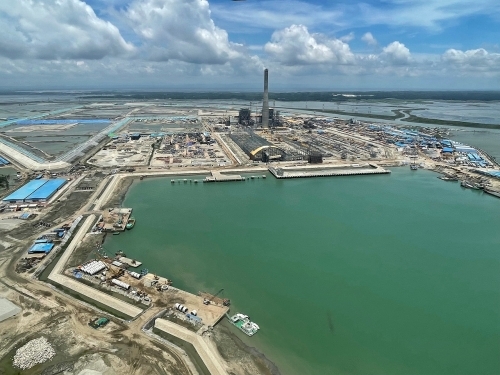
 মাতারবাড়ীতে প্রায় ১ বিলিয়ন মার্কিন ডলার ব্যয়ে পরিবেশবান্ধব ডকইয়ার্ড ও জাহাজ নির্মাণ কেন্দ্র স্থাপনের উদ্যোগে নীতিগত অনুমোদন দিয়েছে নৌপরিবহন মন্ত্রণালয়। এখন প্রকল্পটির কারিগরি ও আর্থিক মূল্যায়নের জন্য প্রস্তাবটি সরকারি-বেসরকারি অংশীদারত্ব (পিপিপি) কর্তৃপক্ষের কাছে পাঠানো হয়েছে। সম্পূর্ণ বেসরকারি অর্থায়নে সরকারি জমির মালিকানা অক্ষুণ্ন রেখে প্রকল্পটি বাস্তবায়নের পরিকল্পনা রয়েছে। বন্দর কর্তৃপক্ষ জানায়, […]
 Industry on alert over scam messages offering ships “safe passage” on Hormuz
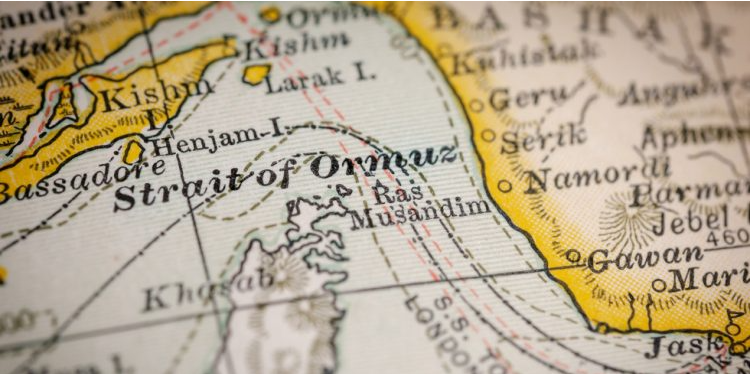
 Credit: Shutterstock Fraudulent messages offering safe passage through the Strait of Hormuz in exchange for cryptocurrency have been circulated to shipping companies with vessels stranded west of the waterway, according to MARISKS. In an alert issued on 20 April, MARISKS cautioned that unknown actors posing as Iranian authorities had contacted […]



JOB SITES
CONTENTS
LINKS
Happy New Year

Découvrez les avantages de MadCasino
Dans le monde des casinos en ligne, MadCasino se distingue par ses offres attrayantes et ses services de qualité. Que vous soyez un joueur débutant ou un parieur aguerri, vous trouverez ici une variété de jeux qui sauront satisfaire toutes vos envies. Les machines à sous, les jeux de table et les options de paris en direct sont tous disponibles pour vous offrir une expérience de jeu inégalée. De plus, le casino propose régulièrement des bonus qui permettent d'augmenter vos chances de gagner, vous offrant ainsi une excellente opportunité de maximiser vos gains.
En matière de sécurité, MadCasino est un nom de confiance. Il est entièrement licencié et régulé, ce qui garantit un environnement de jeu sûr et équitable. Les joueurs peuvent se concentrer sur leur expérience de jeu sans se soucier des problèmes de sécurité. Les transactions financières sont également sécurisées grâce à des technologies de pointe.
Les jeux proposés par MadCasino sont issus des développeurs les plus réputés de l'industrie, vous assurant des graphismes époustouflants et des mécaniques de jeu innovantes. Les joueurs peuvent également profiter d'une expérience de jeu en direct qui simule l'atmosphère d'un casino terrestre, tout en restant dans le confort de leur maison.
Enfin, la plateforme de MadCasino est optimisée pour les appareils mobiles, permettant aux joueurs de parier à tout moment et de n'importe où. Que vous soyez sur votre smartphone ou votre tablette, l'accès à vos jeux préférés n'a jamais été aussi simple. Ne manquez pas l'opportunité de découvrir ce casino exceptionnel.
Les offres de Cresus Casino
Cresus Casino est un autre acteur majeur dans le domaine des jeux en ligne, offrant des promotions généreuses et une vaste sélection de jeux. Les joueurs peuvent profiter d'une expérience de jeu enrichissante grâce aux nombreux bonus disponibles, qui sont conçus pour attirer tant les nouveaux utilisateurs que les joueurs réguliers. Ces avantages permettent non seulement de prolonger votre temps de jeu, mais aussi d'augmenter vos chances de gains conséquents.
Le casino se distingue également par sa ludothèque impressionnante, comprenant une sélection variée de machines à sous, de jeux de table et de jeux en direct. Les clients peuvent choisir parmi des titres populaires et appréciés, ainsi que des nouveautés qui enrichissent constamment l'offre. L'interface utilisateur est conviviale, rendant la navigation sur la plateforme fluide et agréable.
En termes de sécurité, Cresus Casino assure à ses joueurs un environnement de jeu fiable. La plateforme utilise des protocoles de sécurité avancés pour protéger les données personnelles et financières des utilisateurs. Cela permet aux joueurs de se sentir en sécurité tout en jouant à leurs jeux préférés.
Avec un service client réactif et professionnel, Cresus Casino s'assure que toutes vos questions et préoccupations sont traitées rapidement. Que ce soit pour des questions concernant les bonus, les retraits ou les jeux, vous bénéficierez d'une assistance rapide et efficace.
Explorez Nine Casino et ses avantages
Dans l'univers des casinos en ligne, Nine Casino a su se faire une place de choix grâce à son approche innovante et à ses nombreux avantages pour les joueurs. Les utilisateurs peuvent s'attendre à une expérience de jeu enrichissante, avec des bonus attractifs qui sont régulièrement mis à jour. Ces offres sont une excellente façon de découvrir de nouveaux jeux tout en maximisant votre potentiel de gain.
La plateforme de Nine Casino est riche en options de jeux, allant des machines à sous aux jeux de table, en passant par le live casino. Chaque jeu est conçu pour offrir une expérience immersive grâce à des graphismes de haute qualité et des fonctionnalités innovantes. Les parieurs peuvent profiter de sessions de jeu captivantes, comme s'ils étaient dans un véritable casino.
La sécurité est une priorité pour Nine Casino, qui utilise des technologies de cryptage avancées pour protéger les informations de ses joueurs. Cela garantit un environnement de jeu sûr et fiable, permettant aux utilisateurs de se concentrer sur ce qu'ils aiment le plus : jouer.
Enfin, le service clientèle fourni par Nine Casino est exceptionnel, avec des agents disponibles pour répondre à toutes vos questions et résoudre vos problèmes. Vous pourrez ainsi jouer en toute tranquillité, sachant que votre satisfaction est au cœur de leurs préoccupations.
Profitez de l'expérience Lucky31
Lucky31 est un casino en ligne qui se distingue par son approche orientée vers le joueur, offrant une multitude d'options de jeux et des bonus généreux. Que vous soyez amateur de machines à sous ou passionné de jeux de table, vous trouverez une large sélection pour satisfaire toutes vos envies de jeu. Les promotions fréquentes permettent aux joueurs de prolonger leur expérience tout en augmentant leurs chances de gains.
La convivialité de la plateforme de Lucky31 est l'un de ses plus grands atouts. Les joueurs peuvent naviguer facilement entre les différents jeux, et l'interface est conçue pour être intuitive, quel que soit le niveau d'expérience de l'utilisateur. De plus, le casino est entièrement optimisé pour les appareils mobiles, ce qui permet de parier où que vous soyez.
En matière de sécurité, Lucky31 prend les préoccupations des joueurs très au sérieux. Le casino est agréé et régulé, garantissant un environnement de jeu équitable et sécurisé. Les joueurs peuvent ainsi se concentrer sur leur expérience de jeu sans se soucier des risques liés à la sécurité.
Pour ceux qui recherchent un support client efficace, Lucky31 offre un service réactif et professionnel. Que ce soit pour des questions sur les bonus, les jeux ou les paiements, vous aurez accès à une assistance de qualité, vous garantissant une expérience de jeu fluide et agréable.