search the site


International Maritime Organization: Guardian of the Seas
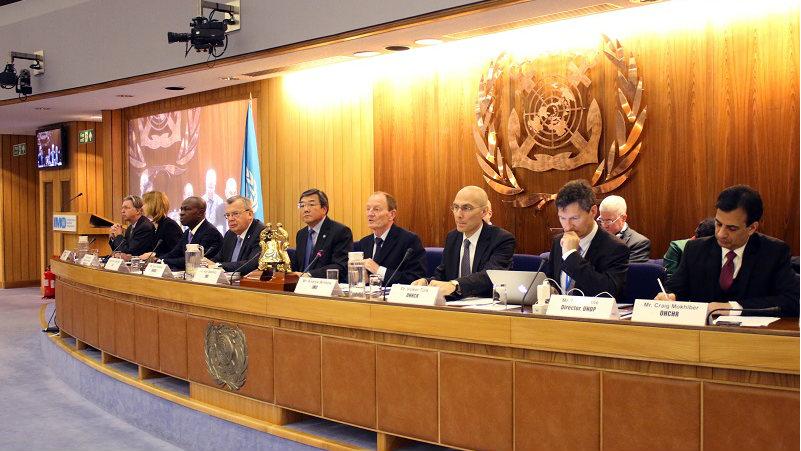
Its origin dates back to 1948, when the U.N. created the Inter-Governmental Maritime Consultative Organization (IMCO) to regulate the growing numbers of ships and seafarers engaged in global trade in the aftermath of World War II. But it was not until ten years later that the IMCO convention came into force, and not until 1959 that it formally convened.
IMCO’s first task was to update the International Convention for the Safety of Life at Sea (SOLAS), established in 1914 in the aftermath of the Titanic disaster. From there its role gradually expanded to include the entire spectrum of safety-at-sea issues, resulting in an all-encompassing series of conventions and treaties that established “rules of the road” for commerce at sea and ensured that the rights of seafarers and the environment were protected.
In 1982 IMCO shortened its name to IMO, the International Maritime Organization.
“What IMO has done over the last five and a half decades of activity,” states current IMO Secretary-General Koji Sekimizu, “is a continual process of establishing an international order for shipping and maritime activities on the oceans. It has done this as the competent international organization under the provisions of UNCLOS [United Nations Convention on the Law of the Sea] and has even worked beyond the scope of UNCLOS to develop a global system of shared responsibilities for maritime and ocean governance under the IMO conventions.”
Sekimizu is the first Secretary-General from Japan and the seventh in a line that began with Ove Nielsen of Denmark. He has stated his intention not to stand for reelection when his four-year term ends on December 1 for personal reasons.
Organization & Structure
There are currently 170 Member States of the IMO and three Associate Members. The first country to join was the UK, and perhaps that is why the organization is headquartered in London, where most of its nearly 300 employees – representing 50 different nationalities – are located.
The IMO is structured around (1) the Assembly, the governing body of all 170 Member States that meets once every two years; (2) the Council, consisting of 40 Member States elected by the Assembly for two-year terms to function as the ad hoc governing body, and (3) five main Committees: Maritime Safety, Marine Environment Protection, Legal, Technical Cooperation, and Facilitation.
Reflecting their importance, the work of the Maritime Safety and Marine Environment Protection Committees is supported by seven Subcommittees: Human Element, Training and Watchkeeping; Implementation of IMO Instruments; Navigation, Communications and Search and Rescue; Pollution Prevention and Response; Ship Design and Construction; Ship Systems and Equipment, and Carriage of Cargoes and Containers.
When Sekimizu took office there were nine Subcommittees. Reducing their number to seven was part of his ongoing effort to make the operations of the Secretariat more efficient and transparent and to encourage its staff and the Member States to become “paper-smart.”
Changing Times, Changing Conventions
One of the most important early issues was marine pollution. The 1967 Torrey Canyon spill contaminated the coastlines of the UK, France and Spain with more than 120,000 tons (nearly a million barrels) of crude oil. To help prevent future incidents, the IMO introduced a series of measures including the International Convention for the Prevention of Pollution from Ships (1973), later modified by the MARPOL Protocol of 1978 and the Protocol of 1997, which introduced a new annex covering air pollution from ships. Today, the MARPOL treaty deals not only with oil spills but pollution from chemicals, sewage, garbage and emissions.
The International Convention on Standards of Training, Certification and Watchkeeping for Seafarers (STCW) was another seminal piece of regulation. For the first time, Member States were required to maintain certain minimal requirements for masters, officers and watch personnel on merchant vessels. First adopted in 1978, it was significantly amended in 1995 (STCW-95).
STCW-95 gave the IMO, also for the first time, the power to check that Member States were in compliance with the convention. A further revision to the STCW Convention was completed in 2010. These are the so-called Manila Amendments and deal with new technology and operational competencies. Other treaties cover search-and-rescue coordination and cooperation as well as preparedness and response to incidents involving oil pollution or hazardous and noxious substances.
In 1993 IMO adopted the International Safety Management Code (ISM) to ensure safety at sea, prevent injury or loss of life and protect the environment. The ISM code was made mandatory by amendments to SOLAS adopted in 1994. Each ISM-compliant ship is audited annually by its company and every two to three years by the flag state. The vessel is then issued an ISM Certificate of Compliance.
As the twin specters of terrorism and piracy reared their ugly heads in the first years of the new century, a renewed focus on maritime security took place, and the IMO put into force the International Ship and Port Security Code (ISPS) in 2002 under amendments to SOLAS. In 2009 it adopted the Djibouti Code of Conduct regarding the repression of piracy and armed robbery in the western Indian Ocean and Gulf of Aden. A trust fund under the Code was established to improve the regional ability to counter piracy through cooperation and coordination.
SOLAS remains the principal IMO treaty for the safety of life at sea, and it is continually under review and updated to take into account new technologies such as electronic charts and to introduce new approaches such as goal-based standards of construction for oil tankers and bulk carriers and provisions aimed at large newbuild passenger ships. The treaty has also been updated over the years in response to recommendations arising from investigations into major casualties, the Costa Concordia being a case in point.
The most recent amendments have included new SOLAS chapters on the verification of compliance via the mandatory Audit Scheme and on safety measures for ships operating in polar waters under the International Code for Ships Operating in Polar Waters (Polar Code).
Today, the SOLAS treaty covers the whole range of safety-related issues for ships: structure and fire protection; life-saving and maritime security; the carriage of cargoes, including dangerous cargoes; and obligations relating to casualty investigation, survey and certification, and Port State control.
IMO has, in fact, adopted 53 conventions or “treaties” over the years supported by literally hundreds of codes and guidelines and recommendations. All have the same purpose: The establishment of a regulatory framework that governs just about every aspect of the industry in order to help prevent accidents, casualties and environmental damage from ships and to mitigate their negative effects when such incidents do occur.
Current Issues
Under Sekimizu’s leadership the IMO has shifted from primarily a rule-making organization to one more focused on implementation and education and inter-agency cooperation on the great issues of the day, such as piracy and ferry disasters and the flood of migrants across the Mediterranean from North Africa.
One of his major concerns is that, while conventions set standards and impose obligations, it is the Member States who must ensure compliance. In theory, when a ship that does not meet IMO standards enters a Member State’s territorial waters, it can be detained until the deficiencies are corrected, no matter how expensive. But enforcement varies from country to country, and what should happen in theory does not always happen in practice.
That is why Sekimizu is so excited about the mandatory Member State Audit Scheme that will take effect next January and which he regards as a major milestone in the IMO’s history. Under the new scheme, Member States will submit to periodic audits by the IMO to measure their performance in a number of areas – standards of training and safety, seafarer training, implementation and enforcement of IMO conventions, and ratification of pending conventions.
Areas of weakness will be identified and corrected. Member States will be graded and receive valuable feedback, and generic lessons learned can be provided to all Member States to encourage the adoption of “best practices.”
The recent flood of migrants from North Africa has created an extreme problem for the industry. “The phenomenon is not a random occurrence,” says Sekimizu. “It is being organized by people who trade and traffic in the lives of others and is placing a huge strain on rescue services and merchant vessels. The age-old principle of rescue on the high seas is being stretched to the breaking point.”
Sekimizu has been outspoken in his call for concerted action to address people smugglers and find alternative safe means of passage for migrants: “The IMO will play its part, but the ultimate solution lies in collaboration among several bodies and UN agencies including the UN Office on Drugs and Crime, the UN Refugee Agency, INTERPOL, the European Union and the African Union.”
In the wake of the 2014 Sewol ferry disaster in South Korea, which killed an estimated 340 passengers, mostly students, the IMO has taken immediate action to improve the safety of passenger vessels. “No matter whether a ferry travels in domestic or international waters,” Sekimizu vows, “it must meet minimal standards of safety, and I have taken action under our Integrated Technical Cooperation Program to revitalize our existing project on this topic, which we will address at a major conference in Manila in April.”
As for the future, Sekimizu sees the IMO continuing its all-important role in ensuring that shipping becomes cleaner, greener and ever more efficient as it assumes even greater importance in an interconnected world. He also sees the IMO enhancing its collaborative and leadership role among the many different organizations involved in matters of ocean governance.
World Maritime Day
On September 24 the IMO will celebrate World Maritime Day with the theme of Maritime Education and Training, a subject near and dear to Sekimizu’s heart. “Without a quality labor force, the maritime industry cannot thrive,” he says. “At IMO, we are unique among UN agencies because of two affiliated educational institutions, the World Maritime University and the International Maritime Law Institute, whose graduates now hold important roles in the maritime community.”
As he takes his leave in December, Sekimizu can rest comfortably in the knowledge that, thanks in large part to his efforts, the outlook for shipping is bright and there will be a sufficient quantity of qualified seafarers available now and into the foreseeable future. – MarEx
Tony Munoz is Publisher and Editor-in-Chief of The Maritime Executive.
Source: Maritime Executive
Featured Post
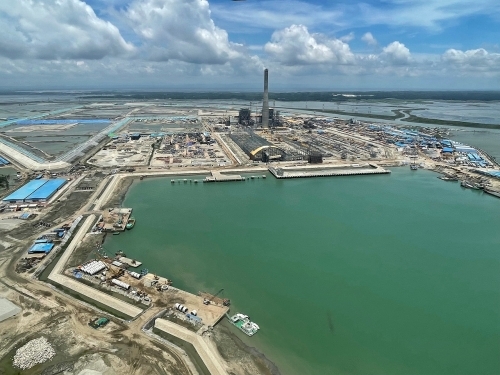 বড় জাহাজ মেরামতে মাতারবাড়ীতে ১ বিলিয়ন ডলারের প্রকল্প
 মাতারবাড়ীতে প্রায় ১ বিলিয়ন মার্কিন ডলার ব্যয়ে পরিবেশবান্ধব ডকইয়ার্ড ও জাহাজ নির্মাণ কেন্দ্র স্থাপনের উদ্যোগে নীতিগত অনুমোদন দিয়েছে নৌপরিবহন মন্ত্রণালয়। এখন প্রকল্পটির কারিগরি ও আর্থিক মূল্যায়নের জন্য প্রস্তাবটি সরকারি-বেসরকারি অংশীদারত্ব (পিপিপি) কর্তৃপক্ষের কাছে পাঠানো হয়েছে। সম্পূর্ণ বেসরকারি অর্থায়নে সরকারি জমির মালিকানা অক্ষুণ্ন রেখে প্রকল্পটি বাস্তবায়নের পরিকল্পনা রয়েছে। বন্দর কর্তৃপক্ষ জানায়, […]
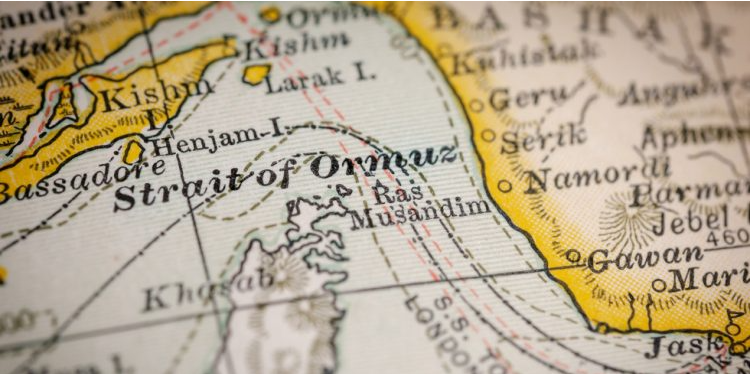 Industry on alert over scam messages offering ships “safe passage” on Hormuz
 Credit: Shutterstock Fraudulent messages offering safe passage through the Strait of Hormuz in exchange for cryptocurrency have been circulated to shipping companies with vessels stranded west of the waterway, according to MARISKS. In an alert issued on 20 April, MARISKS cautioned that unknown actors posing as Iranian authorities had contacted […]


JOB SITES
CONTENTS
LINKS
Happy New Year

Découvrez les avantages de MadCasino
Dans le monde des casinos en ligne, MadCasino se distingue par ses offres attrayantes et ses services de qualité. Que vous soyez un joueur débutant ou un parieur aguerri, vous trouverez ici une variété de jeux qui sauront satisfaire toutes vos envies. Les machines à sous, les jeux de table et les options de paris en direct sont tous disponibles pour vous offrir une expérience de jeu inégalée. De plus, le casino propose régulièrement des bonus qui permettent d'augmenter vos chances de gagner, vous offrant ainsi une excellente opportunité de maximiser vos gains.
En matière de sécurité, MadCasino est un nom de confiance. Il est entièrement licencié et régulé, ce qui garantit un environnement de jeu sûr et équitable. Les joueurs peuvent se concentrer sur leur expérience de jeu sans se soucier des problèmes de sécurité. Les transactions financières sont également sécurisées grâce à des technologies de pointe.
Les jeux proposés par MadCasino sont issus des développeurs les plus réputés de l'industrie, vous assurant des graphismes époustouflants et des mécaniques de jeu innovantes. Les joueurs peuvent également profiter d'une expérience de jeu en direct qui simule l'atmosphère d'un casino terrestre, tout en restant dans le confort de leur maison.
Enfin, la plateforme de MadCasino est optimisée pour les appareils mobiles, permettant aux joueurs de parier à tout moment et de n'importe où. Que vous soyez sur votre smartphone ou votre tablette, l'accès à vos jeux préférés n'a jamais été aussi simple. Ne manquez pas l'opportunité de découvrir ce casino exceptionnel.
Les offres de Cresus Casino
Cresus Casino est un autre acteur majeur dans le domaine des jeux en ligne, offrant des promotions généreuses et une vaste sélection de jeux. Les joueurs peuvent profiter d'une expérience de jeu enrichissante grâce aux nombreux bonus disponibles, qui sont conçus pour attirer tant les nouveaux utilisateurs que les joueurs réguliers. Ces avantages permettent non seulement de prolonger votre temps de jeu, mais aussi d'augmenter vos chances de gains conséquents.
Le casino se distingue également par sa ludothèque impressionnante, comprenant une sélection variée de machines à sous, de jeux de table et de jeux en direct. Les clients peuvent choisir parmi des titres populaires et appréciés, ainsi que des nouveautés qui enrichissent constamment l'offre. L'interface utilisateur est conviviale, rendant la navigation sur la plateforme fluide et agréable.
En termes de sécurité, Cresus Casino assure à ses joueurs un environnement de jeu fiable. La plateforme utilise des protocoles de sécurité avancés pour protéger les données personnelles et financières des utilisateurs. Cela permet aux joueurs de se sentir en sécurité tout en jouant à leurs jeux préférés.
Avec un service client réactif et professionnel, Cresus Casino s'assure que toutes vos questions et préoccupations sont traitées rapidement. Que ce soit pour des questions concernant les bonus, les retraits ou les jeux, vous bénéficierez d'une assistance rapide et efficace.
Explorez Nine Casino et ses avantages
Dans l'univers des casinos en ligne, Nine Casino a su se faire une place de choix grâce à son approche innovante et à ses nombreux avantages pour les joueurs. Les utilisateurs peuvent s'attendre à une expérience de jeu enrichissante, avec des bonus attractifs qui sont régulièrement mis à jour. Ces offres sont une excellente façon de découvrir de nouveaux jeux tout en maximisant votre potentiel de gain.
La plateforme de Nine Casino est riche en options de jeux, allant des machines à sous aux jeux de table, en passant par le live casino. Chaque jeu est conçu pour offrir une expérience immersive grâce à des graphismes de haute qualité et des fonctionnalités innovantes. Les parieurs peuvent profiter de sessions de jeu captivantes, comme s'ils étaient dans un véritable casino.
La sécurité est une priorité pour Nine Casino, qui utilise des technologies de cryptage avancées pour protéger les informations de ses joueurs. Cela garantit un environnement de jeu sûr et fiable, permettant aux utilisateurs de se concentrer sur ce qu'ils aiment le plus : jouer.
Enfin, le service clientèle fourni par Nine Casino est exceptionnel, avec des agents disponibles pour répondre à toutes vos questions et résoudre vos problèmes. Vous pourrez ainsi jouer en toute tranquillité, sachant que votre satisfaction est au cœur de leurs préoccupations.
Profitez de l'expérience Lucky31
Lucky31 est un casino en ligne qui se distingue par son approche orientée vers le joueur, offrant une multitude d'options de jeux et des bonus généreux. Que vous soyez amateur de machines à sous ou passionné de jeux de table, vous trouverez une large sélection pour satisfaire toutes vos envies de jeu. Les promotions fréquentes permettent aux joueurs de prolonger leur expérience tout en augmentant leurs chances de gains.
La convivialité de la plateforme de Lucky31 est l'un de ses plus grands atouts. Les joueurs peuvent naviguer facilement entre les différents jeux, et l'interface est conçue pour être intuitive, quel que soit le niveau d'expérience de l'utilisateur. De plus, le casino est entièrement optimisé pour les appareils mobiles, ce qui permet de parier où que vous soyez.
En matière de sécurité, Lucky31 prend les préoccupations des joueurs très au sérieux. Le casino est agréé et régulé, garantissant un environnement de jeu équitable et sécurisé. Les joueurs peuvent ainsi se concentrer sur leur expérience de jeu sans se soucier des risques liés à la sécurité.
Pour ceux qui recherchent un support client efficace, Lucky31 offre un service réactif et professionnel. Que ce soit pour des questions sur les bonus, les jeux ou les paiements, vous aurez accès à une assistance de qualité, vous garantissant une expérience de jeu fluide et agréable.