search the site


OCIMF: Sharing good-quality data can produce valuable insights to improve safety
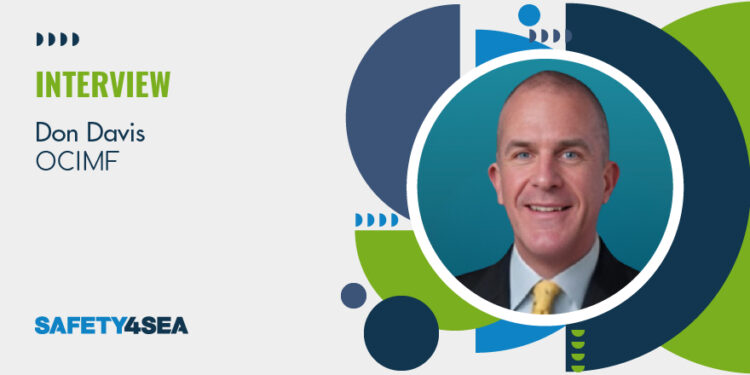
In an exclusive interview with the newly appointed Managing Director of OCIMF, Don Davis shared his priorities and broader vision for the inspection system. Following the implementation of SIRE 2.0, which supports a move away from viewing inspections as simple checklist exercises, OCIMF is now assessing inspection data to identify areas for further improvement.
At the same time, vessel operators and crews need to understand the purpose behind inspections rather than preparing simply to meet individual requirements. More broadly, the industry needs to stop treating human factors as separate from technical or operational safety.
SAFETY4SEA: You have taken the helm of OCIMF at a significant point in its evolution. What are your immediate priorities as Managing Director?
Don Davis: I’m very excited to be assuming the OCIMF MD role, since maritime safety is so personally important to me. I’m fortunate to be joining OCIMF at a time of strength for the organisation, having implemented and operated SIRE 2.0 for a couple of years, and more recently completing the refresh of OCIMF’s mission, scope, and branding.
Going forward, my key priorities to drive maritime safety are:
- Being risk-based and data-driven in everything we do to ensure we’re using our resources on the most value-adding activities for our members and for industry;
- Efficient development and delivery of our publications and programmes to ensure we’re maximising our safety influence;
- Modernisation of our data systems, to help maximise insights and value from our large data stores;
- Incorporate Human Factors in everything we do, because we believe this can be a key to improving safety performance for our industry;
- Enhance the effectiveness of our training programmes, leaning more on modern tools and techniques, as training is the foundation of our inspection programme and it also helps to disseminate our guidance.
S4S: OCIMF recently adopted the mission, “United in purpose to drive maritime safety in the energy sector.” What does this broader mission mean in practice for the organisation and its members?
D.D.: The broader mission reflects how the energy sector itself is changing. Maritime operations now support a more diverse range of energy sources, technologies, vessel types and operating models, so OCIMF’s scope has to widen with it. Our work exists to protect people, assets and the environment through better practice, not abstract debate. In practice, this means applying the experience and expertise within our membership to a wider range of maritime activities, while also recognising where we need to draw on new expertise. Our focus remains the same: understanding the risks, identifying effective safeguards and developing practical guidance and programmes that support safer operations across the energy sector.
S4S: As the energy sector becomes more diverse, how should maritime safety frameworks evolve to address new vessel types, cargoes, technologies and operating models?
D.D.: These new technologies will indeed necessitate changes to maritime safety and assurance frameworks. However, our well-established risk management approach of identifying associated risks and then effective safeguards to address them will remain equally effective here. Many of these risks sit at the interfaces, where new vessel types, fuels and operating models meet existing systems and responsibilities, and that is where our attention needs to be sharpest. One primary challenge, though, is industry’s need for best practice guidance on implementing these nascent technologies, at a time when there is little practical experience to refer to and inform ‘good practice’. Our challenge then is to establish guidance in these areas based on limited available empirical information.
S4S: Drawing on your experience in tanker, offshore, barge and terminal operations, what do you consider the most pressing safety and operational challenges facing the industry today?
D.D.: Direct threats to seafarers resulting from the expanding and escalating geopolitical confrontation. Beyond that, the risks that concern me most are increasingly found at the interfaces, where vessel types, cargoes, technologies and operating models meet, and where responsibilities and expectations are not always clearly aligned.
S4S: SIRE 2.0 introduced a more risk-based, technology-enabled and human-centred approach to vessel inspections. What has the industry learned since its launch, and where is further improvement needed?
D.D.: One of the important changes in SIRE 2.0 is the move away from viewing an inspection as simply a checklist exercise. It provides a richer understanding of how a vessel is being operated, including the condition of its equipment, the effectiveness of its procedures and how those procedures are understood and applied onboard. Because the programme has been operating for some time, OCIMF now holds a significant body of inspection data. We can use that evidence to identify trends, understand where greater attention may be needed and further improve SIRE 2.0 based on what we are learning from the data. Consistency and capability also remain important. A more sophisticated inspection methodology places greater emphasis on professional judgement, making effective inspector training essential. Equally, vessel operators and crews need to understand the purpose behind the inspection rather than preparing simply to satisfy individual requirements.
S4S: How can OCIMF ensure that inspection and assurance programmes strengthen safety performance without creating unnecessary complexity or administrative burden for seafarers and operators?
D.D.: The test should be whether a requirement helps us understand or manage risk. Assurance programmes need enough structure to provide consistency and useful information, but additional processes do not necessarily mean additional safety. OCIMF should continue to use evidence and feedback from those using its programmes to ensure requirements remain proportionate, practical and focused on improving safety.
S4S: Human factors remain central to safe maritime operations. How can the industry better integrate competence, wellbeing, leadership and organisational culture into its safety-management approach?
D.D.: We need to stop treating human factors as something separate from technical or operational safety. Every procedure, piece of equipment and safety-management system ultimately has to be used by a person, often in demanding and time-critical circumstances. That means asking different questions when we look at incidents and operational performance. Rather than stopping at whether someone followed a procedure, we need to understand the conditions in which decisions were made, for example, by asking was the procedure practical? Was the person adequately trained? Were roles and responsibilities clear? What competing pressures existed? Did the working environment make it easier or harder to do the right thing? Leadership is particularly important because culture is shaped by what organisations consistently tolerate, encourage, and reward. A company can have very strong procedures on paper, but if operational pressures routinely pull people in another direction, the written system will not tell you the whole story. Human factors therefore need to be considered when equipment is designed, procedures are written, people are trained and performance is assessed. That is how they become part of the safety-management approach rather than an additional layer sitting alongside it.
S4S:Alternative fuels and emerging energy technologies introduce new operational risks. What role should OCIMF play in helping the industry manage these risks safely and consistently?
D.D.: OCIMF’s role is to convene the industry before answers are settled, not after. We are already working with operators, technology providers and other industry bodies on the early risks around new fuels and interfaces and using that shared experience to shape guidance as it develops. That is what a collaborative, foresight-led approach looks like in practice, and it is how we help the industry manage these risks safely and consistently.
S4S: How important are data quality, digitalisation and information-sharing in improving marine assurance, and how can the industry build greater trust in the use of operational data?
D.D.: The maritime industry has access to an enormous amount of data, but more data does not automatically lead to better decisions. Its value depends on its quality, consistency and understanding the operational context behind it. Building trust requires transparency about what data is collected, why it is collected and how it will be used. There also need to be clear safeguards around access and appropriate use, particularly where operational data may be commercially sensitive. Ultimately, people need to see that sharing good-quality data produces useful insights that can improve safety. That is what will give people confidence in the value of sharing it.
S4S: OCIMF brings together oil companies, vessel operators, terminal operators and other stakeholders. How can stronger collaboration across this wider community help address emerging safety and environmental challenges?
D.D.: Many of the safety and environmental challenges facing the maritime energy sector cannot be solved effectively by individual organisations acting independently. Different companies may be managing the same emerging risk in different ways, which can create inconsistency across an industry where vessels, terminals, operators and energy companies are highly interconnected. OCIMF can bring that experience together, identify where a common approach would improve safety and turn collective learning into practical guidance and programmes. Collaboration also allows us to test whether proposed solutions work across different operating environments before they become established practice. The objective is not collaboration for its own sake, but greater consistency in how significant risks are understood and managed across the industry.
S4S: What is the biggest misconception about OCIMF’s role, and how would you like the industry’s understanding of the organisation to change under your leadership?
D.D.: OCIMF is best known in many parts of the industry through programmes such as SIRE 2.0, which means there can be a tendency to think of OCIMF primarily as an inspection organisation. Marine assurance is clearly an important part of what we do, but it is only one part. We are best understood as a membership organisation: that brings the right expertise together at the right time and does not regulate or dictate outcomes. OCIMF convenes technical and operational expertise from across its membership and industry partners to address shared safety challenges, develop practical guidance and advocate for effective safety practices across the maritime energy sector. As our scope broadens, I would like the industry to have a better understanding of that wider role. OCIMF can help identify where collective action is needed, draw on the right expertise and translate that expertise into practical guidance and programmes that support safer operations.
S4S: What is your key message to maritime and energy-sector stakeholders as OCIMF enters this next chapter?
D.D.: OCIMF’s vision of a maritime industry causing no harm to people or the environment has not changed. Our scope has broadened to include maritime aspects of new energy development, production, transportation, and use. We are proud to be a learning organisation committed to the continuous improvement of our publications, advocacy, and programmes and the promotion of maritime safety across the energy sector. Our collaborative partnerships with other industry organisations, academia, and users of those technologies will be critical to establishing timely safety practices for the benefit of all stakeholders.
source : safety4sea
Featured Post
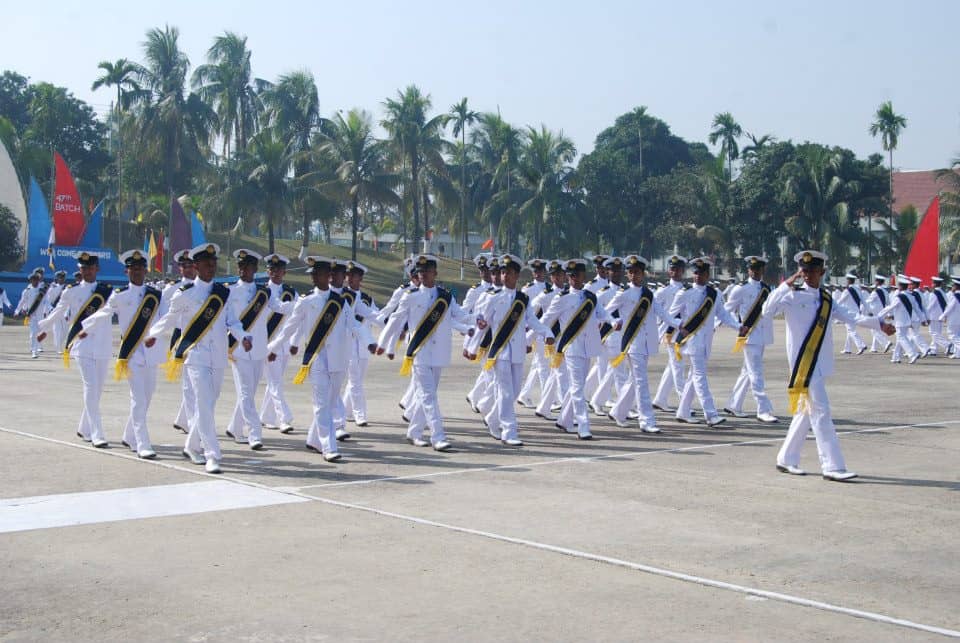 বিশ্ব সমুদ্র দিবস: মেরিন একাডেমিকে আবার সামুদ্রিক শিক্ষার প্রাণকেন্দ্রে ফেরাতে হবে বাংলাদেশকে
 গোলাম সোহরাওয়ার্দি বিশ্ব সমুদ্র দিবস ২০২৬ এবং সমন্বিত জাতীয় প্রশিক্ষণ কৌশলের প্রয়োজনীয়তা বিশ্ব সমুদ্র দিবসে আন্তর্জাতিক সামুদ্রিক সংস্থার (আইএমও) মহাসচিব আর্সেনিও ডমিঙ্গেজ খুব সহজ কিন্তু গভীর একটি বার্তা দিয়েছেন। আন্তর্জাতিক নিয়মকানুন সমুদ্র পরিবহন ব্যবস্থার উন্নতি তখনই করতে পারে, যখন দেশগুলো তা ঠিকমতো মেনে চলে। তিনি বলেন, “নাবিকদের কথাই সবার আগে […]
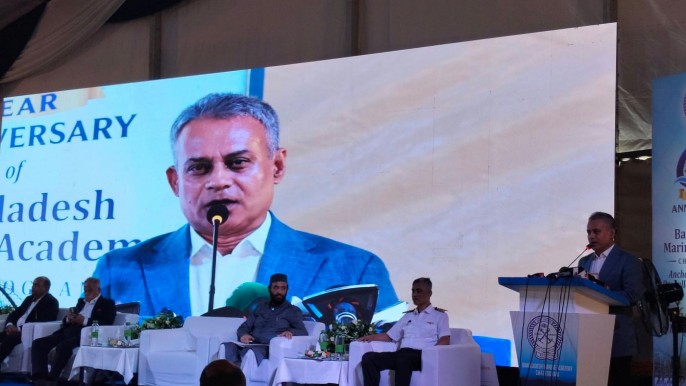 World Maritime Day: Bangladesh Must Put Its Marine Academy Back at the Center of Maritime Education
 World Maritime Day: Bangladesh Must Put Its Marine Academy Back at the Center of Maritime Education by Ghulam Suhrawardi World Maritime Day 2026 and the case for a coherent national training strategy On World Maritime Day, International Maritime Organization Secretary-General Arsenio Dominguez delivered a deceptively simple message: international rules improve […]



JOB SITES
CONTENTS
LINKS
Happy New Year

Découvrez les avantages de MadCasino
Dans le monde des casinos en ligne, MadCasino se distingue par ses offres attrayantes et ses services de qualité. Que vous soyez un joueur débutant ou un parieur aguerri, vous trouverez ici une variété de jeux qui sauront satisfaire toutes vos envies. Les machines à sous, les jeux de table et les options de paris en direct sont tous disponibles pour vous offrir une expérience de jeu inégalée. De plus, le casino propose régulièrement des bonus qui permettent d'augmenter vos chances de gagner, vous offrant ainsi une excellente opportunité de maximiser vos gains.
En matière de sécurité, MadCasino est un nom de confiance. Il est entièrement licencié et régulé, ce qui garantit un environnement de jeu sûr et équitable. Les joueurs peuvent se concentrer sur leur expérience de jeu sans se soucier des problèmes de sécurité. Les transactions financières sont également sécurisées grâce à des technologies de pointe.
Les jeux proposés par MadCasino sont issus des développeurs les plus réputés de l'industrie, vous assurant des graphismes époustouflants et des mécaniques de jeu innovantes. Les joueurs peuvent également profiter d'une expérience de jeu en direct qui simule l'atmosphère d'un casino terrestre, tout en restant dans le confort de leur maison.
Enfin, la plateforme de MadCasino est optimisée pour les appareils mobiles, permettant aux joueurs de parier à tout moment et de n'importe où. Que vous soyez sur votre smartphone ou votre tablette, l'accès à vos jeux préférés n'a jamais été aussi simple. Ne manquez pas l'opportunité de découvrir ce casino exceptionnel.
Les offres de Cresus Casino
Cresus Casino est un autre acteur majeur dans le domaine des jeux en ligne, offrant des promotions généreuses et une vaste sélection de jeux. Les joueurs peuvent profiter d'une expérience de jeu enrichissante grâce aux nombreux bonus disponibles, qui sont conçus pour attirer tant les nouveaux utilisateurs que les joueurs réguliers. Ces avantages permettent non seulement de prolonger votre temps de jeu, mais aussi d'augmenter vos chances de gains conséquents.
Le casino se distingue également par sa ludothèque impressionnante, comprenant une sélection variée de machines à sous, de jeux de table et de jeux en direct. Les clients peuvent choisir parmi des titres populaires et appréciés, ainsi que des nouveautés qui enrichissent constamment l'offre. L'interface utilisateur est conviviale, rendant la navigation sur la plateforme fluide et agréable.
En termes de sécurité, Cresus Casino assure à ses joueurs un environnement de jeu fiable. La plateforme utilise des protocoles de sécurité avancés pour protéger les données personnelles et financières des utilisateurs. Cela permet aux joueurs de se sentir en sécurité tout en jouant à leurs jeux préférés.
Avec un service client réactif et professionnel, Cresus Casino s'assure que toutes vos questions et préoccupations sont traitées rapidement. Que ce soit pour des questions concernant les bonus, les retraits ou les jeux, vous bénéficierez d'une assistance rapide et efficace.
Explorez Nine Casino et ses avantages
Dans l'univers des casinos en ligne, Nine Casino a su se faire une place de choix grâce à son approche innovante et à ses nombreux avantages pour les joueurs. Les utilisateurs peuvent s'attendre à une expérience de jeu enrichissante, avec des bonus attractifs qui sont régulièrement mis à jour. Ces offres sont une excellente façon de découvrir de nouveaux jeux tout en maximisant votre potentiel de gain.
La plateforme de Nine Casino est riche en options de jeux, allant des machines à sous aux jeux de table, en passant par le live casino. Chaque jeu est conçu pour offrir une expérience immersive grâce à des graphismes de haute qualité et des fonctionnalités innovantes. Les parieurs peuvent profiter de sessions de jeu captivantes, comme s'ils étaient dans un véritable casino.
La sécurité est une priorité pour Nine Casino, qui utilise des technologies de cryptage avancées pour protéger les informations de ses joueurs. Cela garantit un environnement de jeu sûr et fiable, permettant aux utilisateurs de se concentrer sur ce qu'ils aiment le plus : jouer.
Enfin, le service clientèle fourni par Nine Casino est exceptionnel, avec des agents disponibles pour répondre à toutes vos questions et résoudre vos problèmes. Vous pourrez ainsi jouer en toute tranquillité, sachant que votre satisfaction est au cœur de leurs préoccupations.
Profitez de l'expérience Lucky31
Lucky31 est un casino en ligne qui se distingue par son approche orientée vers le joueur, offrant une multitude d'options de jeux et des bonus généreux. Que vous soyez amateur de machines à sous ou passionné de jeux de table, vous trouverez une large sélection pour satisfaire toutes vos envies de jeu. Les promotions fréquentes permettent aux joueurs de prolonger leur expérience tout en augmentant leurs chances de gains.
La convivialité de la plateforme de Lucky31 est l'un de ses plus grands atouts. Les joueurs peuvent naviguer facilement entre les différents jeux, et l'interface est conçue pour être intuitive, quel que soit le niveau d'expérience de l'utilisateur. De plus, le casino est entièrement optimisé pour les appareils mobiles, ce qui permet de parier où que vous soyez.
En matière de sécurité, Lucky31 prend les préoccupations des joueurs très au sérieux. Le casino est agréé et régulé, garantissant un environnement de jeu équitable et sécurisé. Les joueurs peuvent ainsi se concentrer sur leur expérience de jeu sans se soucier des risques liés à la sécurité.
Pour ceux qui recherchent un support client efficace, Lucky31 offre un service réactif et professionnel. Que ce soit pour des questions sur les bonus, les jeux ou les paiements, vous aurez accès à une assistance de qualité, vous garantissant une expérience de jeu fluide et agréable.