search the site


Complying with CIC 2026 on Cargo Securing: A best practice guide

Ahead of the 2026 Cargo Securing Concentrated Inspection Campaign (CIC), SQE MARINE provides practical guidance to help shipowners, operators and crews prepare for inspections and demonstrate compliance.
The campaign will run from 1 September to 30 November 2026 under the Paris and Tokyo MoUs, with participating vessels assessed through an additional questionnaire during routine Port State Control inspections. The Indian Ocean, Mediterranean and Black Sea MoUs have also confirmed their participation, while further MoUs may join before the campaign begins.
The official SOLAS documentation, including Chapters VI (‘Carriage of Cargoes’) and VII (‘Carriage of Dangerous Goods’), as well as the ‘Code of Safe Practice for Cargo Stowage and Securing’ (CSS), sets out the fundamental principles for the safe carriage of solid bulk cargoes, fuel oils, and grain.
Furthermore, the approved ‘Cargo Securing Manual’ (CSM) contains ship-specific details for securing the cargo.
Aim of CIC
The purpose of this inspection campaign is for the Port State Control Officer (PSCO) to assess the levels of:
- compliance with the ‘cargo securing’ requirements, as set out in the official documentation and the vessel’s CSM; and
- knowledge, training and experience of the crew members through relevant ‘Cargo Securing’ drills which will also entail emergency scenarios.
Why Cargo Securing is important?
Securing cargo is a fundamental part of operating a ship safely. If cargo is not properly secured, it may shift from its initial position, which could damage the vessel or other cargo. This could also compromise the vessel’s stability and endanger the safety of the crew.
There is also a risk of cargo being lost overboard due to poor securing. Such situations can create environmental and navigational hazards, not to mention the high cost of recovery.
Past investigations have revealed various issues related to poorly secured cargo, such as:
- Non-compliance with the CSS Code’s requirements and guidance.
- The provisions of the vessel’s Cargo Security Manual were not followed.
- Lashings were used incorrectly or did not match the manufacturer’s design limits.
- Lashing equipment was removed prematurely prior to entering the port.
- Stability considerations were not properly addressed.
- Incorrectly declared verified gross mass (VGM) and vertical centre of gravity (VCG).
The CIC questionnaire released early August allows those involved to prepare adequately. The released information contains a checklist of ten questions covering the most significant aspects relating to cargo securing to ensure safe carriage and delivery.

Actions required
Managers, officers and crew onboard should be prepared to address the PSC CIC successfully.
In particular:
#1 Verify that the vessel’s approved Cargo Securing Manual (CSM) is the latest revision accepted by the Flag Administration. Obsolete or superseded versions should be removed from circulation to prevent inadvertent use.
#2 Ensure that all cargo securing arrangements, including lashing equipment and securing devices, are maintained in satisfactory condition, fully operational, and supported by valid certification where required. Any defective or damaged equipment should be withdrawn from service and replaced without delay.
#3 Cargo stowage and lashing plans should clearly indicate the maximum allowable stack weights and any applicable operational limitations. While loading computer calculations remain an important verification tool, the lashing plan should provide readily accessible guidance for personnel involved in cargo operations.
#4 Shipboard personnel should be familiar with the contents of the Cargo Securing Manual and the vessel’s cargo securing procedures. In addition to reviewing checklists, Port State Control Officers (PSCOs) and other inspectors may examine the vessel’s documentation and verify that cargo securing practices are consistent with the approved procedures. Crew members should therefore be prepared to demonstrate their understanding of the cargo securing arrangements and explain how these procedures are implemented in practice.
#5 Maintain complete and up-to-date records of inspections, maintenance, repairs, testing, and replacement of cargo securing equipment and lashing gear. Documentation should be readily available for review during inspections.
#6 Where electronic cargo securing or lashing calculation systems are used, verify that:
- the software version is current and properly maintained;
- all cargo, container, and lashing data have been entered accurately;
- vessel-specific parameters are correctly configured;
- all calculation results confirm compliance with the applicable operational limits and acceptance criteria. To ensure the organization’s goal of achieving absolute compliance, all training sessions, participants and training venues should have been recorded.
A best practice guide
1. Is the CIC applicable to the vessel? (question for information only)?
If the CiC is applicable to the vessel, managers and senior officers (the Master, Chief Officer and Chief Engineer) on board should ensure that every crew member is aware of the current CIC. They should particularly ensure that all related crew members have read the questionnaire and are well prepared to respond to the inspectors’ questions based on the vessel’s cargo securing manual and other official documentation relevant to the CIC’s subject.
2. a. Does the ship have an approved cargo securing manual onboard?
As stipulated in the first paragraph of MSC.1/Circ.1353/Rev.2 (issued on 7 December 2020), managers and senior officers (Master and Chief Officer) should ensure that the vessel carries a valid cargo securing manual approved by the corresponding Administration.
2. b. Does the CSM contain clear lashing instructions for all specific stowage situations found on board? (NA can only be recorded if Q2a is answered with No)?
Managers, DPAs and Senior Officers (the Master, Chief Officer and Chief Engineer) must ensure that the valid cargo securing manual on board contains clear lashing instructions for all stowage situations. They must also ensure that these instructions have been communicated to all cargo operations personnel, who must be fully aware of the capabilities and restrictions of the lashing equipment and the SWL for which it may be used.
3. Are relevant officer’s familiar with the contents of the cargo securing manual in respect of container stack weight and tier weight distribution as well as weight limitations for tank top, hatch covers and decks?
All officers involved in loading containers should be aware of the weight of the container stack (the total combined mass of all containers in a vertical column) and the correct weight distribution on each tier when using the stowage planning and ship loading software. They should also bear in mind that heavier units must be placed on lower tiers. Furthermore, with the help of company managers, they must identify the weight limitations of the vessel’s tank top, hatch covers and decks from the vessel’s ‘Design Loads’.
4. Is the Cargo Securing Manual being complied with?
Senior officers on board who monitor and supervise cargo operations should ensure that all personnel involved have fully comprehended the provisions of the cargo security manual regarding loading operations and are strictly adhering to them (including crew members and stevedores, if applicable). Effective communication between all parties engaged in loading operations, both internal and external, is of paramount importance, as are safety measures and precautions.
5. Does the cargo plan reflect the verified gross mass of the containers being loaded?
All officers involved in loading containers should be familiar with stowage planning and ship loading software and be aware of the gross mass of the containers being loaded. This will enable them to successfully match the final cargo plan with any weight limitations and ensure safety across all aspects of container loading.
6. Does the ship have a “Cargo Safe Access Plan” (CSAP) to facilitate the proper stowage and securing of containers? (question for information only)
Managers and the vessel’s senior officers should ensure that any vessel specifically designed and fitted for carrying containers has an approved Cargo Safe Access Plan (CSAP) for all areas where containers are secured. The CSAP, which must be developed at the design stage of the vessel (as per Chapter 5 of the Annex to MSC.1/Circ.1353), details the safe walking paths, ladders and working platforms required for crew members to secure and lash shipping containers safely, thereby enabling all involved personnel to retain safe working conditions during all anticipated configurations of container stowage.
7. Does the ship carry sufficient approved portable cargo securing devices, from the correct brand and type, onboard to properly stow and secure the cargo in accordance with the cargo securing manual?
The Master, Chief Officer and Bosun should ensure that the ship carries sufficient portable cargo securing devices of the correct brand and type for use during loading operations. If any such devices are to be installed on board for securing specific cargoes, approval must be obtained from the owners/master and the vessel’s classification society before installation.
8. Are the fixed and portable cargo securing devices in good condition, compatible with the ship and maintained in accordance with Inspection and maintenance scheme contained in the CSM?
The Master, Chief Officer and Bosun should monitor maintenance of the vessel’s fixed and portable cargo securing devices in accordance with the inspection and maintenance scheme contained in the CSM. To enable detailed monitoring, all maintenance must be recorded in the relevant vessel files and be available for inspection at any time. When new or replacement securing devices are placed on board, they should be provided with the appropriate certification, which should be kept with the cargo security manual.
9. Does the cargo stow comply with bridge visibility requirements?
The Master and Navigation Officer must be aware of, and strictly adhere to, the SOLAS requirements for minimum visibility (Regulation 22 – ‘Navigational bridge visibility’), which stipulate that the view of the sea surface from the conning position must not be obscured by more than 2L or 500 m (whichever is less) forward of the bow and up to 10° on either side, in all conditions of draft, trim, and deck cargo under which the vessel is expected to operate.
10. a. Does the ship have procedures or arrangements in place, for example within the ships safety management system, covering heavy weather navigation, including precautions to prevent the loss of cargo? (question for information only)
The managers must have prepared a checklist, such as the ‘Bridge Checklist: Navigation in Heavy Weather or Tropical Storm Areas’, for inclusion in the SMS. The Senior Officers and all bridge Officers of the Watch (OOW) on board should be aware of its content and strictly adhere to it whenever required.
10. b. Where they exist, have the procedures covering heavy weather navigation, including precautions to prevent the loss of cargo been complied with? (NA can only be recorded if Q10a is answered with No)
All Senior Officers and crew members engaged in cargo operations must fully comprehend and strictly adhere to the list of items included in the SMS’s ‘Navigation in heavy weather or in tropical storm areas’ checklist. Furthermore, they must record the actions they take to prevent cargo loss and ensure compliance with the relevant SMS provisions.
source : safety4sea
Featured Post
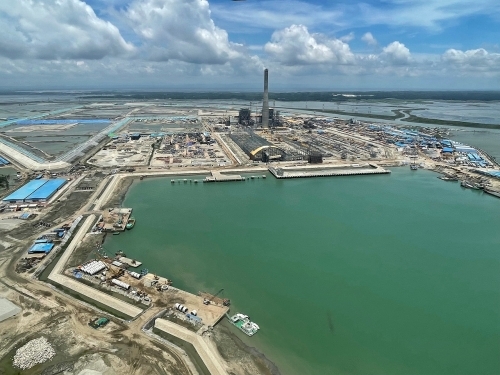 বড় জাহাজ মেরামতে মাতারবাড়ীতে ১ বিলিয়ন ডলারের প্রকল্প
 মাতারবাড়ীতে প্রায় ১ বিলিয়ন মার্কিন ডলার ব্যয়ে পরিবেশবান্ধব ডকইয়ার্ড ও জাহাজ নির্মাণ কেন্দ্র স্থাপনের উদ্যোগে নীতিগত অনুমোদন দিয়েছে নৌপরিবহন মন্ত্রণালয়। এখন প্রকল্পটির কারিগরি ও আর্থিক মূল্যায়নের জন্য প্রস্তাবটি সরকারি-বেসরকারি অংশীদারত্ব (পিপিপি) কর্তৃপক্ষের কাছে পাঠানো হয়েছে। সম্পূর্ণ বেসরকারি অর্থায়নে সরকারি জমির মালিকানা অক্ষুণ্ন রেখে প্রকল্পটি বাস্তবায়নের পরিকল্পনা রয়েছে। বন্দর কর্তৃপক্ষ জানায়, […]
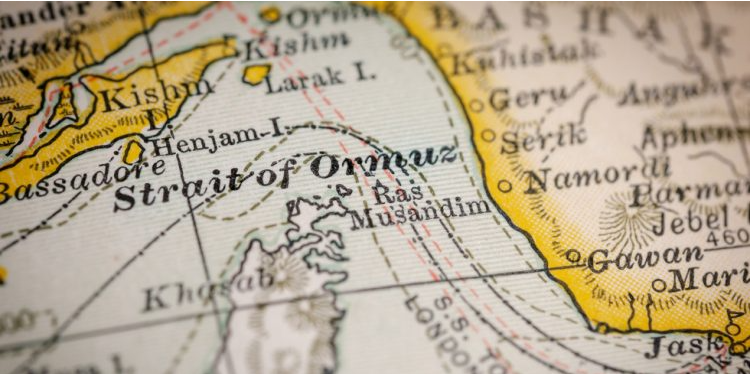 Industry on alert over scam messages offering ships “safe passage” on Hormuz
 Credit: Shutterstock Fraudulent messages offering safe passage through the Strait of Hormuz in exchange for cryptocurrency have been circulated to shipping companies with vessels stranded west of the waterway, according to MARISKS. In an alert issued on 20 April, MARISKS cautioned that unknown actors posing as Iranian authorities had contacted […]



JOB SITES
CONTENTS
LINKS
Happy New Year

Découvrez les avantages de MadCasino
Dans le monde des casinos en ligne, MadCasino se distingue par ses offres attrayantes et ses services de qualité. Que vous soyez un joueur débutant ou un parieur aguerri, vous trouverez ici une variété de jeux qui sauront satisfaire toutes vos envies. Les machines à sous, les jeux de table et les options de paris en direct sont tous disponibles pour vous offrir une expérience de jeu inégalée. De plus, le casino propose régulièrement des bonus qui permettent d'augmenter vos chances de gagner, vous offrant ainsi une excellente opportunité de maximiser vos gains.
En matière de sécurité, MadCasino est un nom de confiance. Il est entièrement licencié et régulé, ce qui garantit un environnement de jeu sûr et équitable. Les joueurs peuvent se concentrer sur leur expérience de jeu sans se soucier des problèmes de sécurité. Les transactions financières sont également sécurisées grâce à des technologies de pointe.
Les jeux proposés par MadCasino sont issus des développeurs les plus réputés de l'industrie, vous assurant des graphismes époustouflants et des mécaniques de jeu innovantes. Les joueurs peuvent également profiter d'une expérience de jeu en direct qui simule l'atmosphère d'un casino terrestre, tout en restant dans le confort de leur maison.
Enfin, la plateforme de MadCasino est optimisée pour les appareils mobiles, permettant aux joueurs de parier à tout moment et de n'importe où. Que vous soyez sur votre smartphone ou votre tablette, l'accès à vos jeux préférés n'a jamais été aussi simple. Ne manquez pas l'opportunité de découvrir ce casino exceptionnel.
Les offres de Cresus Casino
Cresus Casino est un autre acteur majeur dans le domaine des jeux en ligne, offrant des promotions généreuses et une vaste sélection de jeux. Les joueurs peuvent profiter d'une expérience de jeu enrichissante grâce aux nombreux bonus disponibles, qui sont conçus pour attirer tant les nouveaux utilisateurs que les joueurs réguliers. Ces avantages permettent non seulement de prolonger votre temps de jeu, mais aussi d'augmenter vos chances de gains conséquents.
Le casino se distingue également par sa ludothèque impressionnante, comprenant une sélection variée de machines à sous, de jeux de table et de jeux en direct. Les clients peuvent choisir parmi des titres populaires et appréciés, ainsi que des nouveautés qui enrichissent constamment l'offre. L'interface utilisateur est conviviale, rendant la navigation sur la plateforme fluide et agréable.
En termes de sécurité, Cresus Casino assure à ses joueurs un environnement de jeu fiable. La plateforme utilise des protocoles de sécurité avancés pour protéger les données personnelles et financières des utilisateurs. Cela permet aux joueurs de se sentir en sécurité tout en jouant à leurs jeux préférés.
Avec un service client réactif et professionnel, Cresus Casino s'assure que toutes vos questions et préoccupations sont traitées rapidement. Que ce soit pour des questions concernant les bonus, les retraits ou les jeux, vous bénéficierez d'une assistance rapide et efficace.
Explorez Nine Casino et ses avantages
Dans l'univers des casinos en ligne, Nine Casino a su se faire une place de choix grâce à son approche innovante et à ses nombreux avantages pour les joueurs. Les utilisateurs peuvent s'attendre à une expérience de jeu enrichissante, avec des bonus attractifs qui sont régulièrement mis à jour. Ces offres sont une excellente façon de découvrir de nouveaux jeux tout en maximisant votre potentiel de gain.
La plateforme de Nine Casino est riche en options de jeux, allant des machines à sous aux jeux de table, en passant par le live casino. Chaque jeu est conçu pour offrir une expérience immersive grâce à des graphismes de haute qualité et des fonctionnalités innovantes. Les parieurs peuvent profiter de sessions de jeu captivantes, comme s'ils étaient dans un véritable casino.
La sécurité est une priorité pour Nine Casino, qui utilise des technologies de cryptage avancées pour protéger les informations de ses joueurs. Cela garantit un environnement de jeu sûr et fiable, permettant aux utilisateurs de se concentrer sur ce qu'ils aiment le plus : jouer.
Enfin, le service clientèle fourni par Nine Casino est exceptionnel, avec des agents disponibles pour répondre à toutes vos questions et résoudre vos problèmes. Vous pourrez ainsi jouer en toute tranquillité, sachant que votre satisfaction est au cœur de leurs préoccupations.
Profitez de l'expérience Lucky31
Lucky31 est un casino en ligne qui se distingue par son approche orientée vers le joueur, offrant une multitude d'options de jeux et des bonus généreux. Que vous soyez amateur de machines à sous ou passionné de jeux de table, vous trouverez une large sélection pour satisfaire toutes vos envies de jeu. Les promotions fréquentes permettent aux joueurs de prolonger leur expérience tout en augmentant leurs chances de gains.
La convivialité de la plateforme de Lucky31 est l'un de ses plus grands atouts. Les joueurs peuvent naviguer facilement entre les différents jeux, et l'interface est conçue pour être intuitive, quel que soit le niveau d'expérience de l'utilisateur. De plus, le casino est entièrement optimisé pour les appareils mobiles, ce qui permet de parier où que vous soyez.
En matière de sécurité, Lucky31 prend les préoccupations des joueurs très au sérieux. Le casino est agréé et régulé, garantissant un environnement de jeu équitable et sécurisé. Les joueurs peuvent ainsi se concentrer sur leur expérience de jeu sans se soucier des risques liés à la sécurité.
Pour ceux qui recherchent un support client efficace, Lucky31 offre un service réactif et professionnel. Que ce soit pour des questions sur les bonus, les jeux ou les paiements, vous aurez accès à une assistance de qualité, vous garantissant une expérience de jeu fluide et agréable.