search the site


The Engine Room Problem And Why Machinery Failure Remains Shipping’s Dominant Risk

By Paul Morgan (gCaptain) – Every year, Allianz Commercial publishes its Safety and Shipping Review, and every year the shipping industry’s commentators reach for the same headline: the long-term decline in total losses, the improving safety record, the falling incident numbers.
All of that is true, and none of it should be dismissed. But the 2026 edition of the review, published against a backdrop of war in the Persian Gulf and the closure of the Strait of Hormuz, contains a finding that deserves considerably more attention than it typically receives. Machinery damage or failure was the cause of more than half of all reported shipping incidents globally in 2025.
Not fire, not collision, not grounding. Machinery. It has been the dominant cause of shipping incidents for the entire past decade, and the financial consequences of that dominance are getting worse, not better.
The raw numbers, drawn from Lloyd’s List Intelligence casualty statistics, are clear. Of the 2,818 reported incidents on vessels over 100GT recorded during 2025, machinery damage or failure accounted for 1,505, or 53 per cent of the total. Over the full decade from 2016 to 2025, the picture is consistent: machinery damage and failure caused 12,991 incidents from a global total of 28,660, representing 45 per cent of all reported casualties over ten years. No other single cause comes close. Vessel collision, the second most frequent category, accounted for 2,822 incidents over the same decade.
Fire and explosion, which attracts far more column inches and regulatory attention, accounted for 1,952. The machinery problem dwarfs them both, and it has done so year after year, in every region of the world.
The reason that this matters beyond the incident count, is cost. Machinery claims inflation has not returned to pre-Covid-19 levels. That statement, contained in the Allianz review with characteristic understatement, conceals a financial reality that every technical superintendent and hull underwriter is already living with. According to Cefor, the Nordic Association of Marine Insurers, ocean hull claims costs per vessel in 2024 and 2025 remained 33 per cent above both pre-pandemic and 2021 levels.
The International Union of Marine Insurance projects that average hull claim costs will increase by a further seven to 22 per cent over the next five years. For anyone currently negotiating hull and machinery renewals, those are not comfortable numbers.
The factors driving this inflation are structural, and the Allianz review is honest about the fact that they show no sign of resolving. The global shortage of quality marine engineers and technicians pushes up the cost of every repair that requires specialist attendance. Lead times for major engine components, including crankshafts, bearings and fuel injection equipment, remain extended. Workshop rates have risen alongside energy prices and steel costs.
Shipyard capacity, already constrained by sustained demand for new vessels and retrofitting work, leaves limited berth availability for machinery repairs that require drydocking. None of these pressures are easing. Several of them are actively worsening, and the conflict in the Middle East has added a further layer of supply chain disruption and energy cost inflation to a picture that was already concerning before a single shot was fired in the Persian Gulf.
That conflict, and specifically the closure of the Strait of Hormuz that followed the US-Iran confrontation beginning in February 2026, is directly relevant to the machinery risk picture in ways that go beyond macroeconomic inflation. At the peak of the blockade in May 2026, more than 1,500 vessels were trapped in the Persian Gulf. Twenty thousand seafarers were aboard those vessels.
The operational reality for the engineering departments of those ships deserves to be stated plainly: they were required to maintain a state of full readiness, with complete crew complements, in a conflict zone, while simultaneously facing critical shortages of food, water, fuel and spare parts, and while their crews operated under the constant psychological pressure of potential attack.
Maintenance schedules, which in normal operations represent the primary defence against machinery breakdown, were severely disrupted. Spare parts deliveries, already subject to extended lead times in the pre-conflict environment, became unreliable or impossible. The Allianz review is direct on the consequences: trapped vessels face heightened risk of machinery breakdown, and the implications for claims are expected to be substantial and prolonged.
The biofouling dimension adds a further machinery and propulsion risk specific to the Persian Gulf situation. One vessel that recently departed the region was found to have marine growth covering 40 per cent of its underwater hull and its entire propeller. Biofouling of that severity does not merely increase fuel consumption and reduce speed; it changes propeller load characteristics in ways that place abnormal stress on shafting, bearings and the main engine itself.
A propeller encrusted with barnacles delivers thrust inefficiently and unevenly. The main engine must work harder, at higher torque, to achieve reduced speed. The thermal and mechanical consequences for engine components that are already operating with deferred maintenance and potentially non-OEM replacement parts are not difficult to foresee.
The non-OEM parts question is one the Allianz review addresses with appropriate directness. Many shipowners are reporting an increasing incidence of blackouts attributed to the use of non-original equipment manufacturer components for vessel repairs and maintenance.
The commercial logic is understandable: OEM parts may not be available within an acceptable timeframe, and the price differential between OEM and non-OEM components has widened significantly as hull and machinery claims inflation has pushed up demand for genuine parts while constrained supply chains have reduced availability. But the consequences of substituting non-OEM electrical and mechanical components into safety-critical systems can be severe, and the 2024 allision of the container ship Dali with the Francis Scott Key Bridge in Baltimore illustrates exactly what is at stake.
A loose wire in the ship’s electrical system caused two successive blackouts, loss of propulsion and loss of steering. Six highway workers were killed. The National Transportation Safety Board confirmed the loose wire as the primary cause in its November 2025 report. The Allianz review makes the additional point that use of non-OEM parts can affect insurance coverage and the admissibility of claims, a fact that ought to concentrate minds in technical departments and at board level.
The aging of the global fleet provides the broader structural context within which all of these machinery risks operate. The average age of the global shipping fleet reached 23 years in 2025, up from approximately 20 years at the onset of the pandemic. Vessels over 20 years of age now account for almost a quarter of the global container ship fleet, the highest proportion since the early 1970s.
The Allianz data is unequivocal on the safety implications: vessels over 20 years old account for more than half of all safety incidents. The relationship between age and machinery failure is not merely statistical. It reflects the progressive degradation of structural integrity, the accumulation of deferred maintenance decisions made during low-freight-rate periods, the retirement or redeployment of experienced engineering staff as vessels age into secondary trades, and the increasing difficulty of sourcing original spare parts for machinery that has been out of production for a decade or more.
The geopolitical drivers of fleet ageing are, if anything, making the situation worse. Conflict in the Middle East has generated demand for additional tonne-miles as tankers and container ships reroute around the Cape of Good Hope, extending the economic lives of vessels that would otherwise have been candidates for scrapping.
The shadow fleet of tankers trading oil subject to Western sanctions relies disproportionately on older tonnage, precisely because those vessels are cheaper to acquire and their operators are less concerned with the maintenance standards and flag state oversight that govern legitimate trading. The shadow fleet operates largely beyond the reach of the port state control inspections and P&I club requirements that provide at least some check on the condition of legitimately trading vessels. When a shadow fleet vessel suffers a catastrophic machinery failure in a sensitive location, the consequences extend well beyond the vessel itself.
The emergence of dual-fuel propulsion as the industry’s primary response to decarbonisation pressure adds a new chapter to the machinery risk story. The number of dual-fuel vessels in operation has doubled since 2024. At the end of 2025, there were 1,126 dual-fuel container ships and vehicle carriers either in operation or on order. More than half of all container ships currently on order are capable of using alternative fuels.
The Allianz review is measured but clear about the risk implications. Dual-fuel engines require additional procedures and a level of crew familiarity that takes time to develop. Lack of familiarity with systems increases the complexity of operations and increases the possibility of human error, particularly during machinery breakdowns.
Alternative fuels carry their own specific risks: biofuels have a short shelf life compared with conventional heavy fuel oil, creating contamination and degradation claims; ammonia is toxic and corrosive, requiring specialist handling that introduces new failure modes; the limited global availability of some alternative fuel types and their associated spare parts constrains the maintenance and repair options available to crews operating far from major bunkering hubs.
Even the quality of the current range of HFO and MDO fuels are causing significant mechanical issues due to the more efficient refining processes extracting more ‘valuable’ elements from every barrel of crude, and the use of cutter stocks etc.
There is a thread connecting all of these issues that the Allianz review does not spell out explicitly, but to any engineer who has served at sea, the problems are entirely evident.
The machinery problem is, at its root, a resourcing problem. Ships are being operated with smaller crews than at any point in the industry’s modern history. The engineering watchkeeping arrangements on many vessels would have been considered dangerously undermanned by a previous generation of Chief Engineers.
The justification has always been automation, and automation has genuinely reduced the requirement for round-the-clock manual oversight of machinery spaces. But automation does not maintain itself. Automated systems generate alarms and require responses. Planned maintenance systems generate job lists and require execution. The spare parts required to execute that maintenance require procurement, storage, and timely delivery.
All of these functions require people with the technical knowledge to perform them competently, and the industry has been systematically reducing the number of those people aboard its vessels for thirty years in the name of cost efficiency.
The Allianz review’s projection that machinery claims inflation will continue to rise, compounded now by the direct and indirect consequences of the Middle East conflict, is a signal that the cost of that efficiency is coming due. The question for shipowners, managers, insurers and regulators is whether they are prepared to address the structural causes, or whether they will continue to treat each individual machinery failure as an isolated technical event rather than as a symptom of a system under sustained and increasing pressure.
The long-term trend in total shipping losses remains positive. The Allianz data confirms genuine progress on safety over the past decade, and that progress should be acknowledged. But machinery damage and failure has been the leading cause of shipping incidents, by a considerable margin, for as long as the data has been collected.
It remains so today, its financial consequences are worsening, and the combination of an ageing fleet, constrained repair capacity, non-OEM component proliferation, conflict-driven maintenance disruption and dual-fuel transition complexity means there is no credible case for expecting improvement in the near term. The engine room problem is the industry’s most persistent, most expensive and most consequential safety challenge. It deserves to be treated as such.
source : gcaptain
Featured Post
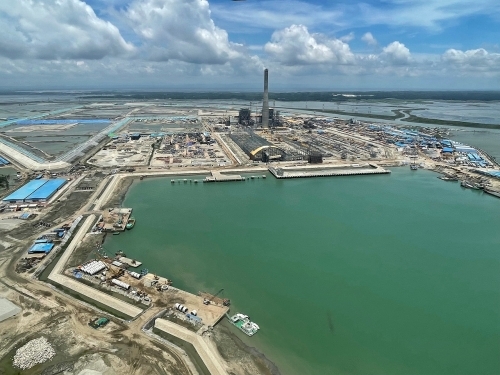 বড় জাহাজ মেরামতে মাতারবাড়ীতে ১ বিলিয়ন ডলারের প্রকল্প
 মাতারবাড়ীতে প্রায় ১ বিলিয়ন মার্কিন ডলার ব্যয়ে পরিবেশবান্ধব ডকইয়ার্ড ও জাহাজ নির্মাণ কেন্দ্র স্থাপনের উদ্যোগে নীতিগত অনুমোদন দিয়েছে নৌপরিবহন মন্ত্রণালয়। এখন প্রকল্পটির কারিগরি ও আর্থিক মূল্যায়নের জন্য প্রস্তাবটি সরকারি-বেসরকারি অংশীদারত্ব (পিপিপি) কর্তৃপক্ষের কাছে পাঠানো হয়েছে। সম্পূর্ণ বেসরকারি অর্থায়নে সরকারি জমির মালিকানা অক্ষুণ্ন রেখে প্রকল্পটি বাস্তবায়নের পরিকল্পনা রয়েছে। বন্দর কর্তৃপক্ষ জানায়, […]
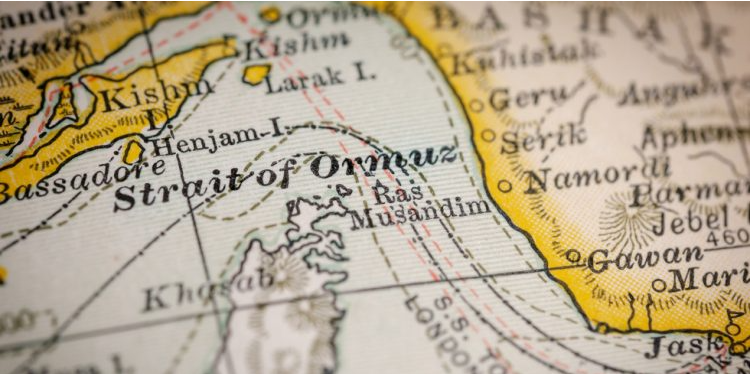 Industry on alert over scam messages offering ships “safe passage” on Hormuz
 Credit: Shutterstock Fraudulent messages offering safe passage through the Strait of Hormuz in exchange for cryptocurrency have been circulated to shipping companies with vessels stranded west of the waterway, according to MARISKS. In an alert issued on 20 April, MARISKS cautioned that unknown actors posing as Iranian authorities had contacted […]



JOB SITES
CONTENTS
LINKS
Happy New Year

Découvrez les avantages de MadCasino
Dans le monde des casinos en ligne, MadCasino se distingue par ses offres attrayantes et ses services de qualité. Que vous soyez un joueur débutant ou un parieur aguerri, vous trouverez ici une variété de jeux qui sauront satisfaire toutes vos envies. Les machines à sous, les jeux de table et les options de paris en direct sont tous disponibles pour vous offrir une expérience de jeu inégalée. De plus, le casino propose régulièrement des bonus qui permettent d'augmenter vos chances de gagner, vous offrant ainsi une excellente opportunité de maximiser vos gains.
En matière de sécurité, MadCasino est un nom de confiance. Il est entièrement licencié et régulé, ce qui garantit un environnement de jeu sûr et équitable. Les joueurs peuvent se concentrer sur leur expérience de jeu sans se soucier des problèmes de sécurité. Les transactions financières sont également sécurisées grâce à des technologies de pointe.
Les jeux proposés par MadCasino sont issus des développeurs les plus réputés de l'industrie, vous assurant des graphismes époustouflants et des mécaniques de jeu innovantes. Les joueurs peuvent également profiter d'une expérience de jeu en direct qui simule l'atmosphère d'un casino terrestre, tout en restant dans le confort de leur maison.
Enfin, la plateforme de MadCasino est optimisée pour les appareils mobiles, permettant aux joueurs de parier à tout moment et de n'importe où. Que vous soyez sur votre smartphone ou votre tablette, l'accès à vos jeux préférés n'a jamais été aussi simple. Ne manquez pas l'opportunité de découvrir ce casino exceptionnel.
Les offres de Cresus Casino
Cresus Casino est un autre acteur majeur dans le domaine des jeux en ligne, offrant des promotions généreuses et une vaste sélection de jeux. Les joueurs peuvent profiter d'une expérience de jeu enrichissante grâce aux nombreux bonus disponibles, qui sont conçus pour attirer tant les nouveaux utilisateurs que les joueurs réguliers. Ces avantages permettent non seulement de prolonger votre temps de jeu, mais aussi d'augmenter vos chances de gains conséquents.
Le casino se distingue également par sa ludothèque impressionnante, comprenant une sélection variée de machines à sous, de jeux de table et de jeux en direct. Les clients peuvent choisir parmi des titres populaires et appréciés, ainsi que des nouveautés qui enrichissent constamment l'offre. L'interface utilisateur est conviviale, rendant la navigation sur la plateforme fluide et agréable.
En termes de sécurité, Cresus Casino assure à ses joueurs un environnement de jeu fiable. La plateforme utilise des protocoles de sécurité avancés pour protéger les données personnelles et financières des utilisateurs. Cela permet aux joueurs de se sentir en sécurité tout en jouant à leurs jeux préférés.
Avec un service client réactif et professionnel, Cresus Casino s'assure que toutes vos questions et préoccupations sont traitées rapidement. Que ce soit pour des questions concernant les bonus, les retraits ou les jeux, vous bénéficierez d'une assistance rapide et efficace.
Explorez Nine Casino et ses avantages
Dans l'univers des casinos en ligne, Nine Casino a su se faire une place de choix grâce à son approche innovante et à ses nombreux avantages pour les joueurs. Les utilisateurs peuvent s'attendre à une expérience de jeu enrichissante, avec des bonus attractifs qui sont régulièrement mis à jour. Ces offres sont une excellente façon de découvrir de nouveaux jeux tout en maximisant votre potentiel de gain.
La plateforme de Nine Casino est riche en options de jeux, allant des machines à sous aux jeux de table, en passant par le live casino. Chaque jeu est conçu pour offrir une expérience immersive grâce à des graphismes de haute qualité et des fonctionnalités innovantes. Les parieurs peuvent profiter de sessions de jeu captivantes, comme s'ils étaient dans un véritable casino.
La sécurité est une priorité pour Nine Casino, qui utilise des technologies de cryptage avancées pour protéger les informations de ses joueurs. Cela garantit un environnement de jeu sûr et fiable, permettant aux utilisateurs de se concentrer sur ce qu'ils aiment le plus : jouer.
Enfin, le service clientèle fourni par Nine Casino est exceptionnel, avec des agents disponibles pour répondre à toutes vos questions et résoudre vos problèmes. Vous pourrez ainsi jouer en toute tranquillité, sachant que votre satisfaction est au cœur de leurs préoccupations.
Profitez de l'expérience Lucky31
Lucky31 est un casino en ligne qui se distingue par son approche orientée vers le joueur, offrant une multitude d'options de jeux et des bonus généreux. Que vous soyez amateur de machines à sous ou passionné de jeux de table, vous trouverez une large sélection pour satisfaire toutes vos envies de jeu. Les promotions fréquentes permettent aux joueurs de prolonger leur expérience tout en augmentant leurs chances de gains.
La convivialité de la plateforme de Lucky31 est l'un de ses plus grands atouts. Les joueurs peuvent naviguer facilement entre les différents jeux, et l'interface est conçue pour être intuitive, quel que soit le niveau d'expérience de l'utilisateur. De plus, le casino est entièrement optimisé pour les appareils mobiles, ce qui permet de parier où que vous soyez.
En matière de sécurité, Lucky31 prend les préoccupations des joueurs très au sérieux. Le casino est agréé et régulé, garantissant un environnement de jeu équitable et sécurisé. Les joueurs peuvent ainsi se concentrer sur leur expérience de jeu sans se soucier des risques liés à la sécurité.
Pour ceux qui recherchent un support client efficace, Lucky31 offre un service réactif et professionnel. Que ce soit pour des questions sur les bonus, les jeux ou les paiements, vous aurez accès à une assistance de qualité, vous garantissant une expérience de jeu fluide et agréable.