search the site


The Strait of Hormuz Is Still Closed After 5 Weeks — Here’s How the Marines Could Forcibly Open It With an Air Assault in Days
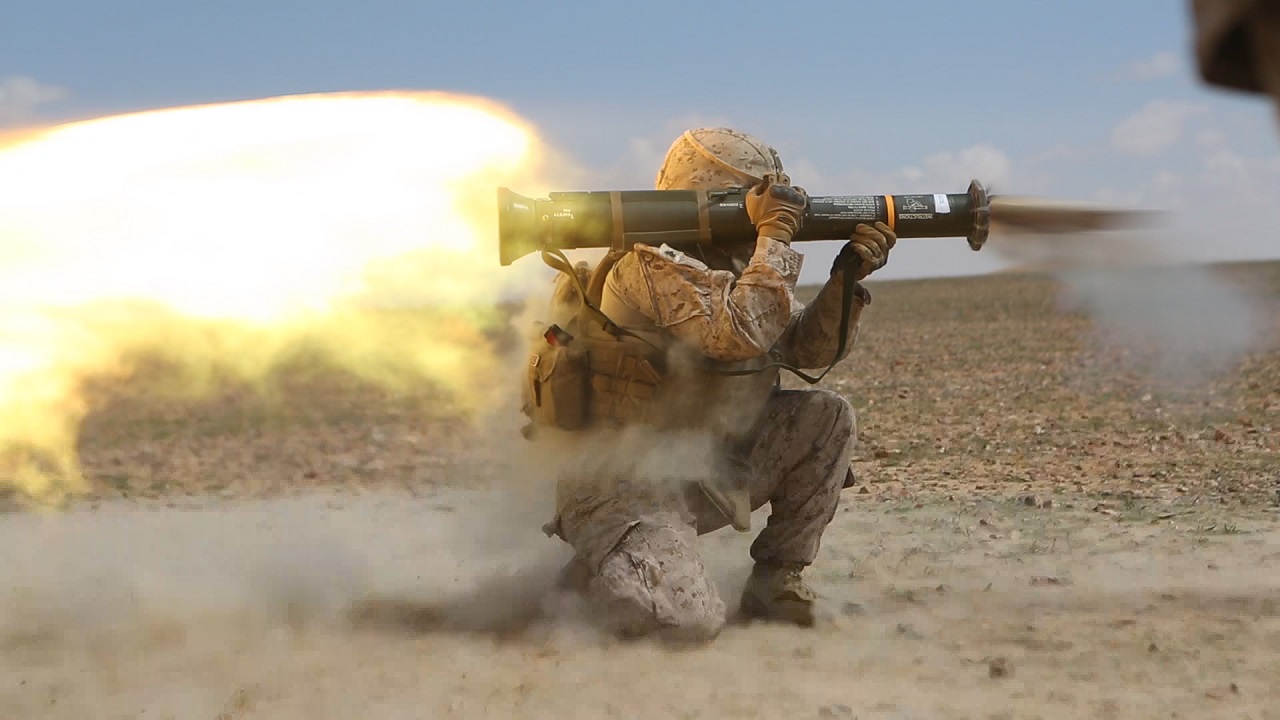
An Amphibious Assault on the Strait of Hormuz Won’t Look Like Iwo Jima — It’ll Come From the Air With F-35Bs, Ospreys, and 82nd Airborne Paratroopers
Iranian mines, small boats, and ballistic missiles are now cited as one of many reasons the U.S. should not seek to “attack” or “seize” islands or coastal territory in the Strait of Hormuz.
The Strait of Hormuz Challenge and History
Americans remember Iraq and Afghanistan and have little tolerance for casualties or a prolonged ground-conflict engagement, yet there might be realistic military options through which the U.S. Navy could strike and forcibly open the Strait of Hormuz quickly through a focused, lethal, multi-domain amphibious operation.
The Iranians are aware of U.S. military history as well, and they may simply be using “time” itself as a weapon of war, aiming to “survive” long enough to outlast an American military campaign by prolonging the conflict.
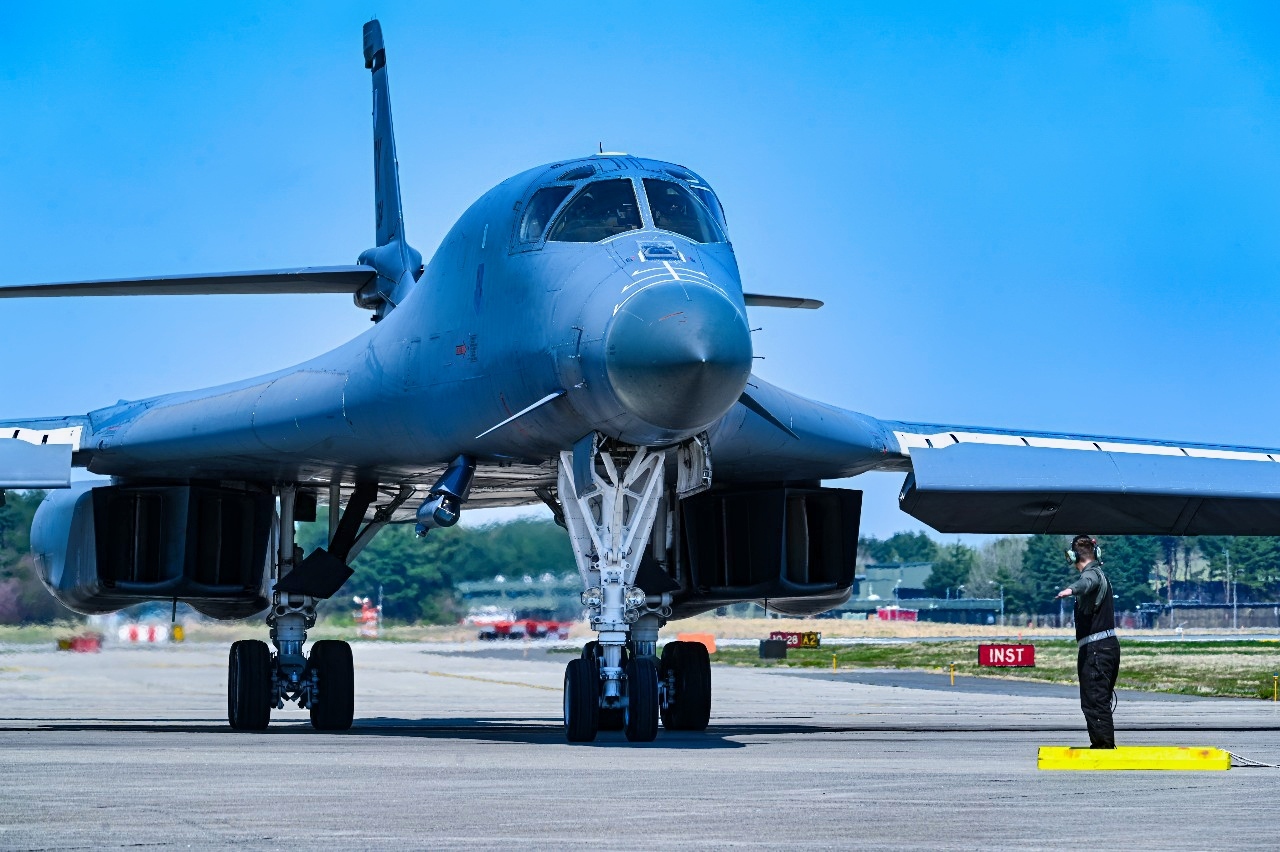
U.S. Air Force Senior Airman Colby Delia, 9th Expeditionary Bomb Squadron crew chief, marshals a B-1B Lancer on a flight line during Bomber Task Force 25-2 at Misawa Air Base, Japan, May 3, 2025. BTF 25-2 demonstrates Allied strength by forging strong alliances, showcasing our resolve, and deterring aggression, while also supporting global stability and security and strengthening military capabilities. (U.S. Air Force photo by Airman 1st Class Mattison Cole)
The intent here would be to further strain and erode U.S. political support for the war effort and, in effect, force the U.S. out before achieving victory by causing domestic political upheaval and unrest.
This circumstance, coupled with the economic necessity of opening the Strait, could well lead the Trump administration to see the racial value in a massive, quick, and lethal amphibious military operation to “open the Strait.”
Thinking Through the Forces Needed
Iran’s arsenal has been massively degraded, and if a combination of joint attack assets were integrated for a targeted island-seizure or coastal operation, then it seems realistic that a short, precise U.S. military attack operation might be able to quickly open the Strait of Hormuz.
A-10s have been patrolling and destroying Iranian small boats from the air, fixed-wing aircraft such as fighter jets and B-2 and B-1 B bombers have been destroying Iranian assets, weapons, and stockpiles along the coast of the Strait of Hormuz, and U.S. Navy ships could deploy mine-detecting drones and laser technology to help “clear” water columns for assault.
Any amphibious landing would likely begin with unmanned boats and drones to clear mines, identify defenses, and create a clear landing pathway to a beachhead.
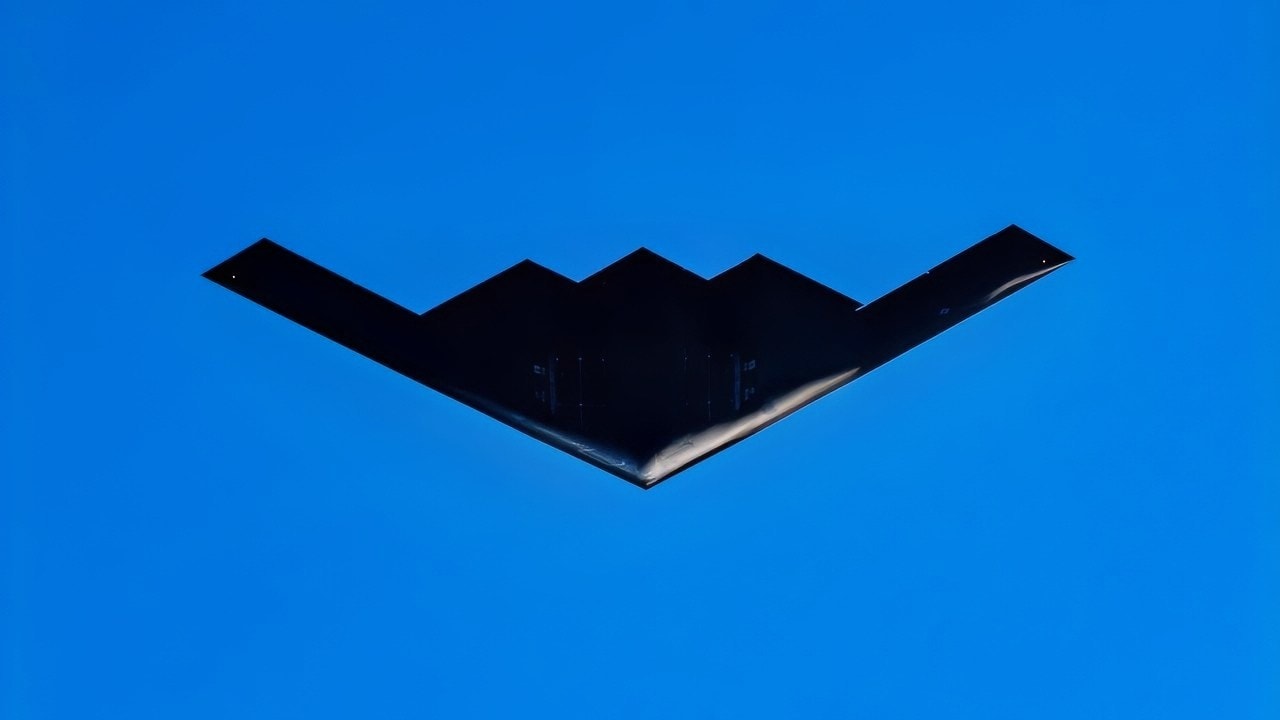
The B-2 Spirit flies over the Rose Parade at Pasadena Ca., Jan. 1, 2024. The Rose Parade is a parade of flower covered floats, marching band, and equestrian units that is produced by the Tournament of Roses. (U.S. Air Force photo by Airman 1st Class Bryce Moore)
Arriving forces would need an organic, built-in, close-range drone and missile defense network to protect advancing forces.
Most of all, the kind of amphibious attack the U.S. Marine Corps might pursue would not look anything like a linear, mechanized Iwo Jima operation. Today’s Marine Corps is lighter, faster, more agile, and more lethal.
The more modern approach to amphibious attack is explained in the much-discussed Corps strategy document called “Marine Corps Force Design 2030,” a text which calls for a more expeditionary, agile, island-hopping kind of sea-land-air force fortified by networking, manned-unmanned systems teaming, ship-to-shore precision weapons
Why the USS Tripoli
Now, the USS Tripoli is in theater with more than 2,200 Marines.
Years ago, U.S. Navy weapons developers and planners envisioned the first two America-class amphibious assault ships as “aviation-centric,” meaning they were built without a well-deck and primarily engineered to support maritime air attack with the arriving F-35B and high-performing MV-22 Osprey.
The third America-class Amphibious Assault Ship, the USS Bougainville, brings back the well-deck and is expected to arrive this year, so elements of water-driven, manned, and unmanned amphibious attack are going nowhere.
Yet constructing new “aviation-centric” amphibs was all part of the initial conception of the ship class, as it sought to leverage breakthrough air attack technologies in the short term, without forsaking or ultimately compromising the core concept of ship-to-shore amphibious assault enabled by a well-deck.
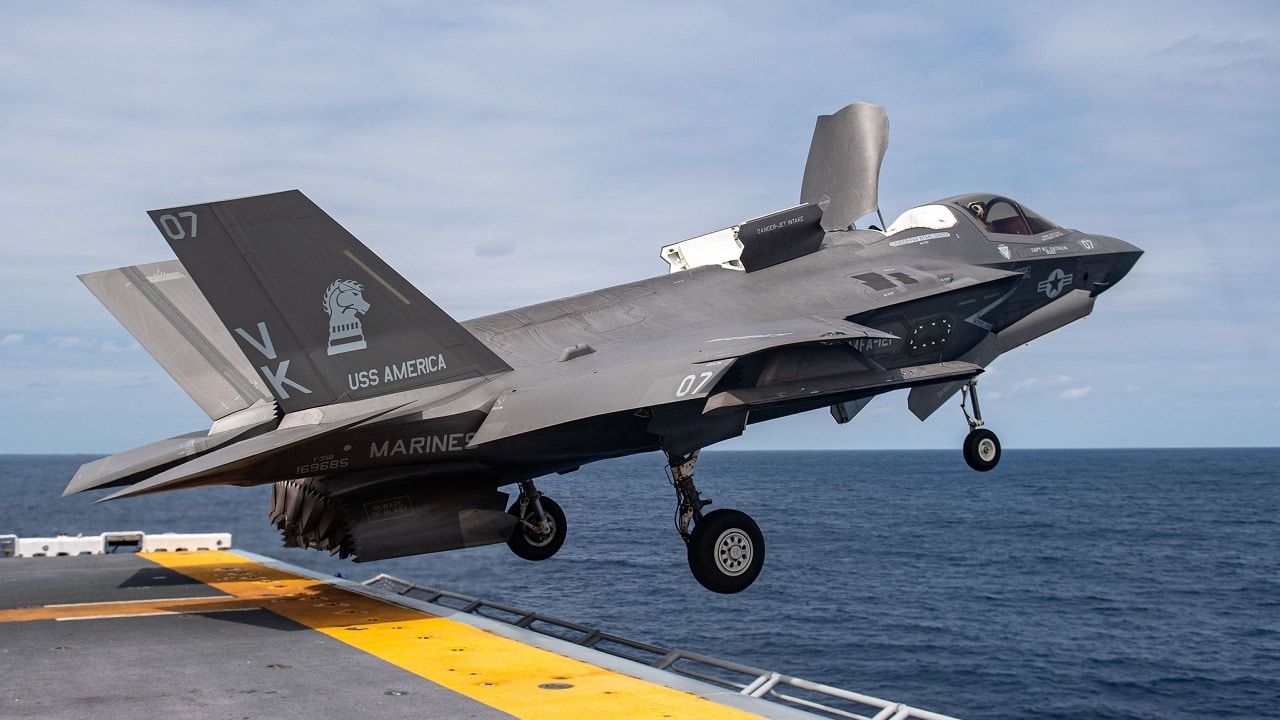
PHILIPPINE SEA (Feb. 9, 2022) An F-35B Lightning II fighter aircraft from the 31st Marine Expeditionary Unit (MEU) launches from the forward-deployed amphibious assault ship USS America (LHA 6) during joint Exercise Noble Fusion. Noble Fusion demonstrates that Navy and Marine Corps forward-deployed stand-in naval expeditionary forces can rapidly aggregate Marine Expeditionary Unit/Amphibious Ready Group teams at sea, along with a carrier strike group, as well as other joint force elements and allies, in order to conduct lethal sea-denial operations, seize key maritime terrain, guarantee freedom of movement, and create advantage for US, partner and allied forces. Naval Expeditionary forces conduct training throughout the year, in the Indo-Pacific, to maintain readiness. (U.S. Navy photo by Mass Communication Specialist 3rd Class Thomas B. Contant) 220209-N-BX791-1299
Therefore, both of the first two America-class ships, the USS America and the USS Tripoli, were built with extra deck and hangar space to transport high-value aircraft such as the then-emerging F-35B and high-performing Osprey.
The USS Tripoli, in particular, received structural reinforcement and a special non-skid, heat-resistant deck coating to better support F-35B operations. The USS America and USS Tripoli can each carry up to 20 F-35Bs and 12 Osprey tiltrotors, supported by UH-60 SeaHawk helicopters.
Air Attack With Osprey
The Concepts of Operation supporting these ships seemed to focus on bringing 5th-Generation stealth air-attack capability into amphibious warfare and on leveraging the Osprey’s transport, speed, and weapons-delivery capabilities.
Small infantry carriers, mortars, and groups of combat-ready Marines can travel hundreds of miles in an Osprey to deliver supplies, conduct forward reconnaissance, or even perform what’s called Mounted Vertical Maneuver — the ability to drop self-sustaining forces in behind enemy lines for short-term clandestine, high-risk combat, scouting, or rescue missions.
The Osprey can travel faster than 200 knots in airplane mode, yet hover and maneuver close to the ground with the agility of a helicopter… all while operating with a combat radius of 450 nautical miles.
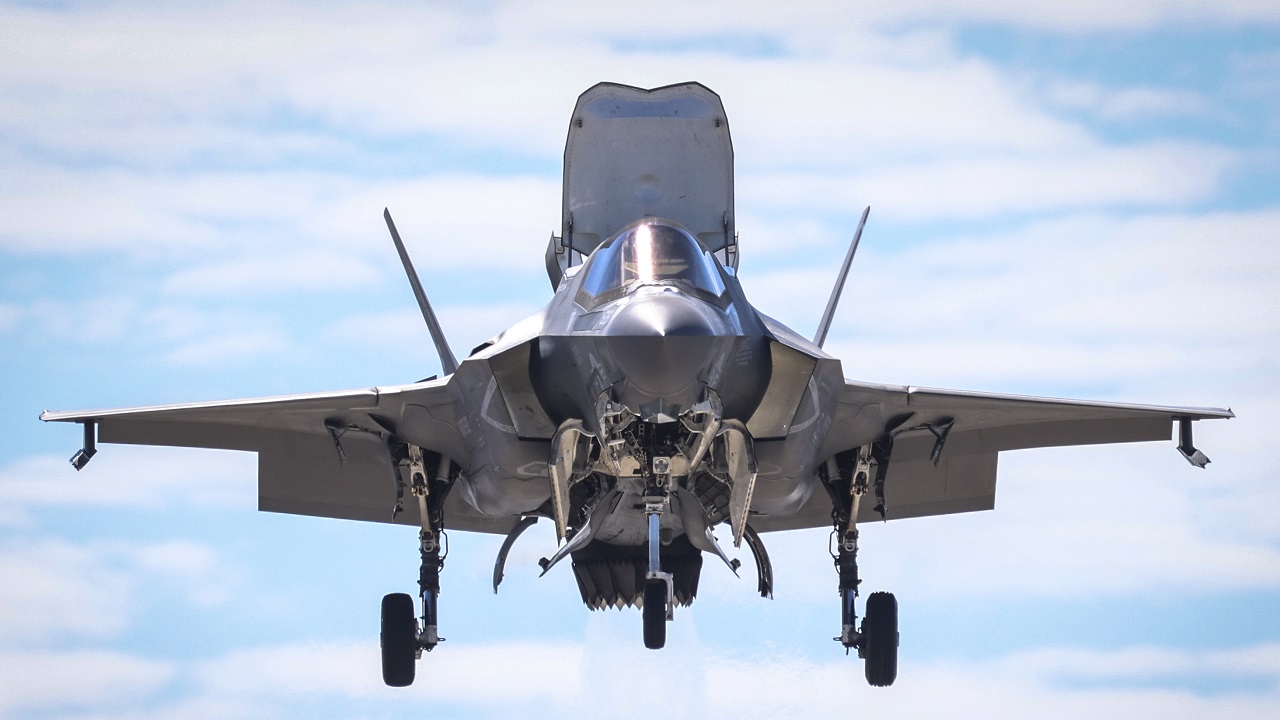
An F-35B Lightning II with 3rd Marine Aircraft Wing, based at Marine Corps Air Station Miramar, San Diego, California, conducts an aerial demonstration during the 2022 MCAS Air Show at MCAS Miramar, Sept. 24, 2022. The F-35B Lightning II, flown by aviators with Marine Fighter Attack Training Squadron 502, is equipped with short takeoff and vertical landing capability that expands its range by allowing it to operate from naval vessels and in austere, expeditionary environments. The theme for the 2022 MCAS Miramar Air Show, “Marines Fight, Evolve and Win,” reflects the Marine Corps’ ongoing modernization efforts to prepare for future conflicts. (U.S. Marine Corps photo by Lance Cpl. Jose S. GuerreroDeLeon)
The USS Tripoli is carrying more than 2,200 Marines, yet, by itself, the ship does not seem fully optimized for ship-to-shore, watercraft-driven amphibious attack, as it has no well deck. However, the ship could unleash F-35B 5th-generation air attack from closer in to shore and transport combat units and weapons “by air” with the Osprey.
Air-Surface Ocean Attack
Since well-decks are already present to a sufficient degree on existing WASP-class amphibs, the idea was to architect a new class of amphibs uniquely positioned to project power … from the “air.” After all, prior to the F-35B, amphibious warfare commanders had “no” built-in, organic 5th-gen air support.
Close-in, organic 5th-generation air support provides an entirely new dimension of amphibious warfare, particularly given the F-35 B’s stealth, weapons, and drone-like surveillance capabilities.
The decision to send the USS Tripoli, given this aviation-centric advantage, may indicate that Pentagon planners see more tactical merit in taking islands and coastal areas along the Strait of Hormuz … from the air.
Should Osprey aircraft carry Marines, supported by Army paratroopers, Apache helicopters, and F-35Bs, it could make tactical sense to seize coastal or island areas without having to fight through mines and small boats on the surface.
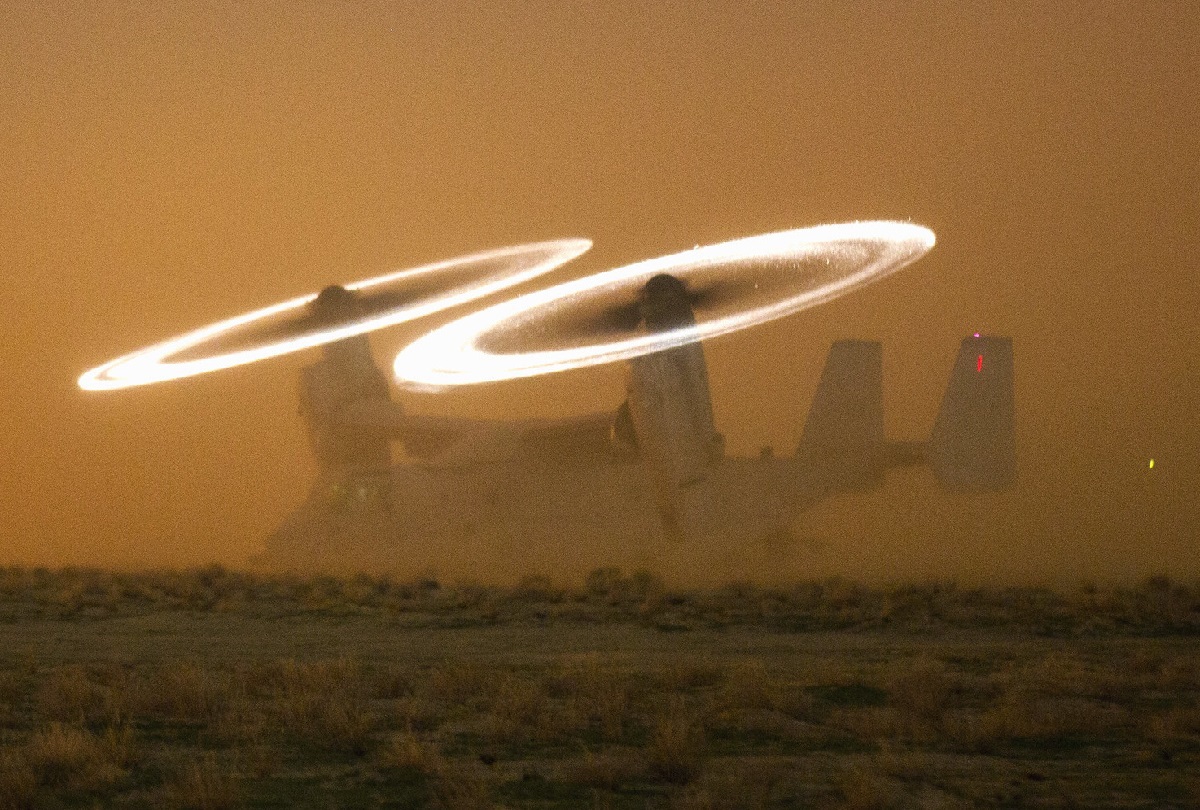
A Marine Corps MV-22 Osprey assigned to Special Purpose Marine Air-Ground Task Force-Crisis Response-Central Command stages on a hasty landing zone during a tactical recovery of aircraft and personnel drill at an undisclosed location in Southwest Asia, Nov. 16, 2015.
Perhaps once an island or coastal territory was secured, additional assets could arrive more securely via an amphibious landing.
An air assault would enable attacking forces to simply “jump” over or “avoid” many sea mines and swarming boat attacks, likely greatly challenging any amphibious landing.
With 5th-generation air support and ballistic missile protective cover provided by Aegis-enabled destroyers and cruisers, the USS Tripoli could be well positioned to “take” or “secure” areas of the Iranian coastline bordering the Strait of Hormuz.
Both the A-10 and F-35 are designed to perform close air support, so arriving units would benefit from close-in air-to-ground attacks. Such an effort would be well fortified by U.S. Army 82nd Airborne paratroopers, Marines traveling in Ospreys, and, of course, drones and fighter jets.
An air-focused attack on the Iranian coastline makes tactical sense, given that the U.S. already has air superiority over Iran and could use ship-based ballistic missile defenses to support arriving forces along the Iranian coastline.
5th Gen Close Air Support
The units would need very strong 5th-gen close-air support to defend arriving forces, and the Marines and soldiers themselves would be well advised to operate with organic drone defenses in the form of mobile EW systems or small-to-medium-caliber transportable surface-to-air counter-drone swarm defenses.
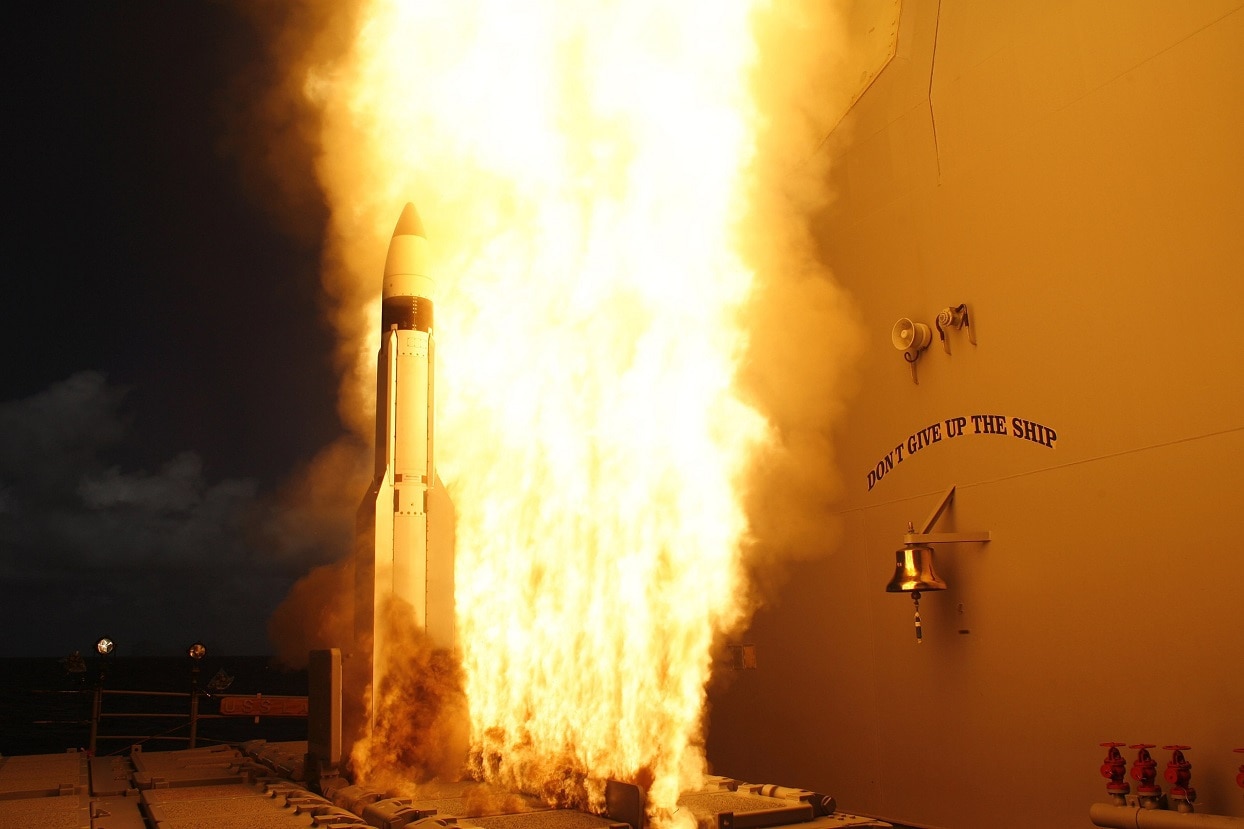
PACIFIC OCEAN (April 26, 2007) – A Standard Missile-3 (SM-3) is launched from the Aegis-class guided missile cruiser USS Lake Erie (CG 70), during a joint Missile Defense Agency, U.S. Navy ballistic missile flight test. Approximately three minutes later, the SM-3 intercepted a unitary (non-separating) ballistic missile threat target, launched from the Pacific Missile Range Facility, Barking Sands, Kauai, Hawaii. Within moments of this launch, the USS Lake Erie also launched a Standard Missile-2 (SM-2) against a hostile air target in order to defend herself. The test was the eighth intercept, in 10 program flight tests. The test was designed to show the capability of the ship and its crew to conduct ballistic missile defense and at the same time defend herself. This test also marks the 27th successful hit-to-kill intercept in tests since 2001. U.S. Navy photo (RELEASED)
This could be done with weapons such as small arms using “proximity” fuses to blanket an area with explosive fire and “stop” or “destroy” groups of incoming drone swarm attacks.
One fast emerging Naval drone-defense effort involves the maritime use of a combat-proven counter-drone “drone” called the Coyote. The Raytheon weapon can launch from armored vehicles as a drone-missile able to destroy drone swarms by detonating with a proximity fuse to release explosive materials across an “area” and destroy many drones at once.
Now, U.S. Navy warships operate with ship-mounted Coyote counter-drone swarm technologies, something which gives depth to the service’s ship-based drone and missile defenses.
Any amphibious forces attacking Iranian islands or coastal areas in the Strait of Hormuz would benefit from the protective envelope of Aegis radar, ship-based integrated radar, command and control, and fire control technology engineered to track and destroy incoming ballistic missiles.
Aegis-capable destroyers could, for example, easily operate within the ranges needed to track and intercept or destroy Iranian missiles aimed at forces arriving on land.
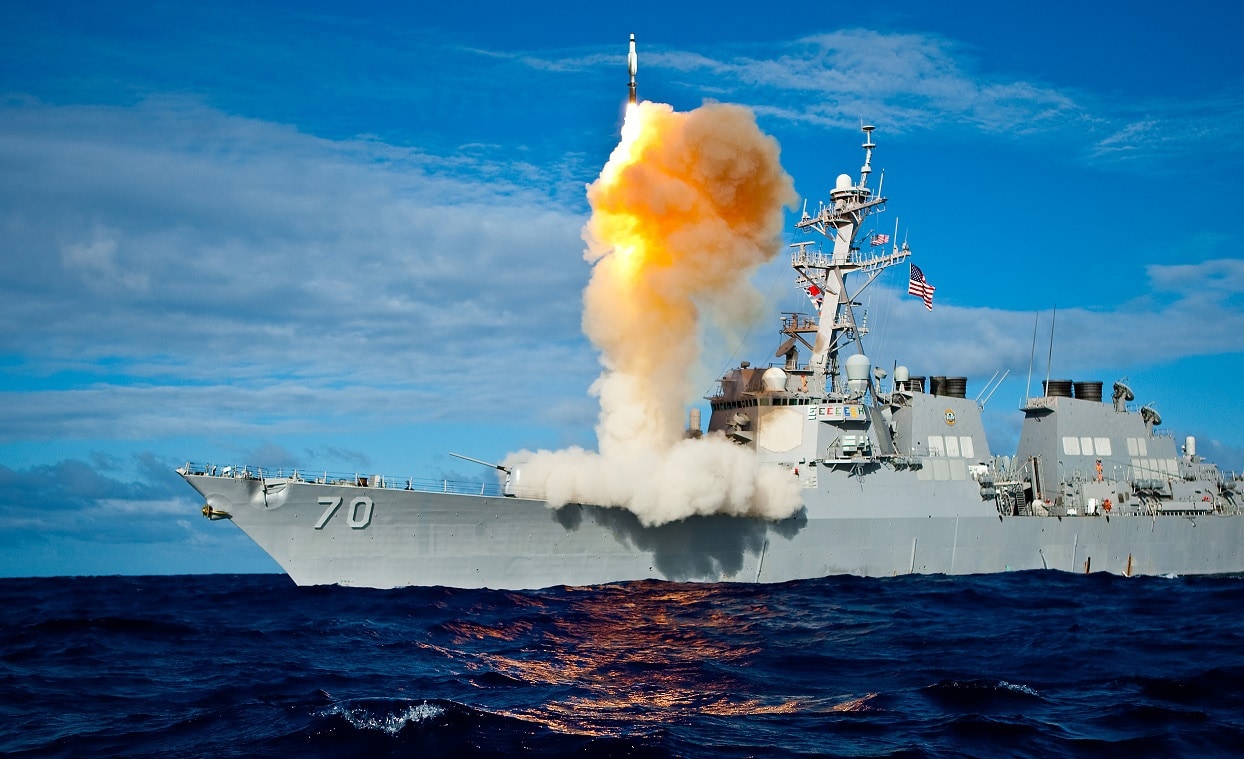
PACIFIC OCEAN (July 30, 2009) During exercise Stellar Avenger, the Aegis-class destroyer USS Hopper (DDG 70) launches a standard missile (SM) 3 Blk IA, successfully intercepting a sub-scale short range ballistic missile, launched from the Kauai Test Facility, Pacific Missile Range Facility (PMRF), Barking Sans, Kauai. This was the 19th successful intercept in 23 at-sea firings, for the Aegis BMD program, including the February 2008 destruction of a malfunctioning satellite above the earthÕs atmosphere. (U.S. Navy photo/Released)
Landing forces would also need organic, built-in drone defenses in the form of portable EW or counter-drone small arms able to track and shoot down Iranian drone attacks.
Then, if a landing corridor were established, mobile Patriot batteries and other surface-to-air defenses could be fast-tracked to forces holding ground.
source : 19fortyfive
Featured Post
 বড় জাহাজ মেরামতে মাতারবাড়ীতে ১ বিলিয়ন ডলারের প্রকল্প
 মাতারবাড়ীতে প্রায় ১ বিলিয়ন মার্কিন ডলার ব্যয়ে পরিবেশবান্ধব ডকইয়ার্ড ও জাহাজ নির্মাণ কেন্দ্র স্থাপনের উদ্যোগে নীতিগত অনুমোদন দিয়েছে নৌপরিবহন মন্ত্রণালয়। এখন প্রকল্পটির কারিগরি ও আর্থিক মূল্যায়নের জন্য প্রস্তাবটি সরকারি-বেসরকারি অংশীদারত্ব (পিপিপি) কর্তৃপক্ষের কাছে পাঠানো হয়েছে। সম্পূর্ণ বেসরকারি অর্থায়নে সরকারি জমির মালিকানা অক্ষুণ্ন রেখে প্রকল্পটি বাস্তবায়নের পরিকল্পনা রয়েছে। বন্দর কর্তৃপক্ষ জানায়, […]
 Industry on alert over scam messages offering ships “safe passage” on Hormuz
 Credit: Shutterstock Fraudulent messages offering safe passage through the Strait of Hormuz in exchange for cryptocurrency have been circulated to shipping companies with vessels stranded west of the waterway, according to MARISKS. In an alert issued on 20 April, MARISKS cautioned that unknown actors posing as Iranian authorities had contacted […]



JOB SITES
CONTENTS
LINKS
Happy New Year

Découvrez les avantages de MadCasino
Dans le monde des casinos en ligne, MadCasino se distingue par ses offres attrayantes et ses services de qualité. Que vous soyez un joueur débutant ou un parieur aguerri, vous trouverez ici une variété de jeux qui sauront satisfaire toutes vos envies. Les machines à sous, les jeux de table et les options de paris en direct sont tous disponibles pour vous offrir une expérience de jeu inégalée. De plus, le casino propose régulièrement des bonus qui permettent d'augmenter vos chances de gagner, vous offrant ainsi une excellente opportunité de maximiser vos gains.
En matière de sécurité, MadCasino est un nom de confiance. Il est entièrement licencié et régulé, ce qui garantit un environnement de jeu sûr et équitable. Les joueurs peuvent se concentrer sur leur expérience de jeu sans se soucier des problèmes de sécurité. Les transactions financières sont également sécurisées grâce à des technologies de pointe.
Les jeux proposés par MadCasino sont issus des développeurs les plus réputés de l'industrie, vous assurant des graphismes époustouflants et des mécaniques de jeu innovantes. Les joueurs peuvent également profiter d'une expérience de jeu en direct qui simule l'atmosphère d'un casino terrestre, tout en restant dans le confort de leur maison.
Enfin, la plateforme de MadCasino est optimisée pour les appareils mobiles, permettant aux joueurs de parier à tout moment et de n'importe où. Que vous soyez sur votre smartphone ou votre tablette, l'accès à vos jeux préférés n'a jamais été aussi simple. Ne manquez pas l'opportunité de découvrir ce casino exceptionnel.
Les offres de Cresus Casino
Cresus Casino est un autre acteur majeur dans le domaine des jeux en ligne, offrant des promotions généreuses et une vaste sélection de jeux. Les joueurs peuvent profiter d'une expérience de jeu enrichissante grâce aux nombreux bonus disponibles, qui sont conçus pour attirer tant les nouveaux utilisateurs que les joueurs réguliers. Ces avantages permettent non seulement de prolonger votre temps de jeu, mais aussi d'augmenter vos chances de gains conséquents.
Le casino se distingue également par sa ludothèque impressionnante, comprenant une sélection variée de machines à sous, de jeux de table et de jeux en direct. Les clients peuvent choisir parmi des titres populaires et appréciés, ainsi que des nouveautés qui enrichissent constamment l'offre. L'interface utilisateur est conviviale, rendant la navigation sur la plateforme fluide et agréable.
En termes de sécurité, Cresus Casino assure à ses joueurs un environnement de jeu fiable. La plateforme utilise des protocoles de sécurité avancés pour protéger les données personnelles et financières des utilisateurs. Cela permet aux joueurs de se sentir en sécurité tout en jouant à leurs jeux préférés.
Avec un service client réactif et professionnel, Cresus Casino s'assure que toutes vos questions et préoccupations sont traitées rapidement. Que ce soit pour des questions concernant les bonus, les retraits ou les jeux, vous bénéficierez d'une assistance rapide et efficace.
Explorez Nine Casino et ses avantages
Dans l'univers des casinos en ligne, Nine Casino a su se faire une place de choix grâce à son approche innovante et à ses nombreux avantages pour les joueurs. Les utilisateurs peuvent s'attendre à une expérience de jeu enrichissante, avec des bonus attractifs qui sont régulièrement mis à jour. Ces offres sont une excellente façon de découvrir de nouveaux jeux tout en maximisant votre potentiel de gain.
La plateforme de Nine Casino est riche en options de jeux, allant des machines à sous aux jeux de table, en passant par le live casino. Chaque jeu est conçu pour offrir une expérience immersive grâce à des graphismes de haute qualité et des fonctionnalités innovantes. Les parieurs peuvent profiter de sessions de jeu captivantes, comme s'ils étaient dans un véritable casino.
La sécurité est une priorité pour Nine Casino, qui utilise des technologies de cryptage avancées pour protéger les informations de ses joueurs. Cela garantit un environnement de jeu sûr et fiable, permettant aux utilisateurs de se concentrer sur ce qu'ils aiment le plus : jouer.
Enfin, le service clientèle fourni par Nine Casino est exceptionnel, avec des agents disponibles pour répondre à toutes vos questions et résoudre vos problèmes. Vous pourrez ainsi jouer en toute tranquillité, sachant que votre satisfaction est au cœur de leurs préoccupations.
Profitez de l'expérience Lucky31
Lucky31 est un casino en ligne qui se distingue par son approche orientée vers le joueur, offrant une multitude d'options de jeux et des bonus généreux. Que vous soyez amateur de machines à sous ou passionné de jeux de table, vous trouverez une large sélection pour satisfaire toutes vos envies de jeu. Les promotions fréquentes permettent aux joueurs de prolonger leur expérience tout en augmentant leurs chances de gains.
La convivialité de la plateforme de Lucky31 est l'un de ses plus grands atouts. Les joueurs peuvent naviguer facilement entre les différents jeux, et l'interface est conçue pour être intuitive, quel que soit le niveau d'expérience de l'utilisateur. De plus, le casino est entièrement optimisé pour les appareils mobiles, ce qui permet de parier où que vous soyez.
En matière de sécurité, Lucky31 prend les préoccupations des joueurs très au sérieux. Le casino est agréé et régulé, garantissant un environnement de jeu équitable et sécurisé. Les joueurs peuvent ainsi se concentrer sur leur expérience de jeu sans se soucier des risques liés à la sécurité.
Pour ceux qui recherchent un support client efficace, Lucky31 offre un service réactif et professionnel. Que ce soit pour des questions sur les bonus, les jeux ou les paiements, vous aurez accès à une assistance de qualité, vous garantissant une expérience de jeu fluide et agréable.