search the site


Omera Liberty marks a historic milestone for Bangladesh’s maritime sector
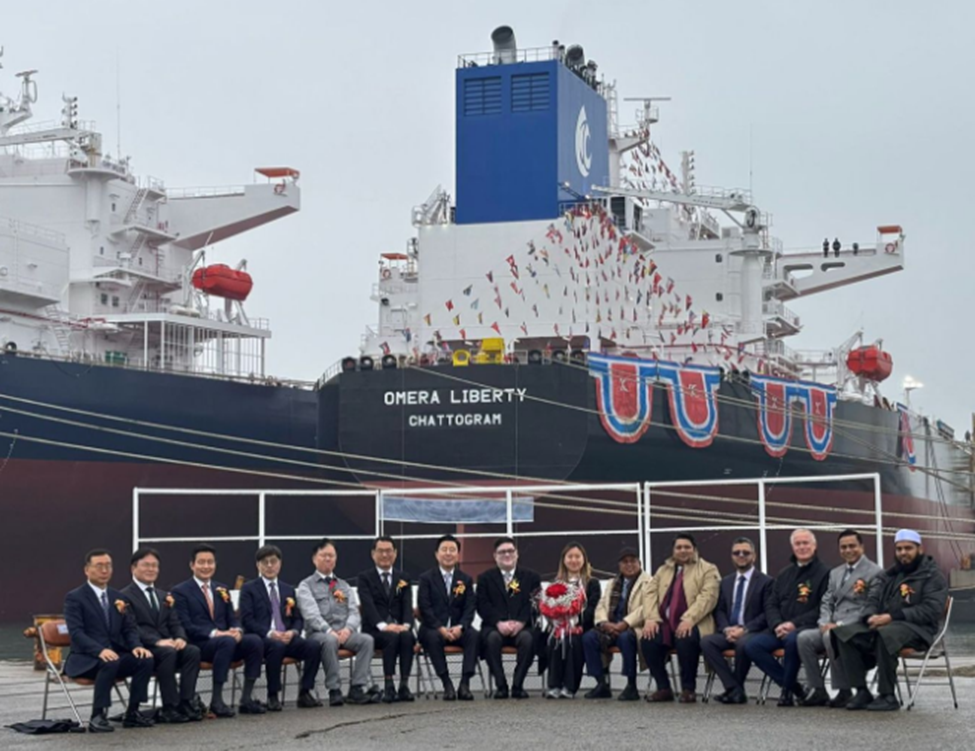
Persons in the image: Azam J. Chowdhury – Managing Director, MJL Bangladesh PLC., Tanjil Chowdhury – Director, MJL Bangladesh PLC., H.E. Toufiq Islam Shatil– Bangladesh Ambassador to South Korea
David Kim – Chairman, Daehan Shipbuilding and Capt. Minhazur Reza Chowdhury – CEO, Shipping Division of ECG
Omera Liberty marks a historic milestone for Bangladesh’s maritime sector
The maiden voyage of the Aframax oil tanker Omera Liberty marks a historic milestone for Bangladesh’s maritime sector. It represents a significant step forward in strengthening the country’s strategic shipping capacity. Owned by MJL Bangladesh PLC and constructed at Daehan Shipbuilding in South Korea, the 115,000-deadweight-ton vessel stands as the largest oil tanker ever to sail under the Bangladeshi flag. Its commissioning signals both industrial confidence and a renewed commitment to advancing Bangladesh’s presence in global maritime trade.
Bangladesh has long relied heavily on foreign-flagged vessels to transport its petroleum imports and exports. This dependence has resulted in substantial freight payments leaving the country each year, placing pressure on foreign-exchange reserves and limiting domestic shipping capacity. The entry of Omera Liberty into service represents a strategic shift to strengthen national tonnage and retain greater economic value within the country. By operating an Aframax vessel well-suited for regional and international transport of crude and refined petroleum, Bangladesh positions itself more competitively in energy logistics across the Bay of Bengal and beyond.
The vessel’s scale and technical capability reflect Bangladesh’s growing ambitions within the blue economy framework. The government and private maritime stakeholders have increasingly emphasized the importance of expanding shipping infrastructure, fleet ownership, and port connectivity as essential pillars of long-term economic growth. In this context, Omera Liberty is not merely a tanker; it is a symbol of a broader transition toward maritime self-reliance and strategic resilience.
Equally important is the vessel’s contribution to employment and professional development for Bangladeshi seafarers. For decades, Bangladesh has produced competent maritime officers and ratings serving on foreign-flag ships worldwide. However, opportunities to serve aboard large national-flag tankers have remained limited. The deployment of Omera Liberty expands opportunities for local officers, engineers, and cadets to gain valuable experience aboard a modern Aframax tanker registered in the national registry. This strengthens both institutional capacity and professional confidence within the country’s maritime workforce.
The project also reflects the growing role of private-sector leadership in advancing Bangladesh’s shipping industry. Under the direction of Managing Director Azam J. Chowdhury, MJL Bangladesh PLC has demonstrated that Bangladeshi corporations can successfully invest in large-scale maritime assets aligned with national priorities. Such initiatives complement government efforts to expand port facilities at the Port of Chattogram and the Port of Mongla, as well as emerging developments linked to the country’s broader maritime infrastructure strategy.
From a geopolitical perspective, the introduction of Omera Liberty strengthens Bangladesh’s credibility as a responsible maritime trading nation capable of managing sophisticated energy transport operations. As regional energy demand grows and shipping routes across the Indian Ocean become increasingly strategic, national ownership of modern tanker capacity enhances Bangladesh’s ability to secure supply chains and participate more actively in regional logistics networks.
Moreover, the vessel’s commissioning highlights the importance of partnerships between Bangladeshi shipping enterprises and leading international shipbuilders. The collaboration with Daehan Shipbuilding demonstrates how technology transfer, quality construction standards, and global expertise can support Bangladesh’s aspirations to modernize its merchant fleet. Such partnerships may pave the way for further fleet expansion in the coming years.
Ultimately, the voyage of Omera Liberty represents more than the addition of a single tanker to the national registry. It embodies confidence in Bangladesh’s maritime future, reinforces the role of shipping in sustaining economic growth, and strengthens the country’s position within the evolving blue economy landscape. As Bangladesh continues to expand its maritime capabilities, such investments will remain essential to shaping a resilient, globally competitive shipping sector.
Featured Post
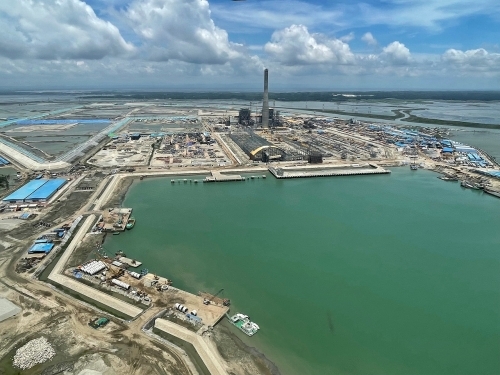 বড় জাহাজ মেরামতে মাতারবাড়ীতে ১ বিলিয়ন ডলারের প্রকল্প
 মাতারবাড়ীতে প্রায় ১ বিলিয়ন মার্কিন ডলার ব্যয়ে পরিবেশবান্ধব ডকইয়ার্ড ও জাহাজ নির্মাণ কেন্দ্র স্থাপনের উদ্যোগে নীতিগত অনুমোদন দিয়েছে নৌপরিবহন মন্ত্রণালয়। এখন প্রকল্পটির কারিগরি ও আর্থিক মূল্যায়নের জন্য প্রস্তাবটি সরকারি-বেসরকারি অংশীদারত্ব (পিপিপি) কর্তৃপক্ষের কাছে পাঠানো হয়েছে। সম্পূর্ণ বেসরকারি অর্থায়নে সরকারি জমির মালিকানা অক্ষুণ্ন রেখে প্রকল্পটি বাস্তবায়নের পরিকল্পনা রয়েছে। বন্দর কর্তৃপক্ষ জানায়, […]
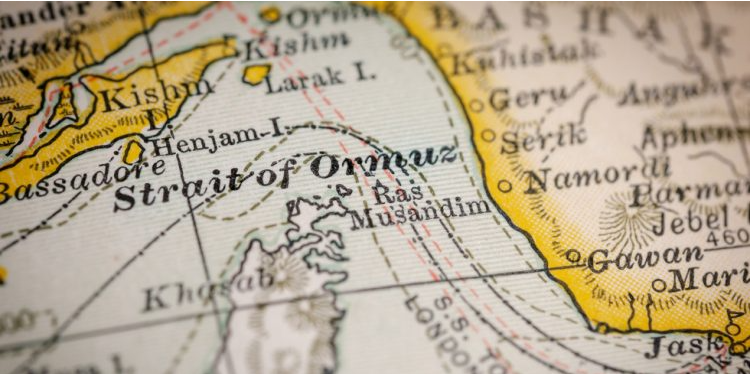 Industry on alert over scam messages offering ships “safe passage” on Hormuz
 Credit: Shutterstock Fraudulent messages offering safe passage through the Strait of Hormuz in exchange for cryptocurrency have been circulated to shipping companies with vessels stranded west of the waterway, according to MARISKS. In an alert issued on 20 April, MARISKS cautioned that unknown actors posing as Iranian authorities had contacted […]



JOB SITES
CONTENTS
LINKS
Happy New Year

Découvrez les avantages de MadCasino
Dans le monde des casinos en ligne, MadCasino se distingue par ses offres attrayantes et ses services de qualité. Que vous soyez un joueur débutant ou un parieur aguerri, vous trouverez ici une variété de jeux qui sauront satisfaire toutes vos envies. Les machines à sous, les jeux de table et les options de paris en direct sont tous disponibles pour vous offrir une expérience de jeu inégalée. De plus, le casino propose régulièrement des bonus qui permettent d'augmenter vos chances de gagner, vous offrant ainsi une excellente opportunité de maximiser vos gains.
En matière de sécurité, MadCasino est un nom de confiance. Il est entièrement licencié et régulé, ce qui garantit un environnement de jeu sûr et équitable. Les joueurs peuvent se concentrer sur leur expérience de jeu sans se soucier des problèmes de sécurité. Les transactions financières sont également sécurisées grâce à des technologies de pointe.
Les jeux proposés par MadCasino sont issus des développeurs les plus réputés de l'industrie, vous assurant des graphismes époustouflants et des mécaniques de jeu innovantes. Les joueurs peuvent également profiter d'une expérience de jeu en direct qui simule l'atmosphère d'un casino terrestre, tout en restant dans le confort de leur maison.
Enfin, la plateforme de MadCasino est optimisée pour les appareils mobiles, permettant aux joueurs de parier à tout moment et de n'importe où. Que vous soyez sur votre smartphone ou votre tablette, l'accès à vos jeux préférés n'a jamais été aussi simple. Ne manquez pas l'opportunité de découvrir ce casino exceptionnel.
Les offres de Cresus Casino
Cresus Casino est un autre acteur majeur dans le domaine des jeux en ligne, offrant des promotions généreuses et une vaste sélection de jeux. Les joueurs peuvent profiter d'une expérience de jeu enrichissante grâce aux nombreux bonus disponibles, qui sont conçus pour attirer tant les nouveaux utilisateurs que les joueurs réguliers. Ces avantages permettent non seulement de prolonger votre temps de jeu, mais aussi d'augmenter vos chances de gains conséquents.
Le casino se distingue également par sa ludothèque impressionnante, comprenant une sélection variée de machines à sous, de jeux de table et de jeux en direct. Les clients peuvent choisir parmi des titres populaires et appréciés, ainsi que des nouveautés qui enrichissent constamment l'offre. L'interface utilisateur est conviviale, rendant la navigation sur la plateforme fluide et agréable.
En termes de sécurité, Cresus Casino assure à ses joueurs un environnement de jeu fiable. La plateforme utilise des protocoles de sécurité avancés pour protéger les données personnelles et financières des utilisateurs. Cela permet aux joueurs de se sentir en sécurité tout en jouant à leurs jeux préférés.
Avec un service client réactif et professionnel, Cresus Casino s'assure que toutes vos questions et préoccupations sont traitées rapidement. Que ce soit pour des questions concernant les bonus, les retraits ou les jeux, vous bénéficierez d'une assistance rapide et efficace.
Explorez Nine Casino et ses avantages
Dans l'univers des casinos en ligne, Nine Casino a su se faire une place de choix grâce à son approche innovante et à ses nombreux avantages pour les joueurs. Les utilisateurs peuvent s'attendre à une expérience de jeu enrichissante, avec des bonus attractifs qui sont régulièrement mis à jour. Ces offres sont une excellente façon de découvrir de nouveaux jeux tout en maximisant votre potentiel de gain.
La plateforme de Nine Casino est riche en options de jeux, allant des machines à sous aux jeux de table, en passant par le live casino. Chaque jeu est conçu pour offrir une expérience immersive grâce à des graphismes de haute qualité et des fonctionnalités innovantes. Les parieurs peuvent profiter de sessions de jeu captivantes, comme s'ils étaient dans un véritable casino.
La sécurité est une priorité pour Nine Casino, qui utilise des technologies de cryptage avancées pour protéger les informations de ses joueurs. Cela garantit un environnement de jeu sûr et fiable, permettant aux utilisateurs de se concentrer sur ce qu'ils aiment le plus : jouer.
Enfin, le service clientèle fourni par Nine Casino est exceptionnel, avec des agents disponibles pour répondre à toutes vos questions et résoudre vos problèmes. Vous pourrez ainsi jouer en toute tranquillité, sachant que votre satisfaction est au cœur de leurs préoccupations.
Profitez de l'expérience Lucky31
Lucky31 est un casino en ligne qui se distingue par son approche orientée vers le joueur, offrant une multitude d'options de jeux et des bonus généreux. Que vous soyez amateur de machines à sous ou passionné de jeux de table, vous trouverez une large sélection pour satisfaire toutes vos envies de jeu. Les promotions fréquentes permettent aux joueurs de prolonger leur expérience tout en augmentant leurs chances de gains.
La convivialité de la plateforme de Lucky31 est l'un de ses plus grands atouts. Les joueurs peuvent naviguer facilement entre les différents jeux, et l'interface est conçue pour être intuitive, quel que soit le niveau d'expérience de l'utilisateur. De plus, le casino est entièrement optimisé pour les appareils mobiles, ce qui permet de parier où que vous soyez.
En matière de sécurité, Lucky31 prend les préoccupations des joueurs très au sérieux. Le casino est agréé et régulé, garantissant un environnement de jeu équitable et sécurisé. Les joueurs peuvent ainsi se concentrer sur leur expérience de jeu sans se soucier des risques liés à la sécurité.
Pour ceux qui recherchent un support client efficace, Lucky31 offre un service réactif et professionnel. Que ce soit pour des questions sur les bonus, les jeux ou les paiements, vous aurez accès à une assistance de qualité, vous garantissant une expérience de jeu fluide et agréable.