search the site


Why Maritime’s AI Future Depends on Data, Integration, and Collaboration
Why Maritime’s AI Future Depends on Data, Integration, and Collaboration

Dr Oscar Pernia is Chief Technology Officer at NextPort
Throughout his 25 years of maritime experience, Dr Oscar Pernia has left a trail of innovation across terminal operations, shipping lines and technology providers. Oscar is a true innovator, and throughout his career has implemented the Mediterranean’s first semi-automated terminal at Hanjin Shipping in Algeciras, led automation and AI strategy at Navis in San Francisco & Rotterdam and built TIL’s global automation and digitalisation department at MSC. Today, Oscar is Chief Technology Officer at NextPort, supporting digital twin technology for ports and terminals, connecting processes, data, and systems.
Oscar has noticed a drastic shift in technology advancements pre- and post-Pandemic.“Before the Pandemic, the industry was pushing for a big change, but now it’s the other way around, technology progress and technology availability are pushing the change.” Originally, industry operators and end users were forced to deal with archaic software, and outdated ways of working were an everyday occurrence. It was only when providers were forced to adapt to remote working that technology improved, enabling new paradigms.
Nowadays, with advances in AI, automation and vessel connectivity, technology providers have the means to create more complex, web-based software and have even created opportunities for traditionally land-based technology providers to move into the shipping domain. Oscar explains, “Technology is now, I would say it has become faster than us, faster than the change that we can accommodate. It is key we enable the future of work for the maritime industry and require integration and organisational enablement.”
The Data Behind AI
AI is, without a doubt, the biggest enabler of innovation in maritime that we’ve seen in the 21st century to date. It has given shipping the potential to streamline every aspect of operations and business; it has also given technology providers the opportunity to enhance platforms and tools through automated operations and data analysis and next frontiers by Agentic AI for virtual assistants and AGI (Artificial General Intelligence).
Despite this, AI is far from perfect, and Oscar is cautious of the quality of some AI products on the market today. “I think that, still in our industry, we are far from leveraging the AI potential because data foundation is lacking.” Oscar likens AI to a house; without a solid foundation of data in place first, it is difficult to build a solid AI product.
“In the last five years, I have seen a quantum leap in the acceptance of next-generation solutions – with ChatGPT by OpenAI or Gemini by Google helped democratise AI: but also the foundation is rapidly maturing as with Data terminology ontology, meaning the standardisation of data components but also the
interoperability between systems.” In our Industry, this has largely been due to enablers such as the IMO, TIC4.0 or DCSA working to standardise data across the industry.
Collaborate Or Fall Behind
Over time, shipping companies and terminals have built their own digital ecosystems, often with no consideration of how the other operates. This has resulted in siloed applications across vessels, terminals and land-based logistics nodes. “The whole ecosystem is very fragmented, a kind of Frankenstein approach in many cases.”
With the emergence of new technology comes a wave of new vendors, all battling against each other for clients; however, Oscar cautions that the entrance of newbies in the Industry is necessary but not collaborative enough so far due to lack of interoperability, “Sometimes we are competing when we should be augmenting each other… Systems have to be able to speak the same language.”
The leading technology providers are those building open architectures and APIs to support integrations to external platforms, but even then, these vendors struggle to see the bigger picture. “There is no one single system that can support the whole process; that’s why we need to focus on standardisation and interoperability.”
For Oscar, the future of innovation isn’t in new technology, but perfecting what we already have. Standardising and sharing the data we collect between departments, organisations and the wider industry.
Featured Post
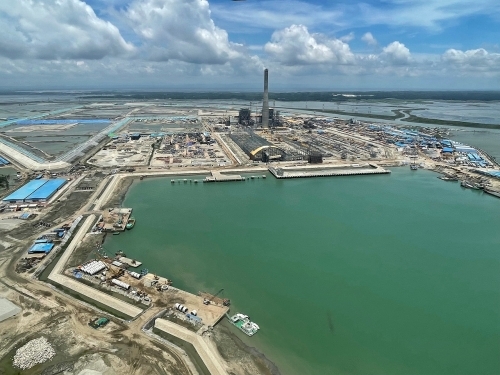 বড় জাহাজ মেরামতে মাতারবাড়ীতে ১ বিলিয়ন ডলারের প্রকল্প
 মাতারবাড়ীতে প্রায় ১ বিলিয়ন মার্কিন ডলার ব্যয়ে পরিবেশবান্ধব ডকইয়ার্ড ও জাহাজ নির্মাণ কেন্দ্র স্থাপনের উদ্যোগে নীতিগত অনুমোদন দিয়েছে নৌপরিবহন মন্ত্রণালয়। এখন প্রকল্পটির কারিগরি ও আর্থিক মূল্যায়নের জন্য প্রস্তাবটি সরকারি-বেসরকারি অংশীদারত্ব (পিপিপি) কর্তৃপক্ষের কাছে পাঠানো হয়েছে। সম্পূর্ণ বেসরকারি অর্থায়নে সরকারি জমির মালিকানা অক্ষুণ্ন রেখে প্রকল্পটি বাস্তবায়নের পরিকল্পনা রয়েছে। বন্দর কর্তৃপক্ষ জানায়, […]
 Industry on alert over scam messages offering ships “safe passage” on Hormuz
 Credit: Shutterstock Fraudulent messages offering safe passage through the Strait of Hormuz in exchange for cryptocurrency have been circulated to shipping companies with vessels stranded west of the waterway, according to MARISKS. In an alert issued on 20 April, MARISKS cautioned that unknown actors posing as Iranian authorities had contacted […]



JOB SITES
CONTENTS
LINKS
Happy New Year

Découvrez les avantages de MadCasino
Dans le monde des casinos en ligne, MadCasino se distingue par ses offres attrayantes et ses services de qualité. Que vous soyez un joueur débutant ou un parieur aguerri, vous trouverez ici une variété de jeux qui sauront satisfaire toutes vos envies. Les machines à sous, les jeux de table et les options de paris en direct sont tous disponibles pour vous offrir une expérience de jeu inégalée. De plus, le casino propose régulièrement des bonus qui permettent d'augmenter vos chances de gagner, vous offrant ainsi une excellente opportunité de maximiser vos gains.
En matière de sécurité, MadCasino est un nom de confiance. Il est entièrement licencié et régulé, ce qui garantit un environnement de jeu sûr et équitable. Les joueurs peuvent se concentrer sur leur expérience de jeu sans se soucier des problèmes de sécurité. Les transactions financières sont également sécurisées grâce à des technologies de pointe.
Les jeux proposés par MadCasino sont issus des développeurs les plus réputés de l'industrie, vous assurant des graphismes époustouflants et des mécaniques de jeu innovantes. Les joueurs peuvent également profiter d'une expérience de jeu en direct qui simule l'atmosphère d'un casino terrestre, tout en restant dans le confort de leur maison.
Enfin, la plateforme de MadCasino est optimisée pour les appareils mobiles, permettant aux joueurs de parier à tout moment et de n'importe où. Que vous soyez sur votre smartphone ou votre tablette, l'accès à vos jeux préférés n'a jamais été aussi simple. Ne manquez pas l'opportunité de découvrir ce casino exceptionnel.
Les offres de Cresus Casino
Cresus Casino est un autre acteur majeur dans le domaine des jeux en ligne, offrant des promotions généreuses et une vaste sélection de jeux. Les joueurs peuvent profiter d'une expérience de jeu enrichissante grâce aux nombreux bonus disponibles, qui sont conçus pour attirer tant les nouveaux utilisateurs que les joueurs réguliers. Ces avantages permettent non seulement de prolonger votre temps de jeu, mais aussi d'augmenter vos chances de gains conséquents.
Le casino se distingue également par sa ludothèque impressionnante, comprenant une sélection variée de machines à sous, de jeux de table et de jeux en direct. Les clients peuvent choisir parmi des titres populaires et appréciés, ainsi que des nouveautés qui enrichissent constamment l'offre. L'interface utilisateur est conviviale, rendant la navigation sur la plateforme fluide et agréable.
En termes de sécurité, Cresus Casino assure à ses joueurs un environnement de jeu fiable. La plateforme utilise des protocoles de sécurité avancés pour protéger les données personnelles et financières des utilisateurs. Cela permet aux joueurs de se sentir en sécurité tout en jouant à leurs jeux préférés.
Avec un service client réactif et professionnel, Cresus Casino s'assure que toutes vos questions et préoccupations sont traitées rapidement. Que ce soit pour des questions concernant les bonus, les retraits ou les jeux, vous bénéficierez d'une assistance rapide et efficace.
Explorez Nine Casino et ses avantages
Dans l'univers des casinos en ligne, Nine Casino a su se faire une place de choix grâce à son approche innovante et à ses nombreux avantages pour les joueurs. Les utilisateurs peuvent s'attendre à une expérience de jeu enrichissante, avec des bonus attractifs qui sont régulièrement mis à jour. Ces offres sont une excellente façon de découvrir de nouveaux jeux tout en maximisant votre potentiel de gain.
La plateforme de Nine Casino est riche en options de jeux, allant des machines à sous aux jeux de table, en passant par le live casino. Chaque jeu est conçu pour offrir une expérience immersive grâce à des graphismes de haute qualité et des fonctionnalités innovantes. Les parieurs peuvent profiter de sessions de jeu captivantes, comme s'ils étaient dans un véritable casino.
La sécurité est une priorité pour Nine Casino, qui utilise des technologies de cryptage avancées pour protéger les informations de ses joueurs. Cela garantit un environnement de jeu sûr et fiable, permettant aux utilisateurs de se concentrer sur ce qu'ils aiment le plus : jouer.
Enfin, le service clientèle fourni par Nine Casino est exceptionnel, avec des agents disponibles pour répondre à toutes vos questions et résoudre vos problèmes. Vous pourrez ainsi jouer en toute tranquillité, sachant que votre satisfaction est au cœur de leurs préoccupations.
Profitez de l'expérience Lucky31
Lucky31 est un casino en ligne qui se distingue par son approche orientée vers le joueur, offrant une multitude d'options de jeux et des bonus généreux. Que vous soyez amateur de machines à sous ou passionné de jeux de table, vous trouverez une large sélection pour satisfaire toutes vos envies de jeu. Les promotions fréquentes permettent aux joueurs de prolonger leur expérience tout en augmentant leurs chances de gains.
La convivialité de la plateforme de Lucky31 est l'un de ses plus grands atouts. Les joueurs peuvent naviguer facilement entre les différents jeux, et l'interface est conçue pour être intuitive, quel que soit le niveau d'expérience de l'utilisateur. De plus, le casino est entièrement optimisé pour les appareils mobiles, ce qui permet de parier où que vous soyez.
En matière de sécurité, Lucky31 prend les préoccupations des joueurs très au sérieux. Le casino est agréé et régulé, garantissant un environnement de jeu équitable et sécurisé. Les joueurs peuvent ainsi se concentrer sur leur expérience de jeu sans se soucier des risques liés à la sécurité.
Pour ceux qui recherchent un support client efficace, Lucky31 offre un service réactif et professionnel. Que ce soit pour des questions sur les bonus, les jeux ou les paiements, vous aurez accès à une assistance de qualité, vous garantissant une expérience de jeu fluide et agréable.