search the site


Resilience at sea: the overlooked sustainability leader

Given its long exposure to physical and financial risk, the maritime industry was compelled to develop robust risk-mitigation approaches well before ESG frameworks became mainstream, argue Silje Bareksten and Morten Elvekrok of KPMG Norway in an article exploring the mechanisms driving the maritime sector toward a more sustainable future.
The overlooked leader
The maritime industry’s role in global sustainability is often overshadowed by scrutiny. We argue the sector deserves recognition for its sustainable leadership and striking progress, especially given the fragmented nature of global shipping. While the complexities of securing a full consensus on the IMO Net Zero Framework are often reported as setbacks, the continuous convening of MEPC sessions is a testament to the sector’s commitment.
Resilience rooted in risk management
The maritime industry has always been defined by physical and financial risk. This reality compelled the sector to pioneer sophisticated risk mitigation measures long before modern ESG frameworks existed. These innovations include:
- Joint-stock companies for distributing cost and risk.
- Mutual insurance companies (“Clubs”) tracing their origins to 17th-century gatherings like Lloyd’s Coffee House.
- Third-party assurance by auditing bodies known as “Classification Societies.”
The logic is simple: ships are expensive assets. Insurance allows multiple parties to pool capital and share the risk of financial ruin, making financing feasible. Crucially, a trusted third party verifies seaworthiness and crew competency before capital is committed. Because the open seas fall outside a single government’s jurisdiction, these private, relationship-based solutions became the norm.
We observe that these financially motivated mechanisms have consistently been powerful drivers of sustainability, improving safety, working conditions, and pollution reduction for centuries.
Tragedies as catalysts: The global framework
Private agility is vital, often proving new standards. Yet, a challenging truth remains: tragedy often serves as a catalyst for sweeping, mandatory global change. Maritime is no exception.
The Titanic sank in 1912; just two years later, nations established a unified response: SOLAS (The International Convention for the Safety of Life at Sea). This remains the most critical instrument ensuring minimum safety standards for global trade. Later, the formation of the IMO following World War II established a shared regulatory framework that stands as a rare example of universal governance.
A proactive track record
Since its inception, the IMO has been an effective coordinator, continuously tightening environmental and safety standards. This structure exists alongside crucial private initiatives. The industry’s commitment is highlighted by major conventions:
- MARPOL Convention (1973): The primary convention addressing environmental issues. Its mandate, expanded through annexes, often follows major disasters. The Net Zero framework is currently being integrated as an amendment to Annex VI (Air Pollution).
- Hong Kong Convention: Now officially in force as of June 2025, it regulates safe and environmentally sound recycling, a crucial step toward genuine circular economy principles.
- STCW Convention: Ensures global, uniform competency for the world’s crew, linking professional standards directly to operational safety.
- The ISM Code: Establishes international standards for safe management and operation through mandatory Safety Management Systems (SMS).
Private innovation beyond bureaucracy
While global conventions are crucial, we must highlight the sector’s capacity for proactive, private-led achievements. Many ambitious leaps originate from internal drive, independent of regulatory pressure.
In Norway, companies are leading the way: Wallenius Wilhelmsen is moving forward with the development of their wind-powered vessel Orcelle concept, while also investing in their methanol dual fuel shaper class vessels. Höegh Autoliners is investing heavily in the ammonia value chain, while Solvang and Wärtsilä are piloting onboard carbon capture despite regulatory uncertainty. Global initiatives such as the Neptune Declaration, the Poseidon Principles, Sea Cargo Charter, and the Getting to Zero Coalition are all evidence of private commitment to seafarers and the environment.
These efforts are driven by organic risk management, technological innovation, and market demand. Crucially, much of this progress is achieved without the overly complex, prescriptive reporting mechanisms favored by regional bodies.
We argue that the sector’s historical success, built on private assurance, is a powerful counter-narrative to the belief that change must be compelled by excessive bureaucracy. The EU’s CSRD framework, for instance, imposes granular reporting demands that risk suffocating small and medium-sized enterprises. Maritime demonstrates that profound change can be achieved through effective industry mechanisms without the weight of twenty-seven different standardized reports.
Beyond compliance: A constructive future
The complexity of maritime regulations is unparalleled. Yet, this history of developing global standards – often self-imposed – proves the sector is uniquely equipped to tackle decarbonization.
While regulatory pressure like FuelEU Maritime and the EU ETS drives compliance, the real leap occurs when market forces and private innovation are unleashed; the same engines that created P&I Clubs and Classification Societies.
The takeaway is clear: the maritime industry does not lack commitment; it simply operates on a scale where global consensus is required.
When we see the proactive adoption of methanol fleets and the pursuit of zero-emission corridors, we see an industry not waiting for a directive but actively charting its own course. We remain constructively optimistic that the sector’s DNA for risk management and global governance will deliver the most resilient transformation of any global industry.
The views presented are only those of the authors and do not necessarily reflect those of SAFETY4SEA and are for information sharing and discussion purposes only.
source : safety4sea
Featured Post
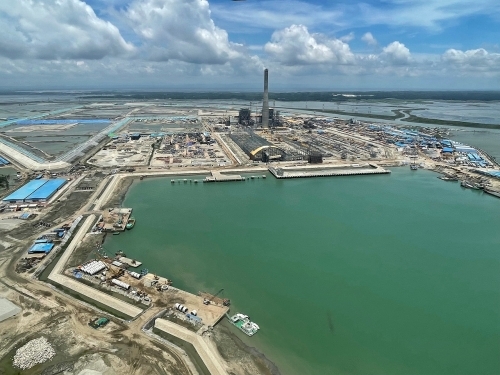 বড় জাহাজ মেরামতে মাতারবাড়ীতে ১ বিলিয়ন ডলারের প্রকল্প
 মাতারবাড়ীতে প্রায় ১ বিলিয়ন মার্কিন ডলার ব্যয়ে পরিবেশবান্ধব ডকইয়ার্ড ও জাহাজ নির্মাণ কেন্দ্র স্থাপনের উদ্যোগে নীতিগত অনুমোদন দিয়েছে নৌপরিবহন মন্ত্রণালয়। এখন প্রকল্পটির কারিগরি ও আর্থিক মূল্যায়নের জন্য প্রস্তাবটি সরকারি-বেসরকারি অংশীদারত্ব (পিপিপি) কর্তৃপক্ষের কাছে পাঠানো হয়েছে। সম্পূর্ণ বেসরকারি অর্থায়নে সরকারি জমির মালিকানা অক্ষুণ্ন রেখে প্রকল্পটি বাস্তবায়নের পরিকল্পনা রয়েছে। বন্দর কর্তৃপক্ষ জানায়, […]
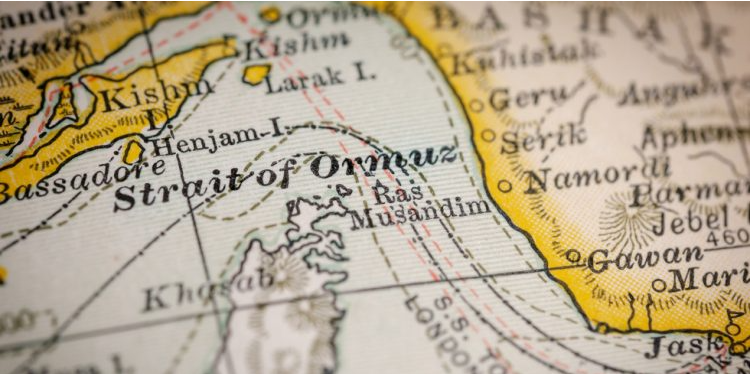 Industry on alert over scam messages offering ships “safe passage” on Hormuz
 Credit: Shutterstock Fraudulent messages offering safe passage through the Strait of Hormuz in exchange for cryptocurrency have been circulated to shipping companies with vessels stranded west of the waterway, according to MARISKS. In an alert issued on 20 April, MARISKS cautioned that unknown actors posing as Iranian authorities had contacted […]



JOB SITES
CONTENTS
LINKS
Happy New Year

Découvrez les avantages de MadCasino
Dans le monde des casinos en ligne, MadCasino se distingue par ses offres attrayantes et ses services de qualité. Que vous soyez un joueur débutant ou un parieur aguerri, vous trouverez ici une variété de jeux qui sauront satisfaire toutes vos envies. Les machines à sous, les jeux de table et les options de paris en direct sont tous disponibles pour vous offrir une expérience de jeu inégalée. De plus, le casino propose régulièrement des bonus qui permettent d'augmenter vos chances de gagner, vous offrant ainsi une excellente opportunité de maximiser vos gains.
En matière de sécurité, MadCasino est un nom de confiance. Il est entièrement licencié et régulé, ce qui garantit un environnement de jeu sûr et équitable. Les joueurs peuvent se concentrer sur leur expérience de jeu sans se soucier des problèmes de sécurité. Les transactions financières sont également sécurisées grâce à des technologies de pointe.
Les jeux proposés par MadCasino sont issus des développeurs les plus réputés de l'industrie, vous assurant des graphismes époustouflants et des mécaniques de jeu innovantes. Les joueurs peuvent également profiter d'une expérience de jeu en direct qui simule l'atmosphère d'un casino terrestre, tout en restant dans le confort de leur maison.
Enfin, la plateforme de MadCasino est optimisée pour les appareils mobiles, permettant aux joueurs de parier à tout moment et de n'importe où. Que vous soyez sur votre smartphone ou votre tablette, l'accès à vos jeux préférés n'a jamais été aussi simple. Ne manquez pas l'opportunité de découvrir ce casino exceptionnel.
Les offres de Cresus Casino
Cresus Casino est un autre acteur majeur dans le domaine des jeux en ligne, offrant des promotions généreuses et une vaste sélection de jeux. Les joueurs peuvent profiter d'une expérience de jeu enrichissante grâce aux nombreux bonus disponibles, qui sont conçus pour attirer tant les nouveaux utilisateurs que les joueurs réguliers. Ces avantages permettent non seulement de prolonger votre temps de jeu, mais aussi d'augmenter vos chances de gains conséquents.
Le casino se distingue également par sa ludothèque impressionnante, comprenant une sélection variée de machines à sous, de jeux de table et de jeux en direct. Les clients peuvent choisir parmi des titres populaires et appréciés, ainsi que des nouveautés qui enrichissent constamment l'offre. L'interface utilisateur est conviviale, rendant la navigation sur la plateforme fluide et agréable.
En termes de sécurité, Cresus Casino assure à ses joueurs un environnement de jeu fiable. La plateforme utilise des protocoles de sécurité avancés pour protéger les données personnelles et financières des utilisateurs. Cela permet aux joueurs de se sentir en sécurité tout en jouant à leurs jeux préférés.
Avec un service client réactif et professionnel, Cresus Casino s'assure que toutes vos questions et préoccupations sont traitées rapidement. Que ce soit pour des questions concernant les bonus, les retraits ou les jeux, vous bénéficierez d'une assistance rapide et efficace.
Explorez Nine Casino et ses avantages
Dans l'univers des casinos en ligne, Nine Casino a su se faire une place de choix grâce à son approche innovante et à ses nombreux avantages pour les joueurs. Les utilisateurs peuvent s'attendre à une expérience de jeu enrichissante, avec des bonus attractifs qui sont régulièrement mis à jour. Ces offres sont une excellente façon de découvrir de nouveaux jeux tout en maximisant votre potentiel de gain.
La plateforme de Nine Casino est riche en options de jeux, allant des machines à sous aux jeux de table, en passant par le live casino. Chaque jeu est conçu pour offrir une expérience immersive grâce à des graphismes de haute qualité et des fonctionnalités innovantes. Les parieurs peuvent profiter de sessions de jeu captivantes, comme s'ils étaient dans un véritable casino.
La sécurité est une priorité pour Nine Casino, qui utilise des technologies de cryptage avancées pour protéger les informations de ses joueurs. Cela garantit un environnement de jeu sûr et fiable, permettant aux utilisateurs de se concentrer sur ce qu'ils aiment le plus : jouer.
Enfin, le service clientèle fourni par Nine Casino est exceptionnel, avec des agents disponibles pour répondre à toutes vos questions et résoudre vos problèmes. Vous pourrez ainsi jouer en toute tranquillité, sachant que votre satisfaction est au cœur de leurs préoccupations.
Profitez de l'expérience Lucky31
Lucky31 est un casino en ligne qui se distingue par son approche orientée vers le joueur, offrant une multitude d'options de jeux et des bonus généreux. Que vous soyez amateur de machines à sous ou passionné de jeux de table, vous trouverez une large sélection pour satisfaire toutes vos envies de jeu. Les promotions fréquentes permettent aux joueurs de prolonger leur expérience tout en augmentant leurs chances de gains.
La convivialité de la plateforme de Lucky31 est l'un de ses plus grands atouts. Les joueurs peuvent naviguer facilement entre les différents jeux, et l'interface est conçue pour être intuitive, quel que soit le niveau d'expérience de l'utilisateur. De plus, le casino est entièrement optimisé pour les appareils mobiles, ce qui permet de parier où que vous soyez.
En matière de sécurité, Lucky31 prend les préoccupations des joueurs très au sérieux. Le casino est agréé et régulé, garantissant un environnement de jeu équitable et sécurisé. Les joueurs peuvent ainsi se concentrer sur leur expérience de jeu sans se soucier des risques liés à la sécurité.
Pour ceux qui recherchent un support client efficace, Lucky31 offre un service réactif et professionnel. Que ce soit pour des questions sur les bonus, les jeux ou les paiements, vous aurez accès à une assistance de qualité, vous garantissant une expérience de jeu fluide et agréable.