search the site


NGOs urge IMO: Ammonia cannot be shipping’s next pollution problem
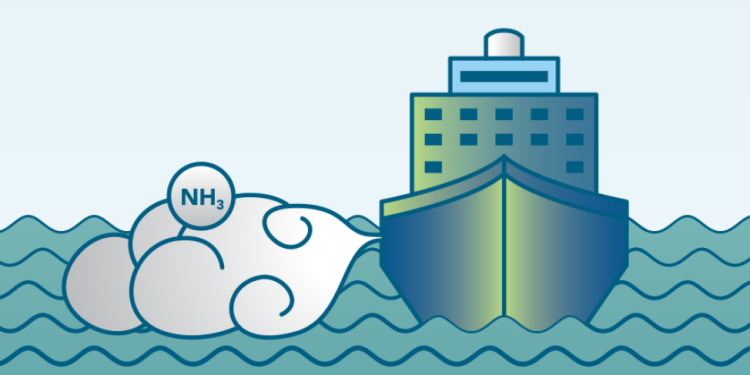
A coalition of environmental and technology NGOs is calling on the International Maritime Organization (IMO) to reject proposals that would permit ships to routinely discharge ammonia into the ocean.
Their appeal comes after a week of discussions at the IMO’s Pollution Prevention and Response (PPR) Sub-Committee in London (9–13 February), where governments examined, for the first time, how to manage ammonia effluent from ammonia-fueled vessels.
While ammonia is being explored as a lower-carbon marine fuel, the groups warn that allowing its discharge at sea would simply swap one pollution problem for another. Instead, they urge the IMO to adopt a straightforward safeguard: require ships to retain ammonia effluent onboard and offload it at port reception facilities.
This approach, they argue, would enable shipping to cut greenhouse gas emissions without introducing a new source of toxic marine pollution. The joint statement was issued by Opportunity Green, Environmental Defense Fund, One Planet Port, Pacific Environment, Clean Shipping Coalition, Seas at Risk and ZESTAs.
Shipping needs to decarbonize fast, and green ammonia could play an important role. But we must not reduce climate pollution while normalizing ocean discharge of toxic waste. The IMO must ensure green fuels are adopted with safeguards that protect marine ecosystems, coastal communities, and seafarers.
…said Dr. James Kershaw, Scientific Officer at Opportunity Green.
What is ammonia effluent — and why it matters
Ammonia gas is extremely toxic and harmful to human health. On ammonia-fueled ships, leftover ammonia gas (for example, when crews purge fuel lines during routine operations) must be captured and contained, often by absorbing it into water.
This produces a high-strength liquid waste known as ammonia effluent. At PPR this week, some Member States discussed a framework that would allow conditional discharge of ammonia effluent into the ocean if certain operational and dilution conditions are met.
To remind, KR (Korean Register), together with the Korean government and shipbuilders launched an international working group to develop global safety and discharge standards for ammonia effluent from ammonia-fueled ships. The group held its meeting on 5 February at the HD Hyundai Global R&D Center, marking a significant step in strengthening cross-industry and government cooperation on the development of international safety and discharge standards.
NGOs warn: focusing only on short-term toxicity misses bigger risks
Supporters of discharge argue that sufficient dilution can avoid immediate harmful effects on marine life. But the group cautions that’s only one part of the environmental risk:
- Chronic, long-term impacts from repeated low-level exposure are an evidence gap that short-duration studies cannot resolve, and more research is urgently needed.
- Discharging ammonia introduces reactive nitrogen pollution to marine environments, contributing to eutrophication, oxygen depletion, and ocean acidification—pressures already straining ocean health.
In a fully decarbonized maritime future, 35–50% of ships are projected to run on green ammonia. If tens of thousands of vessels are periodically discharging ammonia waste, “conditional discharge” could quickly become routine, with consequences that are still unknown for long-term ocean health.
The nitrogen cycle is already beyond safe planetary boundaries—we cannot afford to normalize another source of reactive nitrogen pollution as shipping decarbonizes. The industry has an opportunity to get ammonia fuel right from the start by retaining waste onboard and landing it ashore, rather than defaulting to ocean discharge. This isn’t just about toxicity—it’s about preventing further disruption to a critical planetary system that’s already under stress.
…said Lucy Gilliam, Co-executive Director, One Planet Port, highlighted.
The alternative: retain onboard, offload in port, and enable reuse
NGOs further urge the IMO to adopt a precautionary approach that prohibits discharge at sea and instead requires ships to retain ammonia effluent onboard and offload it at port reception facilities—where it could be reused by other ammonia users, such as the chemical or fertilizer industries, supporting a circular economy.
The ocean should not be a testing ground for routine disposal of toxic ammonia waste. The risks go beyond short-term toxicity to long-term ecosystem damage and added pressure on a global nitrogen cycle that is already out of balance. Until these impacts are fully understood, the precautionary principle demands a strict prohibition on discharge at sea and a clear requirement for onboard retention and unloading at ports.
…noted Marie Cabbia Hubatova, Director, Global Shipping at Environmental Defense Fund.
The group also calls for the IMO to ensure decisions are based on transparent evidence. Concerns have been raised that exclusive shore disposal could be burdensome, but the NGOs note that cost and storage impacts must be quantified, and available examples suggest effluent volumes from routine operations may be small relative to ship capacity.
Moreover, it is vitally important that the IMO considers the various options for fully managing ammonia effluent, including quantifying the full range of challenges and risks associated with each.
Ammonia cannot become shipping’s next pollution problem. Real climate action starts with cutting ships’ energy demand through efficiency and wind propulsion. If ammonia is used, its waste must stay out of the sea. Ocean health quite simply cannot be collateral damage.
…said Anaïs Rios, Senior Shipping Policy Officer and Clean Shipping Coalition Board Member.
Madadh MacLaine, Secretary General of ZESTAs, further highlighted that shipping’s fuel transition is a chance to reduce harm to the ocean. “Industry first movers stand ready to enable that transition, but this opportunity will be missed if the lowest-cost option becomes the default. The IMO must set clear regulations, pre-deployment” MacLaine explained.
NGOs call on IMO Member States to:
- Prohibit routine or conditional discharge of ammonia effluent at sea, consistent with the precautionary principle.
- Ensure guidelines address long-term, chronic ecosystem impacts and the broader consequences of reactive nitrogen pollution—not only acute toxicity.
- Advance a global pathway for onboard retention and port offloading, paired with coordinated scaling of port reception facilities.
- Establish a transparent, science-based work program through PPR14 and beyond to close key evidence gaps and deliver enforceable measures.
The fuel transition must be both fast and durable. Pathways that shift risk from the atmosphere to the ocean will ultimately slow deployment by eroding public trust. Getting ammonia right from the start is how we ensure zero-emission fuels scale globally.
…said Davina Hurt, California policy director, Pacific Environment.
source : safety4sea
Featured Post
 বড় জাহাজ মেরামতে মাতারবাড়ীতে ১ বিলিয়ন ডলারের প্রকল্প
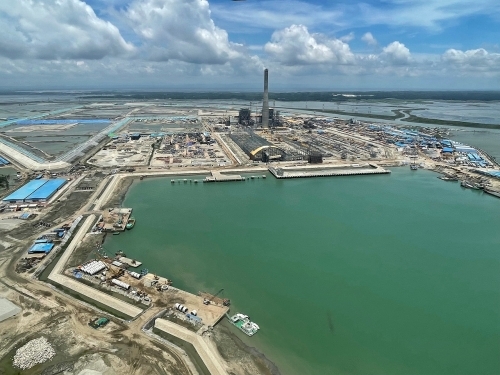
 মাতারবাড়ীতে প্রায় ১ বিলিয়ন মার্কিন ডলার ব্যয়ে পরিবেশবান্ধব ডকইয়ার্ড ও জাহাজ নির্মাণ কেন্দ্র স্থাপনের উদ্যোগে নীতিগত অনুমোদন দিয়েছে নৌপরিবহন মন্ত্রণালয়। এখন প্রকল্পটির কারিগরি ও আর্থিক মূল্যায়নের জন্য প্রস্তাবটি সরকারি-বেসরকারি অংশীদারত্ব (পিপিপি) কর্তৃপক্ষের কাছে পাঠানো হয়েছে। সম্পূর্ণ বেসরকারি অর্থায়নে সরকারি জমির মালিকানা অক্ষুণ্ন রেখে প্রকল্পটি বাস্তবায়নের পরিকল্পনা রয়েছে। বন্দর কর্তৃপক্ষ জানায়, […]
 Industry on alert over scam messages offering ships “safe passage” on Hormuz
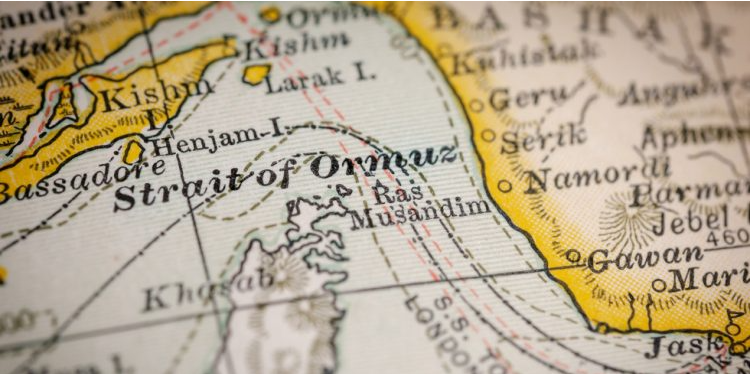
 Credit: Shutterstock Fraudulent messages offering safe passage through the Strait of Hormuz in exchange for cryptocurrency have been circulated to shipping companies with vessels stranded west of the waterway, according to MARISKS. In an alert issued on 20 April, MARISKS cautioned that unknown actors posing as Iranian authorities had contacted […]



JOB SITES
CONTENTS
LINKS
Happy New Year

Découvrez les avantages de MadCasino
Dans le monde des casinos en ligne, MadCasino se distingue par ses offres attrayantes et ses services de qualité. Que vous soyez un joueur débutant ou un parieur aguerri, vous trouverez ici une variété de jeux qui sauront satisfaire toutes vos envies. Les machines à sous, les jeux de table et les options de paris en direct sont tous disponibles pour vous offrir une expérience de jeu inégalée. De plus, le casino propose régulièrement des bonus qui permettent d'augmenter vos chances de gagner, vous offrant ainsi une excellente opportunité de maximiser vos gains.
En matière de sécurité, MadCasino est un nom de confiance. Il est entièrement licencié et régulé, ce qui garantit un environnement de jeu sûr et équitable. Les joueurs peuvent se concentrer sur leur expérience de jeu sans se soucier des problèmes de sécurité. Les transactions financières sont également sécurisées grâce à des technologies de pointe.
Les jeux proposés par MadCasino sont issus des développeurs les plus réputés de l'industrie, vous assurant des graphismes époustouflants et des mécaniques de jeu innovantes. Les joueurs peuvent également profiter d'une expérience de jeu en direct qui simule l'atmosphère d'un casino terrestre, tout en restant dans le confort de leur maison.
Enfin, la plateforme de MadCasino est optimisée pour les appareils mobiles, permettant aux joueurs de parier à tout moment et de n'importe où. Que vous soyez sur votre smartphone ou votre tablette, l'accès à vos jeux préférés n'a jamais été aussi simple. Ne manquez pas l'opportunité de découvrir ce casino exceptionnel.
Les offres de Cresus Casino
Cresus Casino est un autre acteur majeur dans le domaine des jeux en ligne, offrant des promotions généreuses et une vaste sélection de jeux. Les joueurs peuvent profiter d'une expérience de jeu enrichissante grâce aux nombreux bonus disponibles, qui sont conçus pour attirer tant les nouveaux utilisateurs que les joueurs réguliers. Ces avantages permettent non seulement de prolonger votre temps de jeu, mais aussi d'augmenter vos chances de gains conséquents.
Le casino se distingue également par sa ludothèque impressionnante, comprenant une sélection variée de machines à sous, de jeux de table et de jeux en direct. Les clients peuvent choisir parmi des titres populaires et appréciés, ainsi que des nouveautés qui enrichissent constamment l'offre. L'interface utilisateur est conviviale, rendant la navigation sur la plateforme fluide et agréable.
En termes de sécurité, Cresus Casino assure à ses joueurs un environnement de jeu fiable. La plateforme utilise des protocoles de sécurité avancés pour protéger les données personnelles et financières des utilisateurs. Cela permet aux joueurs de se sentir en sécurité tout en jouant à leurs jeux préférés.
Avec un service client réactif et professionnel, Cresus Casino s'assure que toutes vos questions et préoccupations sont traitées rapidement. Que ce soit pour des questions concernant les bonus, les retraits ou les jeux, vous bénéficierez d'une assistance rapide et efficace.
Explorez Nine Casino et ses avantages
Dans l'univers des casinos en ligne, Nine Casino a su se faire une place de choix grâce à son approche innovante et à ses nombreux avantages pour les joueurs. Les utilisateurs peuvent s'attendre à une expérience de jeu enrichissante, avec des bonus attractifs qui sont régulièrement mis à jour. Ces offres sont une excellente façon de découvrir de nouveaux jeux tout en maximisant votre potentiel de gain.
La plateforme de Nine Casino est riche en options de jeux, allant des machines à sous aux jeux de table, en passant par le live casino. Chaque jeu est conçu pour offrir une expérience immersive grâce à des graphismes de haute qualité et des fonctionnalités innovantes. Les parieurs peuvent profiter de sessions de jeu captivantes, comme s'ils étaient dans un véritable casino.
La sécurité est une priorité pour Nine Casino, qui utilise des technologies de cryptage avancées pour protéger les informations de ses joueurs. Cela garantit un environnement de jeu sûr et fiable, permettant aux utilisateurs de se concentrer sur ce qu'ils aiment le plus : jouer.
Enfin, le service clientèle fourni par Nine Casino est exceptionnel, avec des agents disponibles pour répondre à toutes vos questions et résoudre vos problèmes. Vous pourrez ainsi jouer en toute tranquillité, sachant que votre satisfaction est au cœur de leurs préoccupations.
Profitez de l'expérience Lucky31
Lucky31 est un casino en ligne qui se distingue par son approche orientée vers le joueur, offrant une multitude d'options de jeux et des bonus généreux. Que vous soyez amateur de machines à sous ou passionné de jeux de table, vous trouverez une large sélection pour satisfaire toutes vos envies de jeu. Les promotions fréquentes permettent aux joueurs de prolonger leur expérience tout en augmentant leurs chances de gains.
La convivialité de la plateforme de Lucky31 est l'un de ses plus grands atouts. Les joueurs peuvent naviguer facilement entre les différents jeux, et l'interface est conçue pour être intuitive, quel que soit le niveau d'expérience de l'utilisateur. De plus, le casino est entièrement optimisé pour les appareils mobiles, ce qui permet de parier où que vous soyez.
En matière de sécurité, Lucky31 prend les préoccupations des joueurs très au sérieux. Le casino est agréé et régulé, garantissant un environnement de jeu équitable et sécurisé. Les joueurs peuvent ainsi se concentrer sur leur expérience de jeu sans se soucier des risques liés à la sécurité.
Pour ceux qui recherchent un support client efficace, Lucky31 offre un service réactif et professionnel. Que ce soit pour des questions sur les bonus, les jeux ou les paiements, vous aurez accès à une assistance de qualité, vous garantissant une expérience de jeu fluide et agréable.