search the site


A new Red Sea axis: Israel, India, UAE, Ethiopia converge in Somaliland
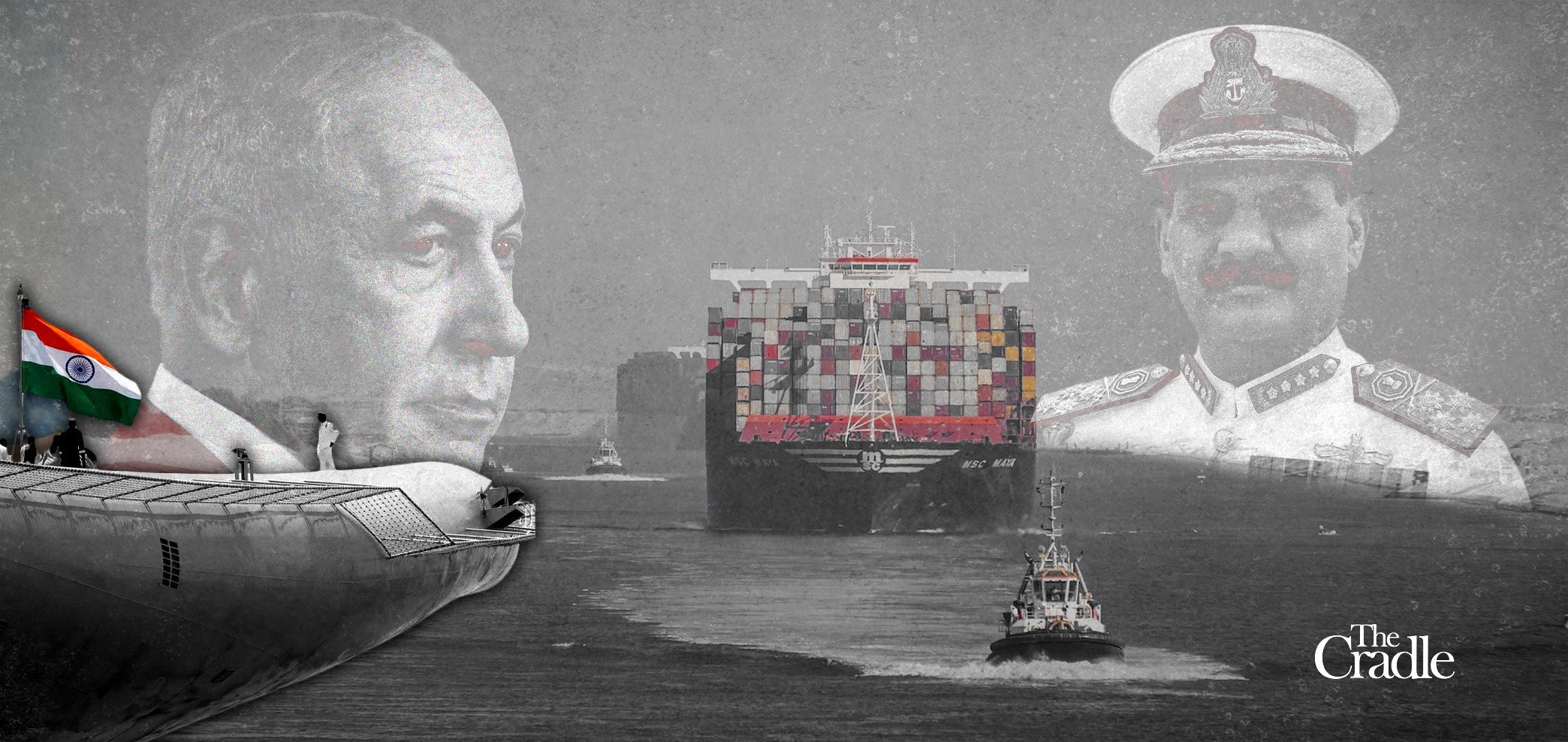
On 26 December 2025, Israel formally recognized what it termed the Republic of Somaliland, marking a significant shift in its policy toward the Horn of Africa.
The move altered the political equation along one of the world’s most sensitive maritime routes. In Hargeisa, it was seen as a long-awaited validation. In Addis Ababa, it opened a new strategic space. In Beijing, Ankara, Cairo, and Riyadh, it raised immediate concern.
It consolidates a four-party alignment linking Israel, India, the UAE, and Ethiopia. This emerging axis centers on securing maritime chokepoints in the Gulf of Aden and Bab al-Mandab, while laying the groundwork for an alternative to China’s Belt and Road Initiative (BRI) in eastern Africa.
The timing followed months of escalating regional pressure. The Israeli–Iranian confrontation in June 2025, along with the Yemeni maritime blockade targeting vessels bound for Israeli ports, exposed the vulnerability of southern sea lanes.
Securing these waterways became a core component of Israeli national security planning. The southern maritime gateway now sits firmly within Israel’s broader regional strategy.
Somaliland’s geography explains its importance. Overlooking one of the world’s busiest maritime arteries, it holds proximity to trade flows linking Asia, Africa, and Europe.
For Israel and its partners, the territory offers a platform for strengthening a stable functional entity capable of securing its coastline, hosting infrastructure, and attracting technological and security investment under formal recognition.
That recognition – particularly if followed by allied states – provides political legitimacy to an entity that has exercised de facto self-governance for more than three decades. It opens the door for structured military cooperation, infrastructure expansion, and advanced technological integration that were previously constrained by diplomatic ambiguity.
Building the maritime axis
India’s strategic outlook aligns closely with these developments. New Delhi has long viewed East Africa, and particularly the Horn of Africa, as an extension of its maritime sphere within the Indian Ocean.
Through the SAGAR initiative – whose name means ‘sea’ in Hindi – launched by Indian Prime Minister Narendra Modi in 2015 during his visit to Mauritius, New Delhi articulated a vision of “Security and Growth for All in the Region,” positioning itself as a coordinating force among Indian Ocean littoral states.
The MAHASAGAR (‘Great Ocean’) – a follow-on framework – reinforced this direction by emphasizing regional maritime security management, coordinated naval leadership, and shared surveillance systems.
These doctrines place India in the role of a primary maritime security provider across an expansive oceanic space. International trade – including Chinese and Turkish shipping – increasingly depends on the security environment shaped by India and its partners, among them Israel and the UAE.
The effect gradually reduces the need for direct American or Russian involvement in safeguarding the Asia–Africa–Europe corridor, replacing external oversight with a regionally anchored structure.
Ethiopia serves as the continental anchor within this framework. During Modi’s December 2025 visit to Addis Ababa, bilateral relations were elevated to a strategic partnership, formalizing Ethiopia’s position within the alignment.
As a landlocked state of approximately 126 million people, access to maritime outlets is a structural necessity. Dependence on Djibouti, where Chinese influence remains significant, has imposed economic constraints. Somaliland and the port of Berbera provide Addis Ababa with an alternative outlet less exposed to Beijing’s leverage. The Berbera–Ethiopia corridor thus becomes a central economic artery within the broader Indian–Israeli alignment.
Defense considerations reinforce the trajectory. India had set a target of raising defense exports to roughly $5 billion by the 2025–26 fiscal year as part of its broader push to expand its defense manufacturing footprint.
The Horn of Africa presents a receptive market. Somaliland offers an environment in which Indian systems – often integrated with Israeli technologies – can be marketed, tested, and embedded within local security structures.
India contributes capacity building and infrastructure development, while Israel adds advanced technological capabilities. Together, these elements form a coordinated security and development framework.
Does the India–Israel alignment in the Horn of Africa strengthen regional stability, or increase fragmentation?Strengthens stabilityIncreases fragmentation
441 votes, 4 days and 21 hours left
Regional reactions and strategic countermoves
For China, the emerging alignment presents a direct challenge to its Djibouti-based influence model. Beijing’s strategy in the Horn has relied on infrastructure finance and port management agreements that generate long-term leverage. The Indian-Israeli approach offers a competing framework built around diversified partnerships and security integration.
China is unlikely to remain passive. Increased military activity at its Djibouti base, diplomatic pressure within the African Union to prevent collective recognition of Somaliland, and expanded investment in Mogadishu’s port infrastructure are among the expected responses.
Turkiye also faces strategic recalibration as Ankara has invested extensively in Somalia, training its armed forces and managing critical facilities. Israel’s recognition complicates this position. Expanded drone deliveries to Mogadishu and closer military coordination with Pakistan aimed at counterbalancing Indian influence are plausible responses. Turkiye may also mobilize diplomatic efforts within the Organization of Islamic Cooperation (OIC) to challenge the recognition.
Iran remains part of the broader security equation. The Indian–Israeli alignment seeks to reduce opportunities for Tehran to project pressure into the Red Sea through asymmetric tactics, including cyber operations or unmanned systems. Strengthening maritime security in the Gulf of Aden limits such avenues.
The economic dimension extends beyond security. The India–Middle East–Europe Economic Corridor (IMEC) represents a major counterweight to China’s Silk Road networks. Within this framework, the UAE provides financial and logistical depth.
The Horn of Africa becomes a southern hinge within this corridor. Somaliland functions as a stabilizing node, particularly as India deepens trade agreements with the US, EU, and UK. Western capitals view the alignment as a mechanism to protect supply chains from Chinese port dominance and secure maritime routes from regional disruption.
Structural pressures and points of friction
Despite its strategic coherence, the alignment faces structural challenges. The principle of inherited colonial borders remains central within both the African Union and the Arab League. Wider recognition of Somaliland raises concerns about territorial precedent.
Indian diplomacy must persuade skeptical African and Arab states – including Egypt, Saudi Arabia, and Qatar – that Somaliland represents a stabilizing case rather than a fragmentation trigger.
Technological competition remains active. Turkish drones maintain a reputation for affordability and operational effectiveness, while Pakistan continues expanding its defense exports. The India–Israel partnership must demonstrate sustained operational and cost advantages under regional conditions.
Ethiopia’s internal stability is another decisive factor. Addis Ababa functions as the continental pivot. Political instability would affect the viability of the Berbera corridor and weaken the economic foundation of the alignment.
Saudi Arabia’s position introduces further complexity. Abu Dhabi has aligned firmly with the emerging axis, viewing stability in Somaliland and Ethiopia as essential to safeguarding its port investments, particularly through DP World’s stake in Berbera.
Riyadh has historically maintained a more flexible policy in the Horn, at times balancing Turkish and Pakistani engagement in Mogadishu. A deeper Emirati security alignment with Israel and India may prompt Saudi recalibration.
Regional balancing and external leverage
Egypt views developments through the lens of the Nile dispute. Israeli recognition intersects with Ethiopia’s Grand Ethiopian Renaissance Dam file, heightening Cairo’s concerns about strategic encirclement.
Additionally, Egypt has strengthened military coordination with Mogadishu and pursued legal initiatives within regional institutions to reinforce territorial integrity norms. Maintaining Somaliland in legal ambiguity constrains investment and slows corridor expansion.
Officially, Washington maintains the One Somalia policy. In practice, it has expanded security cooperation with Somaliland. The 2026 National Defense Authorization Act established a framework for military cooperation with Hargeisa, including access to facilities in Berbera.
Functional engagement has advanced without formal diplomatic recognition. For US planners, the four-party alignment offers a means to reduce reliance on Chinese-influenced Djibouti while limiting Iranian reach in the Red Sea. At the same time, Washington maintains working relations with Mogadishu to preserve counterterrorism coordination.
The India–Israel alliance through Somaliland reflects a recalibration of power along the Red Sea rim. Maritime security, technological integration, and corridor politics now intersect in a territory whose strategic weight exceeds its size.
Israeli expertise, Indian ambition, Emirati capital, and Ethiopian necessity converge in a project designed to secure trade routes and reshape regional alignments. The durability of this framework will depend on continental stability, diplomatic management, and the responses of rival powers unwilling to concede influence in the Horn of Africa.
source : thecradle
Featured Post
 বড় জাহাজ মেরামতে মাতারবাড়ীতে ১ বিলিয়ন ডলারের প্রকল্প
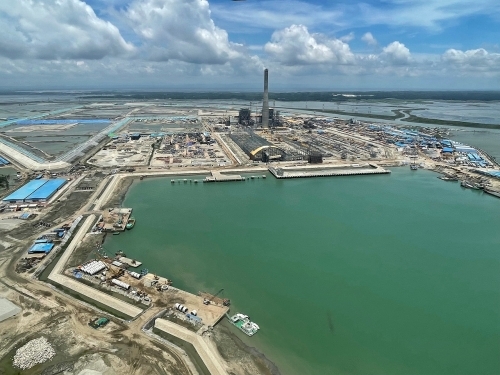
 মাতারবাড়ীতে প্রায় ১ বিলিয়ন মার্কিন ডলার ব্যয়ে পরিবেশবান্ধব ডকইয়ার্ড ও জাহাজ নির্মাণ কেন্দ্র স্থাপনের উদ্যোগে নীতিগত অনুমোদন দিয়েছে নৌপরিবহন মন্ত্রণালয়। এখন প্রকল্পটির কারিগরি ও আর্থিক মূল্যায়নের জন্য প্রস্তাবটি সরকারি-বেসরকারি অংশীদারত্ব (পিপিপি) কর্তৃপক্ষের কাছে পাঠানো হয়েছে। সম্পূর্ণ বেসরকারি অর্থায়নে সরকারি জমির মালিকানা অক্ষুণ্ন রেখে প্রকল্পটি বাস্তবায়নের পরিকল্পনা রয়েছে। বন্দর কর্তৃপক্ষ জানায়, […]
 Industry on alert over scam messages offering ships “safe passage” on Hormuz
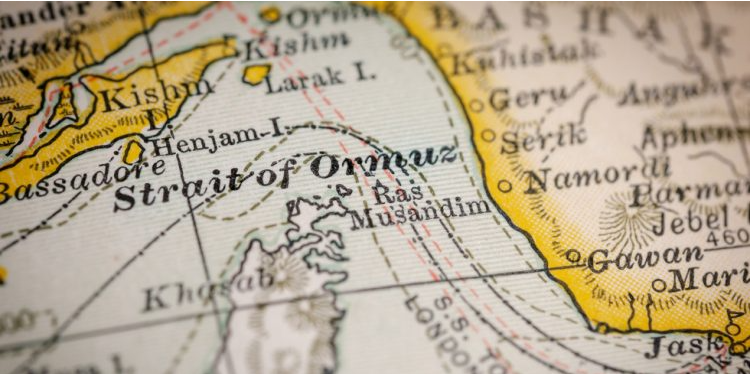
 Credit: Shutterstock Fraudulent messages offering safe passage through the Strait of Hormuz in exchange for cryptocurrency have been circulated to shipping companies with vessels stranded west of the waterway, according to MARISKS. In an alert issued on 20 April, MARISKS cautioned that unknown actors posing as Iranian authorities had contacted […]



JOB SITES
CONTENTS
LINKS
Happy New Year

Découvrez les avantages de MadCasino
Dans le monde des casinos en ligne, MadCasino se distingue par ses offres attrayantes et ses services de qualité. Que vous soyez un joueur débutant ou un parieur aguerri, vous trouverez ici une variété de jeux qui sauront satisfaire toutes vos envies. Les machines à sous, les jeux de table et les options de paris en direct sont tous disponibles pour vous offrir une expérience de jeu inégalée. De plus, le casino propose régulièrement des bonus qui permettent d'augmenter vos chances de gagner, vous offrant ainsi une excellente opportunité de maximiser vos gains.
En matière de sécurité, MadCasino est un nom de confiance. Il est entièrement licencié et régulé, ce qui garantit un environnement de jeu sûr et équitable. Les joueurs peuvent se concentrer sur leur expérience de jeu sans se soucier des problèmes de sécurité. Les transactions financières sont également sécurisées grâce à des technologies de pointe.
Les jeux proposés par MadCasino sont issus des développeurs les plus réputés de l'industrie, vous assurant des graphismes époustouflants et des mécaniques de jeu innovantes. Les joueurs peuvent également profiter d'une expérience de jeu en direct qui simule l'atmosphère d'un casino terrestre, tout en restant dans le confort de leur maison.
Enfin, la plateforme de MadCasino est optimisée pour les appareils mobiles, permettant aux joueurs de parier à tout moment et de n'importe où. Que vous soyez sur votre smartphone ou votre tablette, l'accès à vos jeux préférés n'a jamais été aussi simple. Ne manquez pas l'opportunité de découvrir ce casino exceptionnel.
Les offres de Cresus Casino
Cresus Casino est un autre acteur majeur dans le domaine des jeux en ligne, offrant des promotions généreuses et une vaste sélection de jeux. Les joueurs peuvent profiter d'une expérience de jeu enrichissante grâce aux nombreux bonus disponibles, qui sont conçus pour attirer tant les nouveaux utilisateurs que les joueurs réguliers. Ces avantages permettent non seulement de prolonger votre temps de jeu, mais aussi d'augmenter vos chances de gains conséquents.
Le casino se distingue également par sa ludothèque impressionnante, comprenant une sélection variée de machines à sous, de jeux de table et de jeux en direct. Les clients peuvent choisir parmi des titres populaires et appréciés, ainsi que des nouveautés qui enrichissent constamment l'offre. L'interface utilisateur est conviviale, rendant la navigation sur la plateforme fluide et agréable.
En termes de sécurité, Cresus Casino assure à ses joueurs un environnement de jeu fiable. La plateforme utilise des protocoles de sécurité avancés pour protéger les données personnelles et financières des utilisateurs. Cela permet aux joueurs de se sentir en sécurité tout en jouant à leurs jeux préférés.
Avec un service client réactif et professionnel, Cresus Casino s'assure que toutes vos questions et préoccupations sont traitées rapidement. Que ce soit pour des questions concernant les bonus, les retraits ou les jeux, vous bénéficierez d'une assistance rapide et efficace.
Explorez Nine Casino et ses avantages
Dans l'univers des casinos en ligne, Nine Casino a su se faire une place de choix grâce à son approche innovante et à ses nombreux avantages pour les joueurs. Les utilisateurs peuvent s'attendre à une expérience de jeu enrichissante, avec des bonus attractifs qui sont régulièrement mis à jour. Ces offres sont une excellente façon de découvrir de nouveaux jeux tout en maximisant votre potentiel de gain.
La plateforme de Nine Casino est riche en options de jeux, allant des machines à sous aux jeux de table, en passant par le live casino. Chaque jeu est conçu pour offrir une expérience immersive grâce à des graphismes de haute qualité et des fonctionnalités innovantes. Les parieurs peuvent profiter de sessions de jeu captivantes, comme s'ils étaient dans un véritable casino.
La sécurité est une priorité pour Nine Casino, qui utilise des technologies de cryptage avancées pour protéger les informations de ses joueurs. Cela garantit un environnement de jeu sûr et fiable, permettant aux utilisateurs de se concentrer sur ce qu'ils aiment le plus : jouer.
Enfin, le service clientèle fourni par Nine Casino est exceptionnel, avec des agents disponibles pour répondre à toutes vos questions et résoudre vos problèmes. Vous pourrez ainsi jouer en toute tranquillité, sachant que votre satisfaction est au cœur de leurs préoccupations.
Profitez de l'expérience Lucky31
Lucky31 est un casino en ligne qui se distingue par son approche orientée vers le joueur, offrant une multitude d'options de jeux et des bonus généreux. Que vous soyez amateur de machines à sous ou passionné de jeux de table, vous trouverez une large sélection pour satisfaire toutes vos envies de jeu. Les promotions fréquentes permettent aux joueurs de prolonger leur expérience tout en augmentant leurs chances de gains.
La convivialité de la plateforme de Lucky31 est l'un de ses plus grands atouts. Les joueurs peuvent naviguer facilement entre les différents jeux, et l'interface est conçue pour être intuitive, quel que soit le niveau d'expérience de l'utilisateur. De plus, le casino est entièrement optimisé pour les appareils mobiles, ce qui permet de parier où que vous soyez.
En matière de sécurité, Lucky31 prend les préoccupations des joueurs très au sérieux. Le casino est agréé et régulé, garantissant un environnement de jeu équitable et sécurisé. Les joueurs peuvent ainsi se concentrer sur leur expérience de jeu sans se soucier des risques liés à la sécurité.
Pour ceux qui recherchent un support client efficace, Lucky31 offre un service réactif et professionnel. Que ce soit pour des questions sur les bonus, les jeux ou les paiements, vous aurez accès à une assistance de qualité, vous garantissant une expérience de jeu fluide et agréable.