search the site


Yinson GreenTech’s Big Bet: Electrification and Digitalisation Must Rise Together
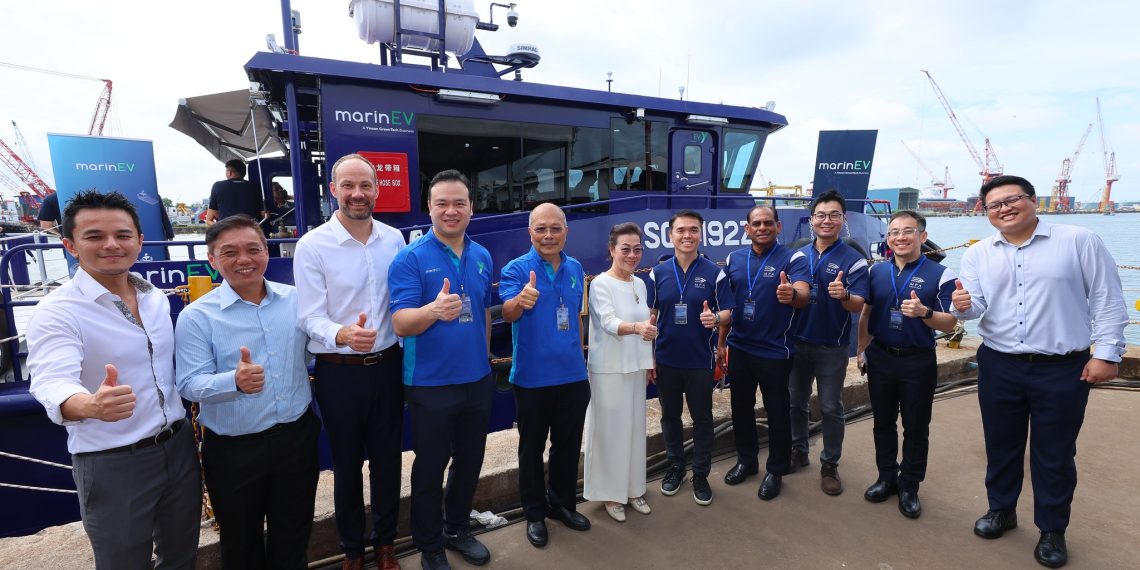
In Southeast Asia’s race toward cleaner logistics, few companies have moved as assertively as Yinson GreenTech. And for Managing Director of marinEV, Jan-Viggo Johansen, the goal is clear: electrification will only scale if the industry treats it as a system, not a standalone product.
“We say that you cannot go electric without going digital,” Johansen told Digital Ship in an interview. “Energy efficiency becomes the most important thing once you work with batteries, and digital technologies make that possible.”
Founded in 2020 as an accelerator inside the Yinson Group, Yinson GreenTech set out to close what it saw as the missing link in the energy transition: an integrated, land-to-sea electrification ecosystem. What emerged were three interconnected pillars: chargEV (charging infrastructure), drivEV (e-mobility leasing solutions), and marinEV (marine electrification), all underpinned by Yinson GreenTech’s digital infrastructure.
Today, Yinson GreenTech is a complete clean-transport chain rather than a vessel builder alone. And its momentum is beginning to shift industry expectations of what electric maritime operations can do.
Electrification as an Integrated Ecosystem, Not a Standalone Vessel
While battery technology has matured rapidly, especially through advances from the automotive sector, Johansen said that marine electrification still lacks the infrastructure, regulations, and standardisation needed for mass adoption.
In the car industry, one standard, CCS2, now enables universal charging. At sea, nothing comparable exists. “That creates a barrier,” he said. “Regulation, infrastructure, and standards must move together.”
To solve this, Yinson GreenTech designed its marine business around ecosystem thinking: vessels, charging networks, digital infrastructure, and commercial models that reduce upfront cost.
One central challenge is the capital expenditure. While electric vessels offer dramatically lower operating costs, the purchase price remains higher than diesel. “We haven’t reached commercial scale yet,” Johansen admitted. Yinson GreenTech’s workaround is a leasing-based model that removes the steep upfront cost for operators and gives them predictable monthly fees.
This integrated approach is embodied most clearly in its two flagship vessels: the Hydroglyder and the Hydromover, which serve as proof-of-concept platforms for what an electrified port ecosystem can look like.
The Hydroglyder, a 12-meter hydrofoiling crew transfer craft, lifts itself above water at speed, cutting energy use by as much as 80%. “If you want high speed with batteries, weight and drag become critical,” Johansen explained. Flying above the water solves that. The vessel is now operating commercially in Singapore.
The Hydromover, meanwhile, was developed in response to Singapore’s Maritime and Port Authority (MPA) and Singapore Maritime Institute (SMI) joint Call-for-Proposals. It eventually received R&D grants from both the MPA Maritime Innovation and Technology (MINT) Fund and SMI Fund for the first prototype, which featured swappable batteries to fit Singapore’s reality: limited quayside space and vessels that often anchored offshore at night. The Singapore government mandates that the current 1,600 vessels must turn fully green by 2050 in its efforts to decarbonise its maritime industry.
Two years of operational data fed into the Hydromover 2.0, launched just weeks ago. This next-generation model delivers:
- 130 nm range (three times the prototype)
- 24-meter hull
- 30 tons cargo capacity
- 40 pallet space
- A full day of operation without charging
Both the Hydroglyder and Hydromover rely on IoT-enabled systems, joystick controls, and real-time connectivity via 5G or satellite, a marked shift from traditional harbour craft design.
Hydromover 2.0 enters commercial operations in Singapore this month, and contracts recently signed in Dubai and Fujairah will see the vessels deployed in the UAE early next year.
“Only when stakeholders come together – regulators, operators, shipyards, equipment suppliers – can we scale electrification,” Johansen said. “It’s 30% hardware, and 70% operational understanding.”
Why Digital Comes First, Even for Electric Boats
If electrification is the hardware, digitalisation is the operating system that makes it viable.
The Marine Digital Platform, Yinson GreenTech’s software and data infrastructure, is built not only to optimise routes and charging but also to measure what the industry has long struggled with: actual emissions from Scope 3 logistics.
Globally, Scope 3 emissions, those generated by outsourced transport, remain poorly quantified. Yinson GreenTech’s digital system records and verifies carbon emissions and savings for every voyage, and recently, Bureau Veritas certified its methodology. Operators now receive digitally issued, class-verified carbon saving certificates that can plug directly into reporting requirements and future carbon credit schemes.
But the company’s vision goes beyond emissions reporting. It wants digitalisation to reshape the operational pattern of entire ports.
Johansen explained that digital route optimisation can enable co-loading, where goods and personnel are consolidated into fewer trips. With a larger deck and longer range, Hydromover 2.0 was built for this. “If perfectly planned, one electric vessel could replace two diesel equivalent vessels,” he said.
Digitalisation would allow just-in-time operations within the port, reducing both vessel and truck idling. In congested hubs like Singapore, where hundreds of crew and cargo transfers occur daily, such optimisation is not just good for emissions. It is operationally transformative.
“Operating vessels is in our DNA, but electric vessels demand a smarter, more integrated approach,” Johansen said. “Digitalisation gives us the real-time visibility and predictive planning needed to optimise performance end-to-end and unlock the full potential of electrified marine operations.”
The Appetite for Electrification: Ready, But Still Waiting for Scale
Across short-sea shipping and harbour craft segments, Johansen sees strong enthusiasm for electrification, especially as hybrid propulsion is becoming increasingly common even in deep-sea vessels. “The market is ready,” he said. “But the commercial barrier remains the biggest challenge.”
Government support – both regulatory and financial – will be essential to bridging this gap. Singapore’s MPA has set a clear long-term vision for the transition, and further refinements in regulation and incentives will help accelerate adoption. Other regions, Johansen notes, will likewise need strong policy direction if they want electrification to move beyond isolated pilots.
For Yinson GreenTech, the long-term plan is clear: build the ecosystem, prove it works, and scale it across global hubs.
With digital platforms, charging networks, new commercial models, and now multiple operational electric vessels, Yinson GreenTech is positioning itself not just as a builder of next-generation boats—but as an architect of a new electrified maritime logistics system.
And if there’s one takeaway from Yinson GreenTech’s approach, it’s this: electrification thrives when digitalisation leads. Data, automation and smart energy management are what make zero-emission fleets reliable, scalable and commercially sound.
source : thedigitalship
Featured Post
 বড় জাহাজ মেরামতে মাতারবাড়ীতে ১ বিলিয়ন ডলারের প্রকল্প
 মাতারবাড়ীতে প্রায় ১ বিলিয়ন মার্কিন ডলার ব্যয়ে পরিবেশবান্ধব ডকইয়ার্ড ও জাহাজ নির্মাণ কেন্দ্র স্থাপনের উদ্যোগে নীতিগত অনুমোদন দিয়েছে নৌপরিবহন মন্ত্রণালয়। এখন প্রকল্পটির কারিগরি ও আর্থিক মূল্যায়নের জন্য প্রস্তাবটি সরকারি-বেসরকারি অংশীদারত্ব (পিপিপি) কর্তৃপক্ষের কাছে পাঠানো হয়েছে। সম্পূর্ণ বেসরকারি অর্থায়নে সরকারি জমির মালিকানা অক্ষুণ্ন রেখে প্রকল্পটি বাস্তবায়নের পরিকল্পনা রয়েছে। বন্দর কর্তৃপক্ষ জানায়, […]
 Industry on alert over scam messages offering ships “safe passage” on Hormuz
 Credit: Shutterstock Fraudulent messages offering safe passage through the Strait of Hormuz in exchange for cryptocurrency have been circulated to shipping companies with vessels stranded west of the waterway, according to MARISKS. In an alert issued on 20 April, MARISKS cautioned that unknown actors posing as Iranian authorities had contacted […]



JOB SITES
CONTENTS
LINKS
Happy New Year

Découvrez les avantages de MadCasino
Dans le monde des casinos en ligne, MadCasino se distingue par ses offres attrayantes et ses services de qualité. Que vous soyez un joueur débutant ou un parieur aguerri, vous trouverez ici une variété de jeux qui sauront satisfaire toutes vos envies. Les machines à sous, les jeux de table et les options de paris en direct sont tous disponibles pour vous offrir une expérience de jeu inégalée. De plus, le casino propose régulièrement des bonus qui permettent d'augmenter vos chances de gagner, vous offrant ainsi une excellente opportunité de maximiser vos gains.
En matière de sécurité, MadCasino est un nom de confiance. Il est entièrement licencié et régulé, ce qui garantit un environnement de jeu sûr et équitable. Les joueurs peuvent se concentrer sur leur expérience de jeu sans se soucier des problèmes de sécurité. Les transactions financières sont également sécurisées grâce à des technologies de pointe.
Les jeux proposés par MadCasino sont issus des développeurs les plus réputés de l'industrie, vous assurant des graphismes époustouflants et des mécaniques de jeu innovantes. Les joueurs peuvent également profiter d'une expérience de jeu en direct qui simule l'atmosphère d'un casino terrestre, tout en restant dans le confort de leur maison.
Enfin, la plateforme de MadCasino est optimisée pour les appareils mobiles, permettant aux joueurs de parier à tout moment et de n'importe où. Que vous soyez sur votre smartphone ou votre tablette, l'accès à vos jeux préférés n'a jamais été aussi simple. Ne manquez pas l'opportunité de découvrir ce casino exceptionnel.
Les offres de Cresus Casino
Cresus Casino est un autre acteur majeur dans le domaine des jeux en ligne, offrant des promotions généreuses et une vaste sélection de jeux. Les joueurs peuvent profiter d'une expérience de jeu enrichissante grâce aux nombreux bonus disponibles, qui sont conçus pour attirer tant les nouveaux utilisateurs que les joueurs réguliers. Ces avantages permettent non seulement de prolonger votre temps de jeu, mais aussi d'augmenter vos chances de gains conséquents.
Le casino se distingue également par sa ludothèque impressionnante, comprenant une sélection variée de machines à sous, de jeux de table et de jeux en direct. Les clients peuvent choisir parmi des titres populaires et appréciés, ainsi que des nouveautés qui enrichissent constamment l'offre. L'interface utilisateur est conviviale, rendant la navigation sur la plateforme fluide et agréable.
En termes de sécurité, Cresus Casino assure à ses joueurs un environnement de jeu fiable. La plateforme utilise des protocoles de sécurité avancés pour protéger les données personnelles et financières des utilisateurs. Cela permet aux joueurs de se sentir en sécurité tout en jouant à leurs jeux préférés.
Avec un service client réactif et professionnel, Cresus Casino s'assure que toutes vos questions et préoccupations sont traitées rapidement. Que ce soit pour des questions concernant les bonus, les retraits ou les jeux, vous bénéficierez d'une assistance rapide et efficace.
Explorez Nine Casino et ses avantages
Dans l'univers des casinos en ligne, Nine Casino a su se faire une place de choix grâce à son approche innovante et à ses nombreux avantages pour les joueurs. Les utilisateurs peuvent s'attendre à une expérience de jeu enrichissante, avec des bonus attractifs qui sont régulièrement mis à jour. Ces offres sont une excellente façon de découvrir de nouveaux jeux tout en maximisant votre potentiel de gain.
La plateforme de Nine Casino est riche en options de jeux, allant des machines à sous aux jeux de table, en passant par le live casino. Chaque jeu est conçu pour offrir une expérience immersive grâce à des graphismes de haute qualité et des fonctionnalités innovantes. Les parieurs peuvent profiter de sessions de jeu captivantes, comme s'ils étaient dans un véritable casino.
La sécurité est une priorité pour Nine Casino, qui utilise des technologies de cryptage avancées pour protéger les informations de ses joueurs. Cela garantit un environnement de jeu sûr et fiable, permettant aux utilisateurs de se concentrer sur ce qu'ils aiment le plus : jouer.
Enfin, le service clientèle fourni par Nine Casino est exceptionnel, avec des agents disponibles pour répondre à toutes vos questions et résoudre vos problèmes. Vous pourrez ainsi jouer en toute tranquillité, sachant que votre satisfaction est au cœur de leurs préoccupations.
Profitez de l'expérience Lucky31
Lucky31 est un casino en ligne qui se distingue par son approche orientée vers le joueur, offrant une multitude d'options de jeux et des bonus généreux. Que vous soyez amateur de machines à sous ou passionné de jeux de table, vous trouverez une large sélection pour satisfaire toutes vos envies de jeu. Les promotions fréquentes permettent aux joueurs de prolonger leur expérience tout en augmentant leurs chances de gains.
La convivialité de la plateforme de Lucky31 est l'un de ses plus grands atouts. Les joueurs peuvent naviguer facilement entre les différents jeux, et l'interface est conçue pour être intuitive, quel que soit le niveau d'expérience de l'utilisateur. De plus, le casino est entièrement optimisé pour les appareils mobiles, ce qui permet de parier où que vous soyez.
En matière de sécurité, Lucky31 prend les préoccupations des joueurs très au sérieux. Le casino est agréé et régulé, garantissant un environnement de jeu équitable et sécurisé. Les joueurs peuvent ainsi se concentrer sur leur expérience de jeu sans se soucier des risques liés à la sécurité.
Pour ceux qui recherchent un support client efficace, Lucky31 offre un service réactif et professionnel. Que ce soit pour des questions sur les bonus, les jeux ou les paiements, vous aurez accès à une assistance de qualité, vous garantissant une expérience de jeu fluide et agréable.