search the site


In China, engineering is creating giant elevators that allow ships to climb mountains, cross aqueducts and tunnels, overcome elevation differences of more than 250 meters, and maintain strategic waterways linked to the Yangtze River.
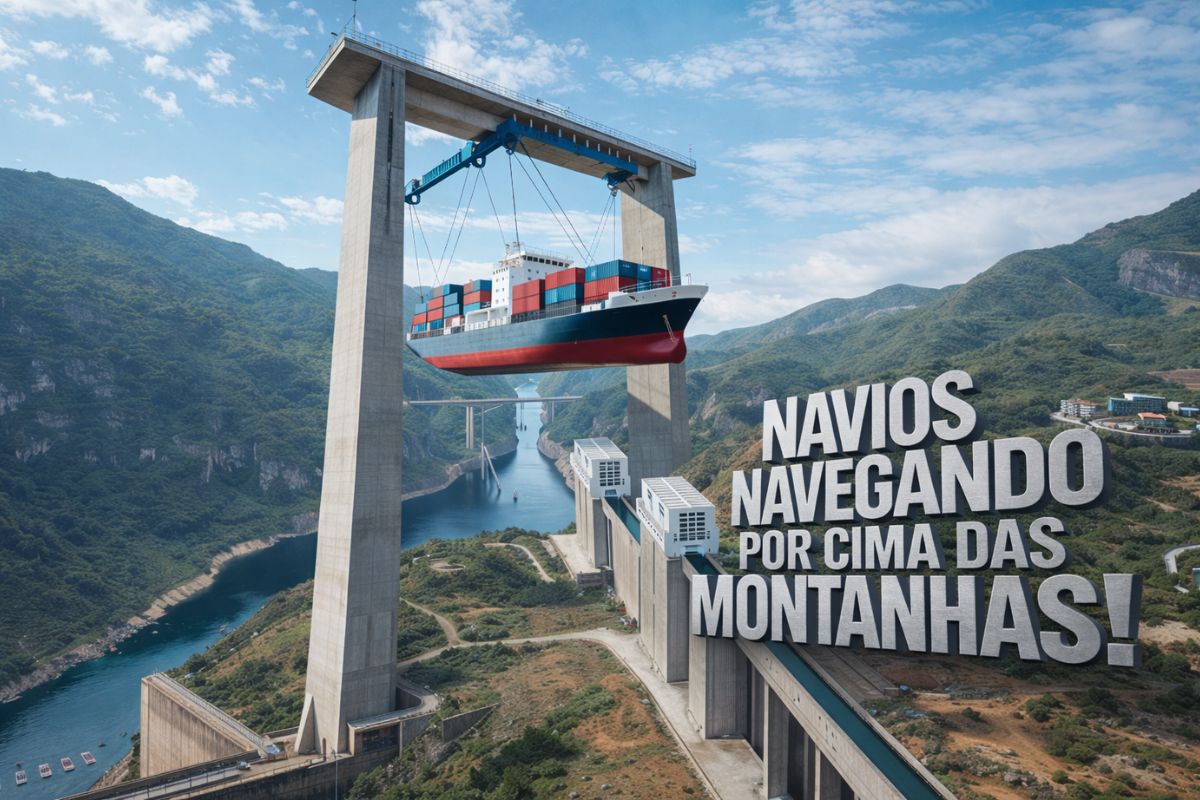
In the mountainous province of Guizhou, China, giant ship elevators overcome elevation differences of more than 250 meters, cross suspended aqueducts and tunnels carved into the rock to keep waterways connected to the Yangtze River and the economic heart of the country.
Crossing mountains by boat seems like a scene from a movie, but today it’s routine in one of the most rugged regions of China. Combining dams, hydroelectric plants, canals, elevated aqueducts and giant elevators Capable of lifting entire vessels, the country has transformed a hostile landscape into an essential logistics corridor, through which heavy cargo passes on its way to the Yangtze River.
All of this is made possible thanks to an engineering project that integrates hydroelectric power generation, river transport, and mountain infrastructure into a single system. At the heart of this solution are the… giant elevators The Gaotan Canal allows ships to ascend and descend hundreds of meters in stages, cross an aqueduct high above, pass through tunnels in the rock, and finally continue their journey along a waterway that connects directly to one of the most important rivers on the planet.
China sailing over the mountains

China is responsible for about 1 third of all the world’s hydroelectric power, with approximately 391 gigawatts out of a total global capacity of nearly 1360 gigawatts. This is only possible because the country has spread dozens of large power plants across its territory, many of them installed in mountainous regions, deep valleys, and fast-flowing rivers.
— ARTICLE CONTINUES BELOW —
Among these structures are some of the largest hydroelectric complexes on the planet, such as the Three Gorges DamThe largest hydroelectric power plant in operation, considered the largest in operation, and others like Bairretan, which are also among the world’s giants. In several of these dams, the rugged geography demanded extreme solutions to reconcile two seemingly contradictory objectives: To dam water in order to generate energy and, at the same time, keep river navigation functioning..
It was in this context that the systems of giant elevators of ships. Instead of trying to build roads and railways in terrain where 90 percent or more of the area is made up of mountains, jagged plateaus and narrow valleys, Chinese engineers opted to take advantage of the potential of rivers and create vertical waterways, where vessels ascend and descend enormous differences in elevation in a few minutes.
Inside the elevators giants of Gaotan
The Gaotan system in Guizhou looks like a science fiction laboratory applied to navigation. From afar, it appears to be a large concrete building on the edge of a canal. Up close, this building hides the heart of the solution: giant elevators specifically designed to transport ships carrying hundreds of tons of cargo and water.
From the outside, these elevators resemble a tall industrial building. Inside, they are composed of… chambers filled with water, robust steel cables, drums and gears They function similarly to a building elevator, but on a colossal scale. Instead of people, entire ships enter.
Each trip can lift a ship up to approximately 500 tons in about 10 minutesThe system keeps the boat stable inside a kind of metallic “bathtub.” It’s designed to support even heavier loads – in the thousands of tons – depending on the operating configuration. From a visual standpoint, it’s like watching a building lift a section of river along with the ship.
The first of giant elevators Gaotan is able to raise the vessel to about Meters 78That’s equivalent to a building of more than 20 stories. But that’s only the first step in the climb.
Three elevators, 252 meters of elevation difference, and a vertical waterway.
The system doesn’t rely on just one, but on… three giant interconnected elevators, forming a veritable hydraulic staircase. After overcoming the first difference in level, the ship continues through a channel to the second elevator, which adds more 127 meters climbNext, there is a third elevator, responsible for the final descent of up to… 47 meters, depending on the water level on the other side of the dam.
Adding up all the stages, the vessels overcome a total difference in elevation of approximately 252 metersIn comparison, this is higher than the Statue of Liberty And it easily surpasses the height of the Great Pyramid of Giza. At times, the ship is floating at heights equivalent to 60-story buildings, with water on all sides and mountains all around.
At first glance, it may seem like a slow system, since each giant elevator It moves only one vessel at a time. But the secret lies in the sequential organization: while one ship ascends, another is already positioning itself on the next elevator or entering the following track. Thus, a constant flow is formed, almost like a vertical train, which makes the most of the available infrastructure.
The suspended aqueduct that connects the elevators.

Among the giant elevatorsThere is another discreet and essential protagonist: a suspended aqueduct, which functions like a water bridge high above the ground. Instead of simple pipes, we’re talking about an elevated navigable canal, through which ships travel as if they were on a river, only several meters above the ground.
Aqueducts have been known since antiquity, especially by the Romans, but here they serve a completely different purpose. It’s not just about conveying water, but about supporting an entire canal with heavy vessels in motion., in an environment subject to geological instabilities, strong winds and variations in water level.Play Video
The aqueduct’s layout was carefully adapted to the terrain, fitting into the mountainous topography of Guizhou. The structure needed to be robust enough to withstand the weight of the water and ships, but also flexible and safe enough to coexist with a landscape of steep slopes, deep valleys, and unstable soil. The result is a kind of… water viaduct, which completes the link between the giant elevators and transforms the whole area into a continuous waterway.
The navigable tunnel that runs through the mountain.
In another section of the route, the challenge shifted from the height to the massive rock obstacle. There was no way to circumvent the mountain, either above or outside, with a viable path for boats. The solution found was radical: open a tunnel in the mountain exclusively for the continuation of the waterway.
This tunnel, excavated with giant tunnel boring machines, extends for approximately 2,2 kmInside, the environment is dark and enclosed, but the canal is fully navigable. Ships enter, travel through the interior of the mountain, and emerge on the other side, ready to continue their series of elevators and canals.
The set of giant elevators, suspended aqueduct and navigable tunnel It transforms an extremely rugged stretch of Guizhou into an integrated water transport solution, where every element of the geography, instead of hindering progress, has been incorporated into the project.
Hydropower and strategy on the Wu and Yangtze rivers
None of this would have been built if there hadn’t been a consistent strategic reason. Guizhou province is in one of the most mountainous regions of China and has… estimated hydroelectric potential in tens of millions of kilowatts, which places it among the richest areas in hydroelectric power in the country.
Along the Wu River, one of the direct tributaries of Yangtze RiverCurrently, there are several hydroelectric power plants in operation, totaling thousands of megawatts of installed capacity. The Gaotan dam is one piece of this puzzle, integrating power generation and navigation in the same corridor.
Shipping industry services
The key point is that the Wu River connects to the Yangtze River, and the The Yangtze is the main river artery of China.Cutting across the country from west to east, passing through highly industrialized regions and one of the world’s largest economic hubs, the river delta. Abandoning navigation along this route would mean removing Guizhou from the country’s main logistics routes.
Therefore, instead of choosing between energy and transportation, China decided Invest in both at the same time., creating large-scale hydroelectric plants and, along with them, systems of giant elevators, aqueducts and tunnels that maintain the connection of the waterways with the Yangtze River.
Gaotan vs. Three Gorges – a comparison between giants
Gaotan’s system impresses with the height it overcomes and the combination of structures. But when it comes to weight, another giant enters the scene: the ship lift at the Three Gorges Dam.
In the case of Three Gorges, the elevator is capable of to lift vessels weighing up to approximately 3.000 tons, in a water chamber with approximately 122 meters long and 18 meters wideequivalent to the volume of several Olympic swimming pools. It rises approximately Meters 113 in a single cycle, drastically reducing transit time compared to the traditional lock system, which can take hours.
Before this elevator, ships already crossed the dam by means of… five-stage locks, arranged in two parallel rows. Even with this system, the total transit time was high. With the new elevator, the flow of cargo grew and reached tens of millions of tons per year, helping to consolidate the Yangtze as an even more competitive transport corridor.
Comparing the two cases, it becomes clear that Each set of giant elevators responds to a different type of challenge.In Three Gorges, the focus is on reducing crossing time at a massive dam already integrated into a busy river route. In Gaotan, the priority was to make navigable a stretch that, without elevators, aqueduct and tunnel, would be virtually impossible to cross.
Why giant elevators are the best option there.

At first glance, you might ask: why not divert freight routes to roads or railways, instead of investing in… giant elevators And such complex suspended channels?
In practice, The terrain in Guizhou makes land transport extremely expensive and risky.Building wide, modern highways requires cutting through mountains, constructing viaducts, dealing with unstable slopes, and constant maintenance. Railways face similar challenges, with the need for long tunnels and very controlled curves.
The river transport system, once implemented, allows a single barge to do the work of dozens of trucks in a single trip. In terms of energy efficiency, water transport consumes significantly less fuel per ton transported, reduces emissions, and alleviates pressure on roads and highways.
That’s why, even though it seems like an extreme solution, Gaotan’s giant elevators appear to be the most rational solution to the region’s many problems.They ensure the full use of hydroelectric potential, maintain the connection with the Yangtze River, and create a robust transport route in a place where geography seemed to prohibit any major freight corridor.
Hydrogen fuel cell technology
In the end, what seemed like science fiction became reality. unsurpassed infrastructure in terms of adaptation to the terrain, integration with the energy matrix, and the capacity to transport millions of tons of goods every year.
source : clickpetroleoegas
Featured Post
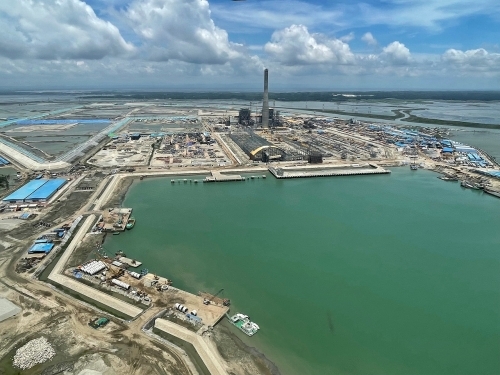 বড় জাহাজ মেরামতে মাতারবাড়ীতে ১ বিলিয়ন ডলারের প্রকল্প
 মাতারবাড়ীতে প্রায় ১ বিলিয়ন মার্কিন ডলার ব্যয়ে পরিবেশবান্ধব ডকইয়ার্ড ও জাহাজ নির্মাণ কেন্দ্র স্থাপনের উদ্যোগে নীতিগত অনুমোদন দিয়েছে নৌপরিবহন মন্ত্রণালয়। এখন প্রকল্পটির কারিগরি ও আর্থিক মূল্যায়নের জন্য প্রস্তাবটি সরকারি-বেসরকারি অংশীদারত্ব (পিপিপি) কর্তৃপক্ষের কাছে পাঠানো হয়েছে। সম্পূর্ণ বেসরকারি অর্থায়নে সরকারি জমির মালিকানা অক্ষুণ্ন রেখে প্রকল্পটি বাস্তবায়নের পরিকল্পনা রয়েছে। বন্দর কর্তৃপক্ষ জানায়, […]
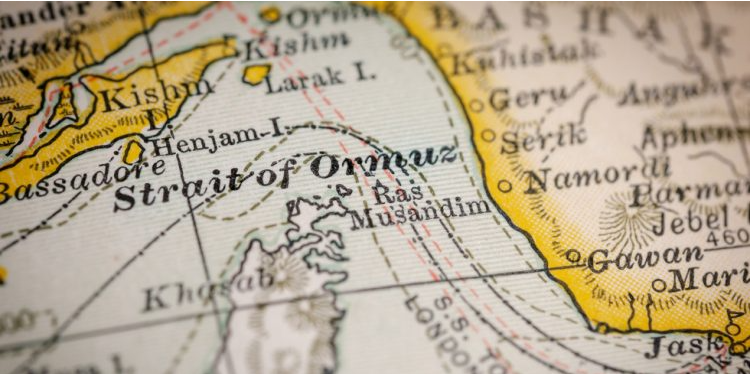 Industry on alert over scam messages offering ships “safe passage” on Hormuz
 Credit: Shutterstock Fraudulent messages offering safe passage through the Strait of Hormuz in exchange for cryptocurrency have been circulated to shipping companies with vessels stranded west of the waterway, according to MARISKS. In an alert issued on 20 April, MARISKS cautioned that unknown actors posing as Iranian authorities had contacted […]



JOB SITES
CONTENTS
LINKS
Happy New Year

Découvrez les avantages de MadCasino
Dans le monde des casinos en ligne, MadCasino se distingue par ses offres attrayantes et ses services de qualité. Que vous soyez un joueur débutant ou un parieur aguerri, vous trouverez ici une variété de jeux qui sauront satisfaire toutes vos envies. Les machines à sous, les jeux de table et les options de paris en direct sont tous disponibles pour vous offrir une expérience de jeu inégalée. De plus, le casino propose régulièrement des bonus qui permettent d'augmenter vos chances de gagner, vous offrant ainsi une excellente opportunité de maximiser vos gains.
En matière de sécurité, MadCasino est un nom de confiance. Il est entièrement licencié et régulé, ce qui garantit un environnement de jeu sûr et équitable. Les joueurs peuvent se concentrer sur leur expérience de jeu sans se soucier des problèmes de sécurité. Les transactions financières sont également sécurisées grâce à des technologies de pointe.
Les jeux proposés par MadCasino sont issus des développeurs les plus réputés de l'industrie, vous assurant des graphismes époustouflants et des mécaniques de jeu innovantes. Les joueurs peuvent également profiter d'une expérience de jeu en direct qui simule l'atmosphère d'un casino terrestre, tout en restant dans le confort de leur maison.
Enfin, la plateforme de MadCasino est optimisée pour les appareils mobiles, permettant aux joueurs de parier à tout moment et de n'importe où. Que vous soyez sur votre smartphone ou votre tablette, l'accès à vos jeux préférés n'a jamais été aussi simple. Ne manquez pas l'opportunité de découvrir ce casino exceptionnel.
Les offres de Cresus Casino
Cresus Casino est un autre acteur majeur dans le domaine des jeux en ligne, offrant des promotions généreuses et une vaste sélection de jeux. Les joueurs peuvent profiter d'une expérience de jeu enrichissante grâce aux nombreux bonus disponibles, qui sont conçus pour attirer tant les nouveaux utilisateurs que les joueurs réguliers. Ces avantages permettent non seulement de prolonger votre temps de jeu, mais aussi d'augmenter vos chances de gains conséquents.
Le casino se distingue également par sa ludothèque impressionnante, comprenant une sélection variée de machines à sous, de jeux de table et de jeux en direct. Les clients peuvent choisir parmi des titres populaires et appréciés, ainsi que des nouveautés qui enrichissent constamment l'offre. L'interface utilisateur est conviviale, rendant la navigation sur la plateforme fluide et agréable.
En termes de sécurité, Cresus Casino assure à ses joueurs un environnement de jeu fiable. La plateforme utilise des protocoles de sécurité avancés pour protéger les données personnelles et financières des utilisateurs. Cela permet aux joueurs de se sentir en sécurité tout en jouant à leurs jeux préférés.
Avec un service client réactif et professionnel, Cresus Casino s'assure que toutes vos questions et préoccupations sont traitées rapidement. Que ce soit pour des questions concernant les bonus, les retraits ou les jeux, vous bénéficierez d'une assistance rapide et efficace.
Explorez Nine Casino et ses avantages
Dans l'univers des casinos en ligne, Nine Casino a su se faire une place de choix grâce à son approche innovante et à ses nombreux avantages pour les joueurs. Les utilisateurs peuvent s'attendre à une expérience de jeu enrichissante, avec des bonus attractifs qui sont régulièrement mis à jour. Ces offres sont une excellente façon de découvrir de nouveaux jeux tout en maximisant votre potentiel de gain.
La plateforme de Nine Casino est riche en options de jeux, allant des machines à sous aux jeux de table, en passant par le live casino. Chaque jeu est conçu pour offrir une expérience immersive grâce à des graphismes de haute qualité et des fonctionnalités innovantes. Les parieurs peuvent profiter de sessions de jeu captivantes, comme s'ils étaient dans un véritable casino.
La sécurité est une priorité pour Nine Casino, qui utilise des technologies de cryptage avancées pour protéger les informations de ses joueurs. Cela garantit un environnement de jeu sûr et fiable, permettant aux utilisateurs de se concentrer sur ce qu'ils aiment le plus : jouer.
Enfin, le service clientèle fourni par Nine Casino est exceptionnel, avec des agents disponibles pour répondre à toutes vos questions et résoudre vos problèmes. Vous pourrez ainsi jouer en toute tranquillité, sachant que votre satisfaction est au cœur de leurs préoccupations.
Profitez de l'expérience Lucky31
Lucky31 est un casino en ligne qui se distingue par son approche orientée vers le joueur, offrant une multitude d'options de jeux et des bonus généreux. Que vous soyez amateur de machines à sous ou passionné de jeux de table, vous trouverez une large sélection pour satisfaire toutes vos envies de jeu. Les promotions fréquentes permettent aux joueurs de prolonger leur expérience tout en augmentant leurs chances de gains.
La convivialité de la plateforme de Lucky31 est l'un de ses plus grands atouts. Les joueurs peuvent naviguer facilement entre les différents jeux, et l'interface est conçue pour être intuitive, quel que soit le niveau d'expérience de l'utilisateur. De plus, le casino est entièrement optimisé pour les appareils mobiles, ce qui permet de parier où que vous soyez.
En matière de sécurité, Lucky31 prend les préoccupations des joueurs très au sérieux. Le casino est agréé et régulé, garantissant un environnement de jeu équitable et sécurisé. Les joueurs peuvent ainsi se concentrer sur leur expérience de jeu sans se soucier des risques liés à la sécurité.
Pour ceux qui recherchent un support client efficace, Lucky31 offre un service réactif et professionnel. Que ce soit pour des questions sur les bonus, les jeux ou les paiements, vous aurez accès à une assistance de qualité, vous garantissant une expérience de jeu fluide et agréable.