search the site


Crew Welfare Week 2025: How women are steering the future of maritime
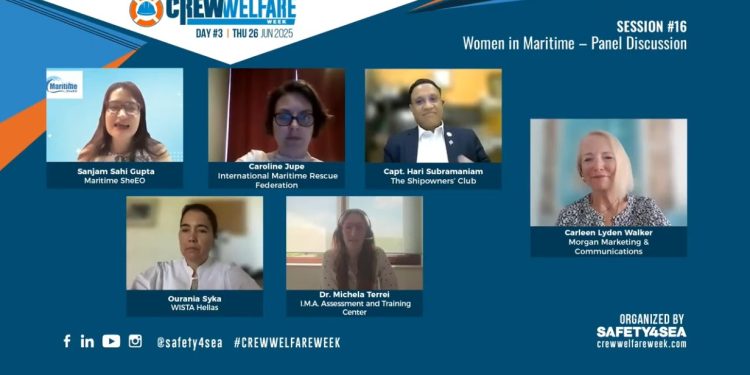
At the 2025 Crew Welfare Week, an illuminating panel moderated by Carleen Lyden Walker, CEO of Morgan Marketing & Communications, brought together some of the most influential voices in the maritime industry to discuss one of its most pressing challenges gender inclusion.
The conversation featured Sanjam Sahi Gupta, Founder, Maritime SheEO, Caroline Jupe, CEO, International Maritime Rescue Federation, Capt. Hari Subramaniam, Regional Head – Business Relations, The Shipowners’ Club, Ourania Syka, WISTA Hellas, and Dr. Michela Terrei, Psychologist, I.M.A. Assessment and Training Center.
A Reality check: Women’s representation at sea
Moderator Carleen Lyden Walker opened with sobering statistics from the IMO–WISTA 2024 Women in Maritime Survey: only 1% of active seafarers are women, and women make up just 19% of the overall maritime workforce. Even more concerning, only 5% of maritime students worldwide are female.
Walker underscored the urgency of these numbers, calling diversity “a necessity for innovation, sustainability, and long-term prosperity.” She also shared a telling anecdote: a young woman who turned down admission to a U.S. maritime academy upon learning that only 9% of its students were female. “If that narrative continues,” Walker warned, “we risk losing bright talent before it even sets sail.”
The power of representation and safe spaces
Sanjam Sahi Gupta, a pioneering voice for gender equality in maritime, recalled her early career in Mumbai when “there was no space for me—I was hiding in a corner.” That experience inspired her to create Maritime SheEO, an initiative that provides mentorship, networking, and leadership development for women in shipping.
Gupta emphasized three keys to women’s success in maritime: networking, working harder to prove oneself, and above all, confidence. She explained that cultural expectations often discourage women from building professional networks—something men have long relied on. “Women go home after work to manage family responsibilities,” she noted, “but networking is part of the job. It’s how opportunities are created.”
Her message was clear: women must stop doubting their place at the table. “We always feel we’re not good enough,” she said. “But we are. We just have to step up.”
Leadership from the deck
Greek captain Ourania Syka offered a frontline perspective from her years commanding oil tankers. “This job demands resilience, expertise, and strong communication skills—regardless of gender,” she said. For her, success depends on problem-solving, adaptability, and leadership.
Syka also noted how technology and automation are changing the dynamics at sea, helping to level the playing field.
There’s no longer a need for physical strength to define competence. Digital navigation and AI tools have made shipboard work more inclusive.
…she said.
Yet, she acknowledged that the path remains steep. “It’s not easy,” she said, “but it gives you knowledge, discipline, and strength.”
Male allies and cultural change
Capt. Hari Subramaniam – a long-time industry advocate and father of a daughter – spoke passionately about men’s role in advancing equality.
There is a place where men have to make space for women; every man has a role to play.
..he said.
Subramaniam identified cultural norms as one of the greatest obstacles. “Tradition has made it seem that women belong at home,” he said. “That mindset is outdated. Men must learn to respect women who are better than them—or at least as good.”
He also challenged men to take a stand against objectification and exclusionary behavior in informal settings like bars or “old boys’ clubs.” “If you wouldn’t want your wife or daughter spoken about that way, you shouldn’t tolerate it about others,” he said.
Perhaps most poignantly, Subramaniam reflected on raising his son. “Change begins at home,” he said. “I’m trying to teach my son to be a true gentleman—someone who respects his sister and his mother. That’s where equality starts.”
Confidence, mentorship, and culture
For Caroline Jupe, who leads the International Maritime Rescue Federation (IMRF), confidence is both a personal and institutional issue. “I walk into conferences where most of the room is male, and sometimes my confidence melts away,” she admitted. “But I remind myself—I have a reason to be here.”
Jupe’s career was shaped by mentorship. “Being mentored by another female CEO gave me the confidence to step into my current role,” she said. Recognizing the power of that experience, IMRF now runs a Women in Search and Rescue mentoring scheme to help women advance in this specialized field.
But mentorship alone isn’t enough. “Organizational culture must support women,” Jupe stressed. She cited improvements in personal protective equipment (PPE) design as a tangible example of progress. “We’re finally seeing kit that fits women properly,” she said. “That may sound small, but it represents inclusion in action.”
Learning, resilience, and stereotypes
Dr. Michela Terrei, psychologist at the Italian Maritime Academy in Manila, approached the discussion from a behavioral science angle. Drawing on Albert Bandura’s social learning theory, she explained that “people learn by observing others.” For women in maritime, the scarcity of visible role models hinders both recruitment and retention.
“Success stories are powerful,” she said. “When young women see a female captain, they begin to believe they can do it too.”
Terrei also highlighted emotional strain as a growing issue. Isolation at sea affects all seafarers, but for women—often the only female onboard—the psychological toll can be greater. “Building emotional resilience and teaching emotional intelligence should be part of training,” she advised.
She outlined three major barriers to women’s advancement:
- Gender stereotypes—the persistent belief that leadership equals masculinity.
- Cultural and social norms that reward emotional stoicism and male behavior.
- Work–family conflict, particularly the challenge of balancing seafaring with motherhood.
“These factors combine to make maritime a difficult career choice for many women,” she concluded, “but none of them are insurmountable.”
The power of visibility
Returning to the theme of representation, Jupe shared a phrase that resonated deeply with the panel: “You can’t be what you can’t see.” This echoes a statement once made by U.S. Congressman Elijah Cummings: “If they can’t see it, they can’t dream it.”
Walker noted that the maritime industry, though essential to global trade, remains largely invisible to the public- and even more so for women. “We must amplify the stories of women like Captain Syka,” she urged. “Visibility creates possibility.”
Women supporting women
The discussion closed on a powerful note about solidarity among women. Subramaniam observed that some women in leadership roles hesitate to support others climbing the ladder – a phenomenon not unique to maritime. Walker responded by quoting former U.S. Secretary of State Madeleine Albright, herself a Wellesley College alumna: “There’s a special place in hell for women who don’t support other women.”
The sentiment drew nods from across the panel. As Gupta and others agreed, mentorship, inclusion, and compassion must be at the heart of progress.
Women lifting each other up is not optional; it’s essential for systemic change.
Charting the course ahead
From mentorship programs and inclusive equipment design to psychological resilience training and male allyship, the industry is beginning to turn the tide. As the IMO and WISTA’s data make clear, there is still far to go—but as every panelist affirmed, the journey toward equality is not only just but vital for the industry’s sustainability and innovation.
Maritime, after all, thrives on collaboration. As Carleen Lyden Walker concluded, “Progress, not perfection. But every wave of change begins with one voice—and today, we heard many.”
source : safety4sea
Featured Post
 বড় জাহাজ মেরামতে মাতারবাড়ীতে ১ বিলিয়ন ডলারের প্রকল্প
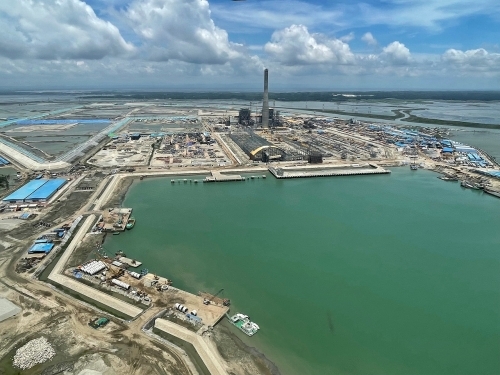
 মাতারবাড়ীতে প্রায় ১ বিলিয়ন মার্কিন ডলার ব্যয়ে পরিবেশবান্ধব ডকইয়ার্ড ও জাহাজ নির্মাণ কেন্দ্র স্থাপনের উদ্যোগে নীতিগত অনুমোদন দিয়েছে নৌপরিবহন মন্ত্রণালয়। এখন প্রকল্পটির কারিগরি ও আর্থিক মূল্যায়নের জন্য প্রস্তাবটি সরকারি-বেসরকারি অংশীদারত্ব (পিপিপি) কর্তৃপক্ষের কাছে পাঠানো হয়েছে। সম্পূর্ণ বেসরকারি অর্থায়নে সরকারি জমির মালিকানা অক্ষুণ্ন রেখে প্রকল্পটি বাস্তবায়নের পরিকল্পনা রয়েছে। বন্দর কর্তৃপক্ষ জানায়, […]
 Industry on alert over scam messages offering ships “safe passage” on Hormuz
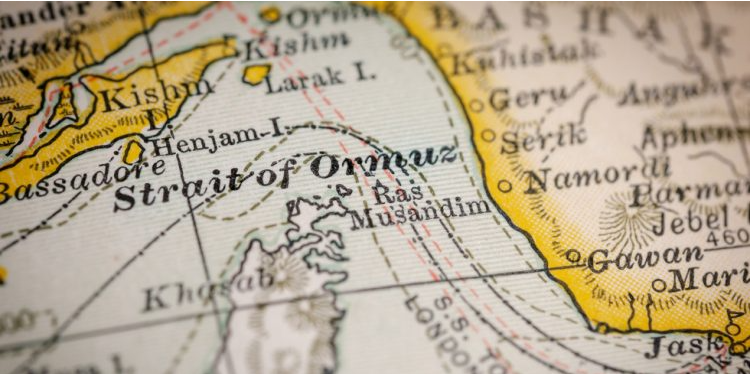
 Credit: Shutterstock Fraudulent messages offering safe passage through the Strait of Hormuz in exchange for cryptocurrency have been circulated to shipping companies with vessels stranded west of the waterway, according to MARISKS. In an alert issued on 20 April, MARISKS cautioned that unknown actors posing as Iranian authorities had contacted […]



JOB SITES
CONTENTS
LINKS
Happy New Year

Découvrez les avantages de MadCasino
Dans le monde des casinos en ligne, MadCasino se distingue par ses offres attrayantes et ses services de qualité. Que vous soyez un joueur débutant ou un parieur aguerri, vous trouverez ici une variété de jeux qui sauront satisfaire toutes vos envies. Les machines à sous, les jeux de table et les options de paris en direct sont tous disponibles pour vous offrir une expérience de jeu inégalée. De plus, le casino propose régulièrement des bonus qui permettent d'augmenter vos chances de gagner, vous offrant ainsi une excellente opportunité de maximiser vos gains.
En matière de sécurité, MadCasino est un nom de confiance. Il est entièrement licencié et régulé, ce qui garantit un environnement de jeu sûr et équitable. Les joueurs peuvent se concentrer sur leur expérience de jeu sans se soucier des problèmes de sécurité. Les transactions financières sont également sécurisées grâce à des technologies de pointe.
Les jeux proposés par MadCasino sont issus des développeurs les plus réputés de l'industrie, vous assurant des graphismes époustouflants et des mécaniques de jeu innovantes. Les joueurs peuvent également profiter d'une expérience de jeu en direct qui simule l'atmosphère d'un casino terrestre, tout en restant dans le confort de leur maison.
Enfin, la plateforme de MadCasino est optimisée pour les appareils mobiles, permettant aux joueurs de parier à tout moment et de n'importe où. Que vous soyez sur votre smartphone ou votre tablette, l'accès à vos jeux préférés n'a jamais été aussi simple. Ne manquez pas l'opportunité de découvrir ce casino exceptionnel.
Les offres de Cresus Casino
Cresus Casino est un autre acteur majeur dans le domaine des jeux en ligne, offrant des promotions généreuses et une vaste sélection de jeux. Les joueurs peuvent profiter d'une expérience de jeu enrichissante grâce aux nombreux bonus disponibles, qui sont conçus pour attirer tant les nouveaux utilisateurs que les joueurs réguliers. Ces avantages permettent non seulement de prolonger votre temps de jeu, mais aussi d'augmenter vos chances de gains conséquents.
Le casino se distingue également par sa ludothèque impressionnante, comprenant une sélection variée de machines à sous, de jeux de table et de jeux en direct. Les clients peuvent choisir parmi des titres populaires et appréciés, ainsi que des nouveautés qui enrichissent constamment l'offre. L'interface utilisateur est conviviale, rendant la navigation sur la plateforme fluide et agréable.
En termes de sécurité, Cresus Casino assure à ses joueurs un environnement de jeu fiable. La plateforme utilise des protocoles de sécurité avancés pour protéger les données personnelles et financières des utilisateurs. Cela permet aux joueurs de se sentir en sécurité tout en jouant à leurs jeux préférés.
Avec un service client réactif et professionnel, Cresus Casino s'assure que toutes vos questions et préoccupations sont traitées rapidement. Que ce soit pour des questions concernant les bonus, les retraits ou les jeux, vous bénéficierez d'une assistance rapide et efficace.
Explorez Nine Casino et ses avantages
Dans l'univers des casinos en ligne, Nine Casino a su se faire une place de choix grâce à son approche innovante et à ses nombreux avantages pour les joueurs. Les utilisateurs peuvent s'attendre à une expérience de jeu enrichissante, avec des bonus attractifs qui sont régulièrement mis à jour. Ces offres sont une excellente façon de découvrir de nouveaux jeux tout en maximisant votre potentiel de gain.
La plateforme de Nine Casino est riche en options de jeux, allant des machines à sous aux jeux de table, en passant par le live casino. Chaque jeu est conçu pour offrir une expérience immersive grâce à des graphismes de haute qualité et des fonctionnalités innovantes. Les parieurs peuvent profiter de sessions de jeu captivantes, comme s'ils étaient dans un véritable casino.
La sécurité est une priorité pour Nine Casino, qui utilise des technologies de cryptage avancées pour protéger les informations de ses joueurs. Cela garantit un environnement de jeu sûr et fiable, permettant aux utilisateurs de se concentrer sur ce qu'ils aiment le plus : jouer.
Enfin, le service clientèle fourni par Nine Casino est exceptionnel, avec des agents disponibles pour répondre à toutes vos questions et résoudre vos problèmes. Vous pourrez ainsi jouer en toute tranquillité, sachant que votre satisfaction est au cœur de leurs préoccupations.
Profitez de l'expérience Lucky31
Lucky31 est un casino en ligne qui se distingue par son approche orientée vers le joueur, offrant une multitude d'options de jeux et des bonus généreux. Que vous soyez amateur de machines à sous ou passionné de jeux de table, vous trouverez une large sélection pour satisfaire toutes vos envies de jeu. Les promotions fréquentes permettent aux joueurs de prolonger leur expérience tout en augmentant leurs chances de gains.
La convivialité de la plateforme de Lucky31 est l'un de ses plus grands atouts. Les joueurs peuvent naviguer facilement entre les différents jeux, et l'interface est conçue pour être intuitive, quel que soit le niveau d'expérience de l'utilisateur. De plus, le casino est entièrement optimisé pour les appareils mobiles, ce qui permet de parier où que vous soyez.
En matière de sécurité, Lucky31 prend les préoccupations des joueurs très au sérieux. Le casino est agréé et régulé, garantissant un environnement de jeu équitable et sécurisé. Les joueurs peuvent ainsi se concentrer sur leur expérience de jeu sans se soucier des risques liés à la sécurité.
Pour ceux qui recherchent un support client efficace, Lucky31 offre un service réactif et professionnel. Que ce soit pour des questions sur les bonus, les jeux ou les paiements, vous aurez accès à une assistance de qualité, vous garantissant une expérience de jeu fluide et agréable.