search the site


US port fees challenge China and its shipping giant in battle for the seas
JAMES HAND-CUKIERMAN
TOKYO — The freighter M.V. Liu Lin Hai eased into the Port of Seattle on a crisp, cloudy day in April 1979 as a cluster of politicians, diplomats and officials watched from shore. The ship, sailed by the fledgling China Ocean Shipping Company (COSCO), was the first Chinese merchant vessel to call in the U.S. in 30 years.
Washington and Beijing had normalized relations a few months earlier. As the Liu Lin Hai docked, a U.S. Navy band struck up a show tune from then-popular rock opera “Jesus Christ Superstar,” as well as China’s national anthem, a New York Times reporter recounted. The dignitaries declared that the Liu Lin Hai’s arrival, along with a similar voyage by a U.S. cargo ship to China, was the beginning of a beautiful friendship.
It was, at least, the start of a trade relationship that would swell to over $500 billion a year. State-backed COSCO would grow into one of the world’s largest shipping groups and the leader between Asia and the U.S. West Coast. China would become the biggest shipbuilding nation, constructing more than half the world’s commercial vessels, experts say.
Now, China and COSCO are facing a colder reception at American ports.
Barring a last-minute deal, on Oct. 14 the U.S. will impose new docking fees on all ships owned or operated by Chinese companies — or even simply built in China. The U.S. Trade Representative (USTR) calls this an effort to reverse China’s “unfair” state-subsidized maritime dominance and restore American shipbuilding, which accounts for less than 1% of global output. Others call it the “COSCO tax,” as the Chinese group is expected to be the hardest hit.
Bankers at HSBC estimate COSCO and its units could face total port fee bills of more than $2 billion next year. COSCO Shipping reported a net profit attributable to shareholders last year of $6.9 billion.
 COSCO’s Liu Lin Hai in Seattle in April 1979: The ship’s visit to pick up corn marked the start of a new trading relationship between the U.S. and China. © Port of Seattle
Some experts say the penalties could be delayed amid ongoing China-U.S. trade negotiations, or watered down if Trump seals a deal with Chinese President Xi Jinping, who was gifted a 3D-printed model of the Liu Lin Hai during a 2015 visit to the U.S. as a symbol of smoother trading times. But the floating of the fees has spotlighted a longer-term superpower competition over the means and machinery of global trade, from ships, to cranes, to ports themselves. Mordor Intelligence estimates the global container shipping market in 2025 at $119 billion
While the focus this year has been on President Donald Trump’s “reciprocal” tariffs on the rest of the world, the docking fees introduce another factor that could increase the cost of doing business with the U.S. Setting the stage for a new confrontation, China at the end of September implemented a law enabling “countermeasures against countries or regions that impose or support discriminatory bans, restrictions, or similar measures” on Chinese shipping, unless treaties offer remedies.
Considerable uncertainty also hovers over the extent to which extra costs may be absorbed by companies or passed on to consumers. “The unintended consequences of this are just off the charts,” said John McCown, a U.S. shipping veteran and nonresident senior fellow at the Center for Maritime Strategy. “We just don’t know.”
What is known is that the looming policy has already prompted a rapid realignment of global fleets, with China-built ships moving off U.S. routes.

Matthew Funaiole, a senior fellow in the China Power Project and shipbuilding expert at the Center for Strategic and International Studies (CSIS), observed that although there is “unpredictability” in Washington, “shipbuilding is one of the rare issues right now that is bipartisan.”
At the Port of Los Angeles, where hundreds of thousands of containers are hoisted and stacked every month, Executive Director Gene Seroka said the industry is experiencing “a lot of up and down” due to Trump’s tariffs, pauses and the imminent ship fees.
Since the USTR unveiled the charges in April, he said, shipping companies have been asking themselves, “OK, what do I do now?” For most, the answer is clear: Limit the number of China-built ships plying U.S. routes, switching them out for vessels constructed elsewhere, such as South Korea and Japan.
“For some it may be easier” to rearrange operations, Seroka said. “For others it will not happen at all,” forcing companies to shift the costs to customers or swallow them.
 The Port of Los Angeles, the busiest U.S. container port, is riding the ups and downs triggered by Trump’s tariffs and the planned docking fees. © Reuters
London-headquartered maritime consultancy Drewry is tracking the exodus of China-built ships from U.S. lanes. Its data shows a 25% decline in such ships on three major North American routes from May to September, with a 33% drop in their capacity, based on the latest sailing schedules.
The chief executive officer of Danish shipping and logistics giant Maersk, Vincent Clerc, told media earlier this year that since less than 10% of the ships it owns are Chinese-made, “We can reallocate capacity so that the ships that will be affected by this do not need to sail to the U.S.”
At German peer Hapag-Lloyd, Chief Executive Rolf Habben Jansen told reporters in August that the policy should be “very manageable.” He added, “It will be a little bit more difficult for one or two carriers, but I’m sure that they will somehow also find a way to manage that.”
COSCO is understood to be working on the “somehow.”
The Chinese conglomerate, which did not respond to requests for comment, has complained the U.S. action is “discriminatory.” In its latest earnings report, Hong Kong-listed arm COSCO Shipping Holdings said the industry is “undergoing an unprecedented historical evolution and transformation,” partly due to trade policy “chain reactions” and “geopolitical influences.”
Hong Kong-headquartered COSCO subsidiary Orient Overseas International Ltd. (OOIL) conceded: “The additional port charges levied by the U.S. on Chinese carriers will have a relatively large impact on the group.”

Some in the industry speculate that COSCO might eat some of the fees to stay competitive. COSCO has been tight-lipped but has assured investors it will defend its transpacific service, according to notes from shipping intelligence firm Lloyds List and Citi.
Drewry’s Managing Director Philip Damas told Nikkei Asia, “We have seen no evidence that the Chinese and Hong Kong-based ship operators … will curtail their own services to the U.S. for now, despite the increased burden.”
HSBC estimated in September that COSCO could take a roughly $1.5 billion hit from the fees in 2026, with OOIL facing a $654 million blow. A representative for OOIL’s Orient Overseas Container Line (OOCL) declined to comment on the bank’s analysis, “which is made based on their studies,” and pointed Nikkei Asia to a Sept. 19 statement in which the carrier said, “Despite the financial burden imposed by these fees, our commitment to the U.S. market is clear and strong.”
HSBC did say China’s carriers could “partly mitigate the impact” by working with non-Chinese partners. Some of the world’s top container shippers collaborate to optimize how vessels are deployed. COSCO and OOCL are partnered with French carrier CMA CGM and Taiwan’s Evergreen in the Ocean Alliance — one of several such groupings. Analysts say COSCO is likely negotiating with these peers to place more non-Chinese vessels on transpacific lanes while shifting Chinese capacity to alternative routes.

This is not simple. Experts say individual companies prioritize their own interests and would expect compensation for going out of their way to accommodate a partner. At the very least, the port fees raise new questions about how to make the most of each fleet.
“If you’re an individual company, with a portfolio of vessels, you want to have them running on a constant basis to really get the cost benefit of using that vessel that you paid $150 million to $200 million for,” Seroka at the Port of LA said. He added that members are bound to have their own vessel configurations and cargo stowage patterns to account for, and that a ship’s owner has the final say on key decisions.
“It gets super-complex” to shuffle and share vessels, Seroka said. “It doesn’t mean you can’t do it. It just takes more planning time.”
Another potential obstacle is fleet composition. In the Ocean Alliance, the biggest non-Chinese member, CMA CGM, has one of the industry’s higher ratios of China-built vessels, at about 40%, according to analytics firm Xeneta. Cichen Shen, APAC editor at Lloyds List, wrote in a recent note that there are concerns “the grouping may lack sufficient ships to completely sidestep Washington’s port tax, and even if it could, rebalancing interests among members is not expected to be easy.”
CMA CGM did not reply to requests for comment. It said in a September statement that although the fees may create “challenges,” it expects to minimize the impact and “does not plan to implement a surcharge at this time” to cover them.

Amid the foggy outlook, COSCO could catch a tailwind if it lands a stake in dozens of global ports that Hong Kong conglomerate CK Hutchison has put up for sale.
CK Hutchison initially agreed to sell the ports — including two at the Panama Canal that Trump had vowed to “take back” — to a consortium led by American investment firm BlackRock and the world’s biggest shipping line, Mediterranean Shipping Co. (MSC). After China balked, the parties started seeking a major mainland investor, reportedly COSCO.
Shen at Lloyds List said, “There’s a dimension the headlines and coverage so far have missed.”
“This transaction could forge deeper ties between COSCO and fellow bidder MSC … and help COSCO buffer the looming hit from the new U.S. port fees,” he wrote. Becoming MSC’s partner in terminals would give COSCO “valuable leverage” in Ocean Alliance talks, or even a “potential back door to additional capacity through vessel-sharing agreements.”
 U.S. President Donald Trump and Chinese counterpart Xi Jinping, pictured at a G20 summit in Germany in 2017, are expected to meet again at the APEC forum in South Korea later this month. © Reuters
The ports deal would be another milestone in the shipping “transformation” COSCO described.
Other policies under consideration could further change the game. The U.S. has threatened a 100% tariff on Chinese-made ship-to-shore cranes that dominate the global container shipping market, but are considered by critics to be a security risk because of the data they collect. Broad U.S. legislation known as the SHIPS Act, now in congressional hands, would expand the fee regime and close some loopholes, experts say, with a similar goal of engineering an American shipbuilding renaissance.
Funaiole at CSIS has written about how China came to build more than half of all commercial ships, while the U.S. makes as little as 0.1%. He co-authored a report released this year that said this presents critical security challenges, warning that commercial purchases from “dual use” shipyards are supporting swift Chinese naval modernization and should be discouraged through policy.
Funaiole stressed to Nikkei Asia that, “This isn’t a short-term problem to fix.”

While China’s share of new orders dropped to 52% from 72% in the first half of 2025, according to shipowners’ association BIMCO, Funaiole said buyers were likely waiting to assess the U.S. fees. “There are reasons companies buy from China,” he said. “China makes ships quick, they have a huge amount of capacity. They’re reasonably high quality. And they fall within the price point that companies are looking to pay.”
Funaiole and colleagues wrote in late September that China’s share of global orders was back above 65% in June and up to 84% in August.
At best, it will take the U.S. years to rebuild capacity and cultivate the talent for a shipping revival.
“If progress is slower than expected, these fees could create prolonged cost burdens without delivering the intended domestic supply chain resilience,” said Mark McCullough, North America CEO for Austrian freight forwarder Gebrueder Weiss. In addition, “future policy measures or incentives [to promote shipbuilding] could reshape the cost landscape further.”
 A shipyard of COSCO Shipping Kawasaki Ship Engineering Co. in Nantong, in China’s Jiangsu province, on Aug. 15, 2025. The American government aims to chip away at Chinese shipbuilding dominance with policies like the new port fees. (Photo by Costfoto/NurPhoto via Getty Images) © Getty Images
While many transporters appear to be finding workarounds, and McCullough expects the overall impact on shipping flows to be “relatively minor,” he thinks U.S. importers could end up swallowing the “vast majority” of the fees charged. “How different industries handle this, whether through higher consumer prices, supply chain adjustments or supplier negotiations, will be important to watch,” he said.
Back in LA, Seroka said everyone from port staff to customs agents is going “all out” to stay on top of the industry changes. Despite the uncertainty, he said the maritime trading bonds between the U.S. and Asia are “sacrosanct.”
It’s unclear what became of Chinese leader Xi’s gift from a pre-Trump era that symbolized those bonds — the model of the Liu Lin Hai. The vessel itself no longer sails the high seas: Ship-spotting sites say it was sent to be scrapped in 2003.
source : asia.nikkei
Featured Post
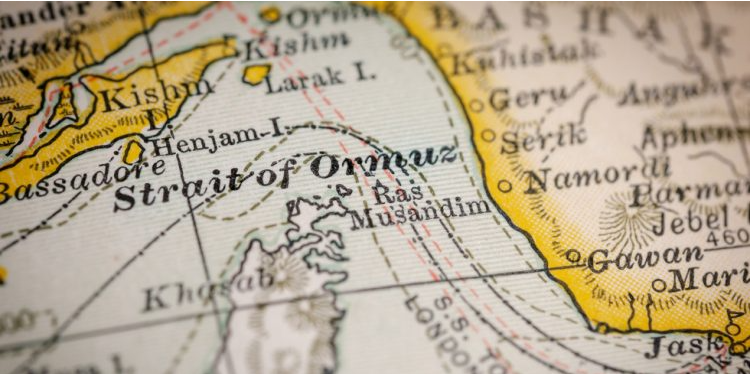 Industry on alert over scam messages offering ships “safe passage” on Hormuz
 Credit: Shutterstock Fraudulent messages offering safe passage through the Strait of Hormuz in exchange for cryptocurrency have been circulated to shipping companies with vessels stranded west of the waterway, according to MARISKS. In an alert issued on 20 April, MARISKS cautioned that unknown actors posing as Iranian authorities had contacted […]
 The ‘Cadet Gridlock’ in Bangladesh’s Maritime Sector: A Sorrowful Story of Wasted Potential
 The ‘Cadet Gridlock’ in Bangladesh’s Maritime Sector: A Sorrowful Story of Wasted Potential By Minar Rashid 21E On 15 November, the BMCS Gala Night 2025 was held at Singapore’s Orchid Country Club. With the vibrant participation of hundreds of Bangladeshi mariners and their families, the event became a remarkable reunion […]



JOB SITES
CONTENTS
LINKS
Happy New Year

Découvrez les avantages de MadCasino
Dans le monde des casinos en ligne, MadCasino se distingue par ses offres attrayantes et ses services de qualité. Que vous soyez un joueur débutant ou un parieur aguerri, vous trouverez ici une variété de jeux qui sauront satisfaire toutes vos envies. Les machines à sous, les jeux de table et les options de paris en direct sont tous disponibles pour vous offrir une expérience de jeu inégalée. De plus, le casino propose régulièrement des bonus qui permettent d'augmenter vos chances de gagner, vous offrant ainsi une excellente opportunité de maximiser vos gains.
En matière de sécurité, MadCasino est un nom de confiance. Il est entièrement licencié et régulé, ce qui garantit un environnement de jeu sûr et équitable. Les joueurs peuvent se concentrer sur leur expérience de jeu sans se soucier des problèmes de sécurité. Les transactions financières sont également sécurisées grâce à des technologies de pointe.
Les jeux proposés par MadCasino sont issus des développeurs les plus réputés de l'industrie, vous assurant des graphismes époustouflants et des mécaniques de jeu innovantes. Les joueurs peuvent également profiter d'une expérience de jeu en direct qui simule l'atmosphère d'un casino terrestre, tout en restant dans le confort de leur maison.
Enfin, la plateforme de MadCasino est optimisée pour les appareils mobiles, permettant aux joueurs de parier à tout moment et de n'importe où. Que vous soyez sur votre smartphone ou votre tablette, l'accès à vos jeux préférés n'a jamais été aussi simple. Ne manquez pas l'opportunité de découvrir ce casino exceptionnel.
Les offres de Cresus Casino
Cresus Casino est un autre acteur majeur dans le domaine des jeux en ligne, offrant des promotions généreuses et une vaste sélection de jeux. Les joueurs peuvent profiter d'une expérience de jeu enrichissante grâce aux nombreux bonus disponibles, qui sont conçus pour attirer tant les nouveaux utilisateurs que les joueurs réguliers. Ces avantages permettent non seulement de prolonger votre temps de jeu, mais aussi d'augmenter vos chances de gains conséquents.
Le casino se distingue également par sa ludothèque impressionnante, comprenant une sélection variée de machines à sous, de jeux de table et de jeux en direct. Les clients peuvent choisir parmi des titres populaires et appréciés, ainsi que des nouveautés qui enrichissent constamment l'offre. L'interface utilisateur est conviviale, rendant la navigation sur la plateforme fluide et agréable.
En termes de sécurité, Cresus Casino assure à ses joueurs un environnement de jeu fiable. La plateforme utilise des protocoles de sécurité avancés pour protéger les données personnelles et financières des utilisateurs. Cela permet aux joueurs de se sentir en sécurité tout en jouant à leurs jeux préférés.
Avec un service client réactif et professionnel, Cresus Casino s'assure que toutes vos questions et préoccupations sont traitées rapidement. Que ce soit pour des questions concernant les bonus, les retraits ou les jeux, vous bénéficierez d'une assistance rapide et efficace.
Explorez Nine Casino et ses avantages
Dans l'univers des casinos en ligne, Nine Casino a su se faire une place de choix grâce à son approche innovante et à ses nombreux avantages pour les joueurs. Les utilisateurs peuvent s'attendre à une expérience de jeu enrichissante, avec des bonus attractifs qui sont régulièrement mis à jour. Ces offres sont une excellente façon de découvrir de nouveaux jeux tout en maximisant votre potentiel de gain.
La plateforme de Nine Casino est riche en options de jeux, allant des machines à sous aux jeux de table, en passant par le live casino. Chaque jeu est conçu pour offrir une expérience immersive grâce à des graphismes de haute qualité et des fonctionnalités innovantes. Les parieurs peuvent profiter de sessions de jeu captivantes, comme s'ils étaient dans un véritable casino.
La sécurité est une priorité pour Nine Casino, qui utilise des technologies de cryptage avancées pour protéger les informations de ses joueurs. Cela garantit un environnement de jeu sûr et fiable, permettant aux utilisateurs de se concentrer sur ce qu'ils aiment le plus : jouer.
Enfin, le service clientèle fourni par Nine Casino est exceptionnel, avec des agents disponibles pour répondre à toutes vos questions et résoudre vos problèmes. Vous pourrez ainsi jouer en toute tranquillité, sachant que votre satisfaction est au cœur de leurs préoccupations.
Profitez de l'expérience Lucky31
Lucky31 est un casino en ligne qui se distingue par son approche orientée vers le joueur, offrant une multitude d'options de jeux et des bonus généreux. Que vous soyez amateur de machines à sous ou passionné de jeux de table, vous trouverez une large sélection pour satisfaire toutes vos envies de jeu. Les promotions fréquentes permettent aux joueurs de prolonger leur expérience tout en augmentant leurs chances de gains.
La convivialité de la plateforme de Lucky31 est l'un de ses plus grands atouts. Les joueurs peuvent naviguer facilement entre les différents jeux, et l'interface est conçue pour être intuitive, quel que soit le niveau d'expérience de l'utilisateur. De plus, le casino est entièrement optimisé pour les appareils mobiles, ce qui permet de parier où que vous soyez.
En matière de sécurité, Lucky31 prend les préoccupations des joueurs très au sérieux. Le casino est agréé et régulé, garantissant un environnement de jeu équitable et sécurisé. Les joueurs peuvent ainsi se concentrer sur leur expérience de jeu sans se soucier des risques liés à la sécurité.
Pour ceux qui recherchent un support client efficace, Lucky31 offre un service réactif et professionnel. Que ce soit pour des questions sur les bonus, les jeux ou les paiements, vous aurez accès à une assistance de qualité, vous garantissant une expérience de jeu fluide et agréable.