search the site


THE ORIGIN OF SHIPPING & INSURANCE
F R Chowdhury
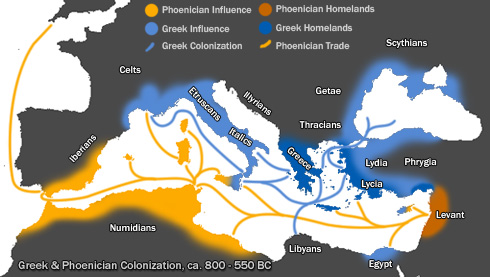
Shipping is one of the oldest businesses in the world. Risk management and insurance is also equally old business. They are closely linked with one another. In fact the development of insurance took place in support of the shipping industry.
In the early days the ship-owner, trader and ship-captain was a single entity. A rich influential person got a ship built, procured some commodity that is readily available in his area and then sailed to another place for business. He would normally barter the goods in exchange of commodity available in the new land. Gradually gold and then coins and currency became medium of exchange. Fortune favours the brave. The pioneer in shipping gradually became a rich man. He was not anymore ready to undergo all the rolling and pitching at sea. He employed a trusted man as the captain of his ship. He still remained owner of the ship and the cargo. However, those days with no radio telecommunication there was no way for him to know anything until the ship was sighted on the horizon again. Some time the ship was never seen again – either lost at sea or hijacked by pirates.
Another businessman came with a bright idea. He agreed to share the risk in exchange of a token payment. Because he shared similar risks with few other ship-owners, he managed to keep the premium low and thereby flourished his business. This is how the concept of hull insurance took birth in this world. However, it was also necessary to know “how good the ship is and the risk it represents”. This we will deal at a later stage.
With the passage of time more changes took place. The ship-owner was no more the cargo owner. The ship-owner placed a ship and accepted cargoes from different traders. The cargo owners also looked for similar security and there came the concept of cargo insurance.
Hundreds of years later the ship-owners came across claims from others for damages caused by way of the operation of the ship. Sometime the claim was too big to handle by a single ship-owner. The ship-owners got together and created common fund to protect themselves from such claims. This became the eventual protection and indemnity insurance. Because of being mutual in nature, they were called P&I clubs.
An important group of organizations that exert considerable influence on the design, construction, equipment and safety of ships are Classification Societies. Classification is defined as “a division by groups in order of merit” – and this was what was precisely attempted in the early days of ship classification. It was done for the benefit of ship-owners, cargo owners and underwriters in order to ascertain the risk a particular ship represented. The origin of classification is linked with the name Lloyd, and we shall discuss the history.
It was customary in the seventeenth and eighteenth centuries for merchants, shippers and underwriters to meet in tea shops/ coffee houses in London to discuss business. Ship lists were circulated in these establishments, which contained information concerning ships; and these lists were particularly helpful in providing underwriters with information concerning the degree of risk involved in insuring the ships and their cargoes. Amongst these coffee houses was one owned by an enterprising man called Edward Lloyd. His coffee house was originally in Tower Street but he later moved to Lombard Street (I think there is now a branch of Sainsbury, supermarket chain stores located there). Lloyd provided a list or bulletin about ships as far back as 1702 and after being withdrawn for a time it was issued again in 1734 and has continued to be published the present day as Lloyd’s List (perhaps the oldest newspaper being published today). It is still published but only the electronic version. The last printed issue was published 19th December, 2013.
Another interesting development in shipping took place when the housewives of Bristol area approached their MP Samuel Plimsol to do something in the parliament to save seafarers’ lives from the greedy ship-owners who would load the ship with cargo to such an extent that ships could not remain afloat at sea. The first load line (1876) act was named after the MP as Plimsol Mark Act.
One of the most remarkable improvements to safety came through radio-communication by Marconi. He was an Italian but developed his first radio transmission and reception facility in the UK in 1897 on a boat called “Electra” given to him by British government.
As time went on, the provisions relating to information about ships got more formalized and eventually a Register was published. Today this register is number one reference for shipbrokers, charterers and others keen to know about the status/ condition of the ship. Originally business of classifying ships and insuring them went under the same roof but eventually the two activities became completely separate. Both activities took the name of the coffee house proprietor. The Classification side took the name Lloyd’s Register of Shipping (the oldest classification society). Founded in 1760 to examine merchant ships and classify them according to their condition, today the organization’s expertise and activities extend far wider than shipping field – shore based industries including steel mills and oil refineries, offshore explorations and installations. Today Lloyd’s Register is an independent authority, non-profit making, and relying entirely on fees charged for surveys and other services rendered. It is controlled by a Committee representing ship-owners, ship and engine builders, the Institute of London Underwriters, the Royal Institute of Naval Architects and Shipbuilders. The national committees also include similar national bodies.
Other classification societies also follow the pattern set by LR. They are like independent standard institutes having common rules. A ship or an installation remains classed so long it meets the standard. Because they operate without any bias, they are equally trusted by ship-owners, traders, underwriters and even national administrations who delegate lot of statutory survey and certification to them. However, it must be understood that functions may be delegated to classification societies but administration as Party State shall always bear the responsibility.
We shall now discuss a very important aspect of shipping and insurance. It is to be noted that early shipping, insurance and classification developed on its own without any legal constrains. Those days there were no national or international laws governing those activities. They were self regulatory and it worked wonderfully well. By making necessary Act of Parliament, the British Government formally legitimised the working of Lloyds. This is why London still remains the centre for resolution of most of the legal disputes and arbitration. With the development of time shipping became the most international business in the world becoming subject to international conventions and protocols. Most of the early conventions were drafted by CMI and adopted through diplomatic conference called by a lead nation. After the World War II and development of the UN network, most of the maritime conventions are adopted through a number of UN agencies such as UNCTAD, UNCITRAL, ITU, ILO and IMO. Today the International Maritime Organization (IMO), a specialised agency of the UN is the international guardian of safety and security of operation of ships and protection of the marine environment. However, neither the UN nor any of its agencies can enforce the international standards to ships around the word. This aspect is left with sovereign nations. It is the duty of the Party States to transpose the provisions of international conventions into national legislation and enforce them over own ships (wherever they may be) and other ships within their jurisdiction. This measure is known as Flag State and Port State jurisdiction.
Now we shall discuss a little about development of port facilities. Remember, in the early part of this paper we said about some of the ships never returning back to owners. They either went down due to perils of the sea or taken over by pirates. So, port facilities needed to provide shelter from both weather and pirates. However, it was not necessary to go far inland as pirates would not chase that far being mindful of their return journey. Ports were based on hinterland – either in proximity of raw materials or in proximity of large population to deliver the consumer goods. Natural locations were sheltered basins or mouth of the river going to sea. Port facilities would normally develop a few miles up-stream where depth of water still sufficient to navigate safely. Immediately after that there would be evidently a bridge across the river to make it a hub of trading activities. London, New York, Calcutta and Chittagong are examples of such ports. In today’s world of economy of scales, main line global operators have big ships touching key points around the world. So, port and transhipment facilities are developing in key junction points like Singapore, Hambantota (Sri Lanka) and Algeciras (Spain).
However, ports are not as well regulated as shipping is. There is no separate UN agency to deal exclusively with port matters. ILO and UNCTAD have developed a number of guidelines that are widely followed by sea-ports all over the world. Ports provide the shore based facilities that shipping requires to operate. This is why many international shipping regulations also extend over ports. All marine operations within the port areas have to comply with SOLAS and COLREG. In respect of protection of marine environment, ports have to meet the MARPOL requirements. In addition to national contingency plan for combating accidental pollution, ports are required to have their own contingency plans. Ports have to work hand in hand with maritime administration for compliance of ISPS Code. Handling of all dangerous goods within the port areas is done in conformity with IMDG Code. IMO has developed training standards for marine pilots (for handling ships within port areas) and IMO wants ports to have efficient VTS.
This is the summarised history of development of trade, shipping, ports, insurance and classification societies.
<fazlu.chowdhury@btinternet.com>
Featured Post
 বড় জাহাজ মেরামতে মাতারবাড়ীতে ১ বিলিয়ন ডলারের প্রকল্প
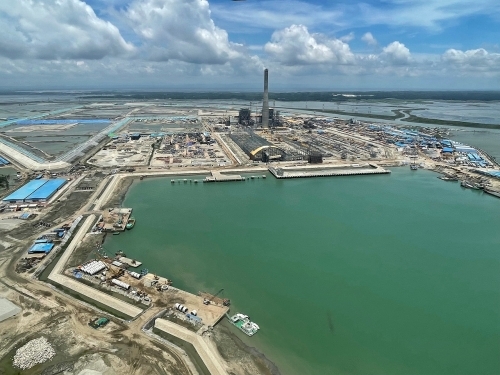
 মাতারবাড়ীতে প্রায় ১ বিলিয়ন মার্কিন ডলার ব্যয়ে পরিবেশবান্ধব ডকইয়ার্ড ও জাহাজ নির্মাণ কেন্দ্র স্থাপনের উদ্যোগে নীতিগত অনুমোদন দিয়েছে নৌপরিবহন মন্ত্রণালয়। এখন প্রকল্পটির কারিগরি ও আর্থিক মূল্যায়নের জন্য প্রস্তাবটি সরকারি-বেসরকারি অংশীদারত্ব (পিপিপি) কর্তৃপক্ষের কাছে পাঠানো হয়েছে। সম্পূর্ণ বেসরকারি অর্থায়নে সরকারি জমির মালিকানা অক্ষুণ্ন রেখে প্রকল্পটি বাস্তবায়নের পরিকল্পনা রয়েছে। বন্দর কর্তৃপক্ষ জানায়, […]
 Industry on alert over scam messages offering ships “safe passage” on Hormuz
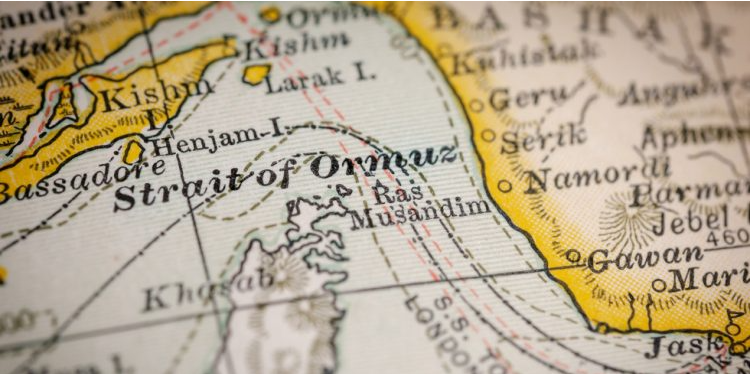
 Credit: Shutterstock Fraudulent messages offering safe passage through the Strait of Hormuz in exchange for cryptocurrency have been circulated to shipping companies with vessels stranded west of the waterway, according to MARISKS. In an alert issued on 20 April, MARISKS cautioned that unknown actors posing as Iranian authorities had contacted […]



JOB SITES
CONTENTS
LINKS
Happy New Year

Découvrez les avantages de MadCasino
Dans le monde des casinos en ligne, MadCasino se distingue par ses offres attrayantes et ses services de qualité. Que vous soyez un joueur débutant ou un parieur aguerri, vous trouverez ici une variété de jeux qui sauront satisfaire toutes vos envies. Les machines à sous, les jeux de table et les options de paris en direct sont tous disponibles pour vous offrir une expérience de jeu inégalée. De plus, le casino propose régulièrement des bonus qui permettent d'augmenter vos chances de gagner, vous offrant ainsi une excellente opportunité de maximiser vos gains.
En matière de sécurité, MadCasino est un nom de confiance. Il est entièrement licencié et régulé, ce qui garantit un environnement de jeu sûr et équitable. Les joueurs peuvent se concentrer sur leur expérience de jeu sans se soucier des problèmes de sécurité. Les transactions financières sont également sécurisées grâce à des technologies de pointe.
Les jeux proposés par MadCasino sont issus des développeurs les plus réputés de l'industrie, vous assurant des graphismes époustouflants et des mécaniques de jeu innovantes. Les joueurs peuvent également profiter d'une expérience de jeu en direct qui simule l'atmosphère d'un casino terrestre, tout en restant dans le confort de leur maison.
Enfin, la plateforme de MadCasino est optimisée pour les appareils mobiles, permettant aux joueurs de parier à tout moment et de n'importe où. Que vous soyez sur votre smartphone ou votre tablette, l'accès à vos jeux préférés n'a jamais été aussi simple. Ne manquez pas l'opportunité de découvrir ce casino exceptionnel.
Les offres de Cresus Casino
Cresus Casino est un autre acteur majeur dans le domaine des jeux en ligne, offrant des promotions généreuses et une vaste sélection de jeux. Les joueurs peuvent profiter d'une expérience de jeu enrichissante grâce aux nombreux bonus disponibles, qui sont conçus pour attirer tant les nouveaux utilisateurs que les joueurs réguliers. Ces avantages permettent non seulement de prolonger votre temps de jeu, mais aussi d'augmenter vos chances de gains conséquents.
Le casino se distingue également par sa ludothèque impressionnante, comprenant une sélection variée de machines à sous, de jeux de table et de jeux en direct. Les clients peuvent choisir parmi des titres populaires et appréciés, ainsi que des nouveautés qui enrichissent constamment l'offre. L'interface utilisateur est conviviale, rendant la navigation sur la plateforme fluide et agréable.
En termes de sécurité, Cresus Casino assure à ses joueurs un environnement de jeu fiable. La plateforme utilise des protocoles de sécurité avancés pour protéger les données personnelles et financières des utilisateurs. Cela permet aux joueurs de se sentir en sécurité tout en jouant à leurs jeux préférés.
Avec un service client réactif et professionnel, Cresus Casino s'assure que toutes vos questions et préoccupations sont traitées rapidement. Que ce soit pour des questions concernant les bonus, les retraits ou les jeux, vous bénéficierez d'une assistance rapide et efficace.
Explorez Nine Casino et ses avantages
Dans l'univers des casinos en ligne, Nine Casino a su se faire une place de choix grâce à son approche innovante et à ses nombreux avantages pour les joueurs. Les utilisateurs peuvent s'attendre à une expérience de jeu enrichissante, avec des bonus attractifs qui sont régulièrement mis à jour. Ces offres sont une excellente façon de découvrir de nouveaux jeux tout en maximisant votre potentiel de gain.
La plateforme de Nine Casino est riche en options de jeux, allant des machines à sous aux jeux de table, en passant par le live casino. Chaque jeu est conçu pour offrir une expérience immersive grâce à des graphismes de haute qualité et des fonctionnalités innovantes. Les parieurs peuvent profiter de sessions de jeu captivantes, comme s'ils étaient dans un véritable casino.
La sécurité est une priorité pour Nine Casino, qui utilise des technologies de cryptage avancées pour protéger les informations de ses joueurs. Cela garantit un environnement de jeu sûr et fiable, permettant aux utilisateurs de se concentrer sur ce qu'ils aiment le plus : jouer.
Enfin, le service clientèle fourni par Nine Casino est exceptionnel, avec des agents disponibles pour répondre à toutes vos questions et résoudre vos problèmes. Vous pourrez ainsi jouer en toute tranquillité, sachant que votre satisfaction est au cœur de leurs préoccupations.
Profitez de l'expérience Lucky31
Lucky31 est un casino en ligne qui se distingue par son approche orientée vers le joueur, offrant une multitude d'options de jeux et des bonus généreux. Que vous soyez amateur de machines à sous ou passionné de jeux de table, vous trouverez une large sélection pour satisfaire toutes vos envies de jeu. Les promotions fréquentes permettent aux joueurs de prolonger leur expérience tout en augmentant leurs chances de gains.
La convivialité de la plateforme de Lucky31 est l'un de ses plus grands atouts. Les joueurs peuvent naviguer facilement entre les différents jeux, et l'interface est conçue pour être intuitive, quel que soit le niveau d'expérience de l'utilisateur. De plus, le casino est entièrement optimisé pour les appareils mobiles, ce qui permet de parier où que vous soyez.
En matière de sécurité, Lucky31 prend les préoccupations des joueurs très au sérieux. Le casino est agréé et régulé, garantissant un environnement de jeu équitable et sécurisé. Les joueurs peuvent ainsi se concentrer sur leur expérience de jeu sans se soucier des risques liés à la sécurité.
Pour ceux qui recherchent un support client efficace, Lucky31 offre un service réactif et professionnel. Que ce soit pour des questions sur les bonus, les jeux ou les paiements, vous aurez accès à une assistance de qualité, vous garantissant une expérience de jeu fluide et agréable.