search the site


LNG SHIPS
by F R Chowdhury
Properties of LNG:
LNG is actually METHANE. Purity of cargoes ranges from 67% to 99.5%, according to geographical location. Impurities consist mainly of Ethane and Propane.
LNG is:
Non – toxic
Non – corrosive
Colourless
Odourless
In its gaseous form it is lighter than air. Its ratio of volume as liquid to gas is 1:600.
Lower flammable limit is approx. 4% in air. Upper flammable limit is approx. 14% in air. There is no LEL or UEL as such because there is no explosive effect upon ignition at any concentration. Auto ignition temperature is approx. 585° C and there is therefore little chance of ignition from engine or boiler exhausts. Methane has a slow travelling flame front and can be effectively extinguished with dry powder. Ship superstructure or other vulnerable areas may be protected by water spray, which imparts heat to the vapour cloud, resulting in immediate upward evaporation. CO2 injection firefighting systems are not fitted due to the possibility of ignition by static electricity being generated.
Because it is odourless and colourless it presents additional dangers to ships crew who may be unaware of system leaks. An odour is given to the gas prior to domestic distribution to enable detection by smell. This process is known as “stenching”.
Containment Systems / Ship Types:
There are basically two types of tank construction in current use. They are the MOSS ROSENBURG and MEMBRANE systems. In both cases the containment system is designed to serve two purposes:
- To contain LNG cargo at cryogenic temperature (-160 degree C);
- To insulate the cargo from hull structure.
The MOSS – ROSENBURG system comprises usually of four aluminium alloy spherical tanks, the upper half of which protrude above the main deck. The tanks are connected to ship’s structure by a skirt extending downwards from the equator of the tank into the hold space. Insulation is applied around the spherical tank and is backed by aluminium foil, which forms a spray shield in case of leakage. Accumulated leakages may be collected in a simple drip tray arrangement below the tank, designed to protect the structure below from excessive cooling. Minor leakage would flash off rather than form any significant pool. Tank thickness ranges from 30 – 50mm top to bottom but with a thickness of about 120mm at the equatorial ring. These tanks suffer relatively few structural problems. However MOSS ships require significant reinforcement of structure at sheer strakes and utilise a trunk deck construction at either side. In fact the hull construction is remarkably similar to a container ship in this regard, but with massive stiffening at the trunk deck. Severe rolling of the vessel is not unusual, especially in ballast condition. Numerous ballast tanks are fitted. A MOSS hull results in a higher GT compared to Membrane type ships. e.g. 120,000 compared to 92,000 GT.
MEMBRANE tanks vary in design according to manufacturer but all designs follow similar basic principles of construction. There is a primary barrier made of “Invar” or stainless steel, which forms the cargo tank surface. This is 0.7 or 1.2 mm thick, depending on design, and is backed by insulation blocks of approx. 250mm thickness. A secondary barrier sits behind this, made of Invar or Triplex (Aluminium / Glass fibre cloth composite), again depending on design. The secondary barrier is backed by more insulation, which directly sits against the ship’s hull structure.
The tank lining thus consists of two identical layers of membrane and insulation, so that in the event of any leak in the primary barrier, the cargo is contained by the secondary barrier. The secondary barrier is only designed to contain any envisaged leakage of cargo for a maximum period of 15 days (IGC Chapter IV/ 4.7.4). This system ensures that all the hydrostatic loads of the cargo are transmitted through the membranes and insulation to the inner hull plating of the ship.
MEMBRANE ships are prone to sloshing damage at certain loaded conditions. As a result, insulation boxes and adjacent cofferdam structures have been reinforced on ships built 2003 onwards. Loading was previously prohibited between 10% of tank length (expressed as a height of the tank) and 80% tank height. Later ships are now restricted loading between 10%L and 70%. This small improvement allows all four tanks to comply with restrictions on loading height by simple transfer of cargo for any tank condition.
A large amount of high tensile steel is used in construction of LNG ships. The current ceiling on ship capacity (approx. 140,000 cu.m) is the result of Japan, the major gas importer to date, imposing a 105,000 dwt limit on ships entering its ports. With expanding markets, ships up to 216,000 cu.m are planned.
Ship operations:
Where a tanker has been designed specifically to carry fully refrigerated Ethylene (boiling point at atmospheric pressure of -104 degree C) or LNG (atmospheric boiling point -162 degree C) nickel-alloyed steel, stainless steel (such as Invar) or aluminum must be used as tank construction material.
LNG is loaded at a temperature of –162° C and at atmospheric pressure. Tank pressures are maintained at slight positive pressure but below 230 mbar (Cargo tank relief valve setting). A small percentage of the cargo boils off over the voyage (can be as low as 0.15% of the cargo per day) and this is normally burnt in the ship’s boilers, generating steam for use in the steam turbine propulsion plant. Because of the boil-off occurring, Administrations may allow filling up to 99.5% of tank volume instead of the 98% stipulated maximum. This is not normally a problem for “Moss” ships due to their spherical tank construction and highly accurate measurement due to the shape of the tank. “Membrane” ships with their flat topped cargo tanks may not be so accurately measured for certain ship conditions of list and trim.
All ships are fitted with a Nitrogen generator for inerting pipes, void spaces and membrane spaces as necessary. (Safety note: Asphyxiation by nitrogen is swift, due to there being no CO2 present in the lungs. There is no stimulus to breathe and you simply drop dead). In the case of membrane ships, a traditional inert gas generator is not required due to the nature of operations and construction. Moss ships require an inert gas generator to flood the hold spaces surrounding the spherical tanks in case of gas detection only. Otherwise these spaces may be filled with dry air.
Relief valves are fitted not only to cargo tanks and membrane spaces, but also to all liquid lines between isolating valves. Consequently, surveyors might require a sample test only of relief valve operation.
Cargo discharge is by submerged electric motor driven centrifugal pump, two per tank each rated at 1700 cu.m/hr.
Cargo boil-off is initially controlled by the thickness of insulation that is fitted to the tank. The required thickness is affected by the calculated amount of boil off required for propulsion. The ship is usually employed on the same route for life and so the boil off may be determined by the owner/charterer as a trade off between anticipated price of LNG and fuel oil and also earning capacity of the ship by comparing % boil-off to cargo delivered. (Less insulation means more cargo capacity but also more cargo lost by boil-off). The Charterer will daily instruct the ship to burn LNG or fuel oil, depending on current or anticipated market prices. Ultimately, minimum insulation thickness is determined by IGC Code requirements, which are designed to protect the ship’s structure from excessively low temperatures. Ships are fitted with regasification plant to generate more gas for propulsion, in the event of boil-off being insufficient.
Boil-off cannot simply be vented in case of overpressure. IGC Code requires that this ozone depleting substance be dealt with at all times. In case of boil-off being in excess of propulsion requirements, the usual method is to simply generate and dump steam to the condenser.
Dual fuel diesel engine technology has arrived and it is likely to become more popular. It is also now economically feasible to reliquify the gas on board and return it to the cargo tanks. This raises questions on dealing with excess boil-off in case of non-propulsion or reliquifaction plant breakdown. (At a cost of $10,000,000 it is likely that only one will be fitted per ship). An answer has been offered by industry in the form of an LNG burner that simply burns the gas to atmosphere. They are known by several fancy names, principally to disguise the fact of their wasteful purpose. A design for a 210,000 cu.m ship has a 6m diameter flue!
A question over allowable maximum tank filling also arises due to possibility of no boil-off. (Value of LNG cargoes is rising rapidly and may outstrip fuel oil prices – LNG might not be used for propulsion). The possibility of returning liquefied gas to an already full tank should also be considered.
LNG overflowing from a mast riser can easily crack deck plating. Although it can be demonstrated that LNG spilt onto steel plate will not cause cracking, actual cases have shown that deck plating can and will crack due to inherent stresses generated by fabrication of the hull and/or ship in loaded or ballast condition. In the case shown on the LNG course, multiple cracks propagated completely through under-deck stiffeners.
Statutory considerations:
LNG ships are often built to USCG rules (CFR) in addition to IMO/IGC Code requirements in order to trade to US. All ships have instrumentation in excess of statutory requirements and failure of one instrument will not usually render the ship non-compliant.
LNG ships are traditionally drydocked at 30 month intervals, at which time instrumentation is overhauled by requirement of the shore terminals. Instrumentation includes the Custody Transfer System (CTS); a computerised monitoring system, which enables monitoring of the ship condition by the shore facility, with Emergency Shut Down of ship cargo operations being possible from ashore also. CTS are not a statutory or class requirement.
With markets changing, it is anticipated that owners operating particularly in the spot market may object to taking their ships out of service when an in-water survey might possibly suffice. It is therefore expected that pressure to have in-water surveys carried out at intermediate surveys will be forthcoming. Currently Class intermediate surveys are required to be carried out while the ship is gas-free and ships are usually in drydock as a consequence of shore terminals requirements stated above.
The expected expansion in the LNG fleet will require 5000 additional crew with relevant STCW endorsements. Also of concern is the emergence of new technology. Gas turbines are expected to become increasingly used in LPG ships and the question was asked, “What will Flag States require by way of training” for new technology such as this?
LNG ships are known to be positioning themselves to take advantage of possible spot cargoes, and switching off AIS to maintain their commercial advantage.
Prior to delivery, LNG ships have functional gas trials carried out with a usually small partial load in order to prove satisfactory operation of cargo systems and instrumentation.
Upon delivery, newly built LNG ships have three IGC Code items outstanding:
- Initial loading
- Initial discharge
- Cold spot inspection
One IACS Society has stated that these three items may be considered to be completed during gas trials. Other member societies disagree with this view and an IACS UI (unified interpretation) is under consideration. Some ships carry out gas trials fully loaded but it is important that the cold spot inspection is not carried out before the thermal inertia of the insulation has been overcome.
Some gas leakage into the space behind the primary membrane is allowable. The alarm level to be set at 30% LFL or up to 30% by volume, (well above the flammable range) depending upon the type of containment system fitted. The wide range of allowable limits is principally because early containment systems leaked anyway! Leakages into the space are normally purged with nitrogen and are not perceived to be a real danger to the ship.
The first Gas Code for existing ships was retrospectively written and applies to ships pre 1975. The next Gas Code applies to ships 75-85 and the current IGC Code applies to ships ‘86 onwards.
Ship systems and design are rapidly changing and the current IGC Code is out of touch with developments in some areas. Consequently LR are adopting a risk-based approach for some new designs and have already applied risk based analysis to gas turbine and dual fuel technology in the absence of existing regulations.
Future developments:
Future developments include “Gas to Liquid” conversion of LNG to pure diesel oil, naptha etc. This is a chemical process.
Shipping developments include proposed Compressed Natural Gas Ships (Cargo 70-80 bar pressure), Compressed LPG Ships (cargo at up to 250 bar pressure) and “Gas to wire” offshore generating stations, which may be classed and registered in the same way as FPSO vessels currently are.
LNG Course:
Operation of Liquefied Gas Carriers involves potential hazards. Training in emergency procedures and use of special emergency equipment must be given to crew. The technical complexity of design, construction, operation and maintenance require good training. The training must help in understanding of LNG ship technology and ship operations including considerations for loading in excess of 98%.
STCW training & endorsement:
Regulation V/1-2 states: Officers and ratings assigned specific duties and responsibilities related to cargo or cargo equipment on liquefied gas tankers shall hold a “Certificate in Basic Training for liquefied gas tanker cargo operations”.
This basic certificate may be obtained either by completing at least three months service on a liquefied gas tanker followed by successful assessment of competence meeting the requirements of Code A-V/1-2 paragraph 1. Or by having successfully completed an approved course of training meeting the same requirements (A-V/1-2, paragraph 1).
Management level officers and any person with immediate responsibility for loading, discharging, care in transit, handling of cargo, tank cleaning or other cargo related operations on liquefied gas tankers shall successfully complete an approved advance training for liquefied gas tanker cargo operations and complete a minimum period of three months service on a liquefied gas tanker in a supervised capacity (other than management level).
Administration shall issue Certificate of Proficiency to those who meet the requirements for certification under both categories.
[Please note this article does not meet any training requirement. This article merely presents an outline/ introduction of LNG ships for basic knowledge.]
London, 23-August-2016 <fazlu.chowdhury@btinternet.com>
Featured Post
 বড় জাহাজ মেরামতে মাতারবাড়ীতে ১ বিলিয়ন ডলারের প্রকল্প
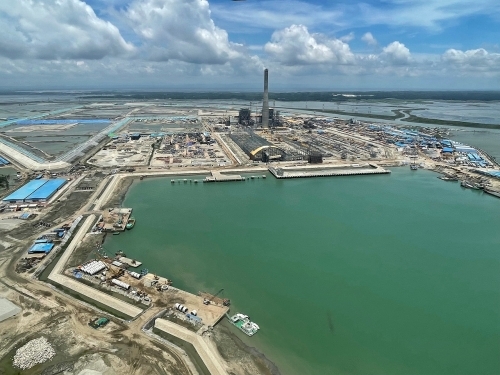
 মাতারবাড়ীতে প্রায় ১ বিলিয়ন মার্কিন ডলার ব্যয়ে পরিবেশবান্ধব ডকইয়ার্ড ও জাহাজ নির্মাণ কেন্দ্র স্থাপনের উদ্যোগে নীতিগত অনুমোদন দিয়েছে নৌপরিবহন মন্ত্রণালয়। এখন প্রকল্পটির কারিগরি ও আর্থিক মূল্যায়নের জন্য প্রস্তাবটি সরকারি-বেসরকারি অংশীদারত্ব (পিপিপি) কর্তৃপক্ষের কাছে পাঠানো হয়েছে। সম্পূর্ণ বেসরকারি অর্থায়নে সরকারি জমির মালিকানা অক্ষুণ্ন রেখে প্রকল্পটি বাস্তবায়নের পরিকল্পনা রয়েছে। বন্দর কর্তৃপক্ষ জানায়, […]
 Industry on alert over scam messages offering ships “safe passage” on Hormuz
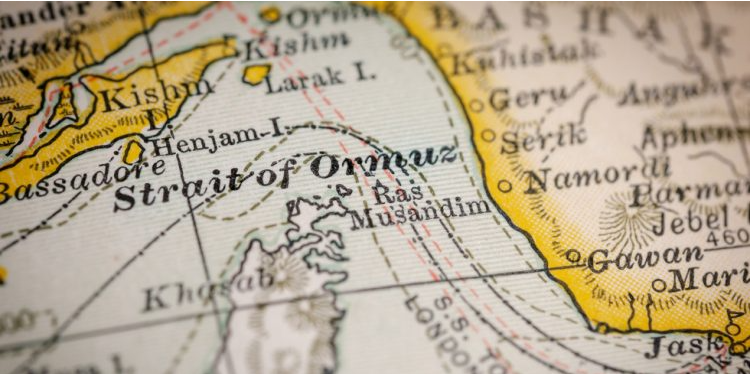
 Credit: Shutterstock Fraudulent messages offering safe passage through the Strait of Hormuz in exchange for cryptocurrency have been circulated to shipping companies with vessels stranded west of the waterway, according to MARISKS. In an alert issued on 20 April, MARISKS cautioned that unknown actors posing as Iranian authorities had contacted […]



JOB SITES
CONTENTS
LINKS
Happy New Year

Découvrez les avantages de MadCasino
Dans le monde des casinos en ligne, MadCasino se distingue par ses offres attrayantes et ses services de qualité. Que vous soyez un joueur débutant ou un parieur aguerri, vous trouverez ici une variété de jeux qui sauront satisfaire toutes vos envies. Les machines à sous, les jeux de table et les options de paris en direct sont tous disponibles pour vous offrir une expérience de jeu inégalée. De plus, le casino propose régulièrement des bonus qui permettent d'augmenter vos chances de gagner, vous offrant ainsi une excellente opportunité de maximiser vos gains.
En matière de sécurité, MadCasino est un nom de confiance. Il est entièrement licencié et régulé, ce qui garantit un environnement de jeu sûr et équitable. Les joueurs peuvent se concentrer sur leur expérience de jeu sans se soucier des problèmes de sécurité. Les transactions financières sont également sécurisées grâce à des technologies de pointe.
Les jeux proposés par MadCasino sont issus des développeurs les plus réputés de l'industrie, vous assurant des graphismes époustouflants et des mécaniques de jeu innovantes. Les joueurs peuvent également profiter d'une expérience de jeu en direct qui simule l'atmosphère d'un casino terrestre, tout en restant dans le confort de leur maison.
Enfin, la plateforme de MadCasino est optimisée pour les appareils mobiles, permettant aux joueurs de parier à tout moment et de n'importe où. Que vous soyez sur votre smartphone ou votre tablette, l'accès à vos jeux préférés n'a jamais été aussi simple. Ne manquez pas l'opportunité de découvrir ce casino exceptionnel.
Les offres de Cresus Casino
Cresus Casino est un autre acteur majeur dans le domaine des jeux en ligne, offrant des promotions généreuses et une vaste sélection de jeux. Les joueurs peuvent profiter d'une expérience de jeu enrichissante grâce aux nombreux bonus disponibles, qui sont conçus pour attirer tant les nouveaux utilisateurs que les joueurs réguliers. Ces avantages permettent non seulement de prolonger votre temps de jeu, mais aussi d'augmenter vos chances de gains conséquents.
Le casino se distingue également par sa ludothèque impressionnante, comprenant une sélection variée de machines à sous, de jeux de table et de jeux en direct. Les clients peuvent choisir parmi des titres populaires et appréciés, ainsi que des nouveautés qui enrichissent constamment l'offre. L'interface utilisateur est conviviale, rendant la navigation sur la plateforme fluide et agréable.
En termes de sécurité, Cresus Casino assure à ses joueurs un environnement de jeu fiable. La plateforme utilise des protocoles de sécurité avancés pour protéger les données personnelles et financières des utilisateurs. Cela permet aux joueurs de se sentir en sécurité tout en jouant à leurs jeux préférés.
Avec un service client réactif et professionnel, Cresus Casino s'assure que toutes vos questions et préoccupations sont traitées rapidement. Que ce soit pour des questions concernant les bonus, les retraits ou les jeux, vous bénéficierez d'une assistance rapide et efficace.
Explorez Nine Casino et ses avantages
Dans l'univers des casinos en ligne, Nine Casino a su se faire une place de choix grâce à son approche innovante et à ses nombreux avantages pour les joueurs. Les utilisateurs peuvent s'attendre à une expérience de jeu enrichissante, avec des bonus attractifs qui sont régulièrement mis à jour. Ces offres sont une excellente façon de découvrir de nouveaux jeux tout en maximisant votre potentiel de gain.
La plateforme de Nine Casino est riche en options de jeux, allant des machines à sous aux jeux de table, en passant par le live casino. Chaque jeu est conçu pour offrir une expérience immersive grâce à des graphismes de haute qualité et des fonctionnalités innovantes. Les parieurs peuvent profiter de sessions de jeu captivantes, comme s'ils étaient dans un véritable casino.
La sécurité est une priorité pour Nine Casino, qui utilise des technologies de cryptage avancées pour protéger les informations de ses joueurs. Cela garantit un environnement de jeu sûr et fiable, permettant aux utilisateurs de se concentrer sur ce qu'ils aiment le plus : jouer.
Enfin, le service clientèle fourni par Nine Casino est exceptionnel, avec des agents disponibles pour répondre à toutes vos questions et résoudre vos problèmes. Vous pourrez ainsi jouer en toute tranquillité, sachant que votre satisfaction est au cœur de leurs préoccupations.
Profitez de l'expérience Lucky31
Lucky31 est un casino en ligne qui se distingue par son approche orientée vers le joueur, offrant une multitude d'options de jeux et des bonus généreux. Que vous soyez amateur de machines à sous ou passionné de jeux de table, vous trouverez une large sélection pour satisfaire toutes vos envies de jeu. Les promotions fréquentes permettent aux joueurs de prolonger leur expérience tout en augmentant leurs chances de gains.
La convivialité de la plateforme de Lucky31 est l'un de ses plus grands atouts. Les joueurs peuvent naviguer facilement entre les différents jeux, et l'interface est conçue pour être intuitive, quel que soit le niveau d'expérience de l'utilisateur. De plus, le casino est entièrement optimisé pour les appareils mobiles, ce qui permet de parier où que vous soyez.
En matière de sécurité, Lucky31 prend les préoccupations des joueurs très au sérieux. Le casino est agréé et régulé, garantissant un environnement de jeu équitable et sécurisé. Les joueurs peuvent ainsi se concentrer sur leur expérience de jeu sans se soucier des risques liés à la sécurité.
Pour ceux qui recherchent un support client efficace, Lucky31 offre un service réactif et professionnel. Que ce soit pour des questions sur les bonus, les jeux ou les paiements, vous aurez accès à une assistance de qualité, vous garantissant une expérience de jeu fluide et agréable.